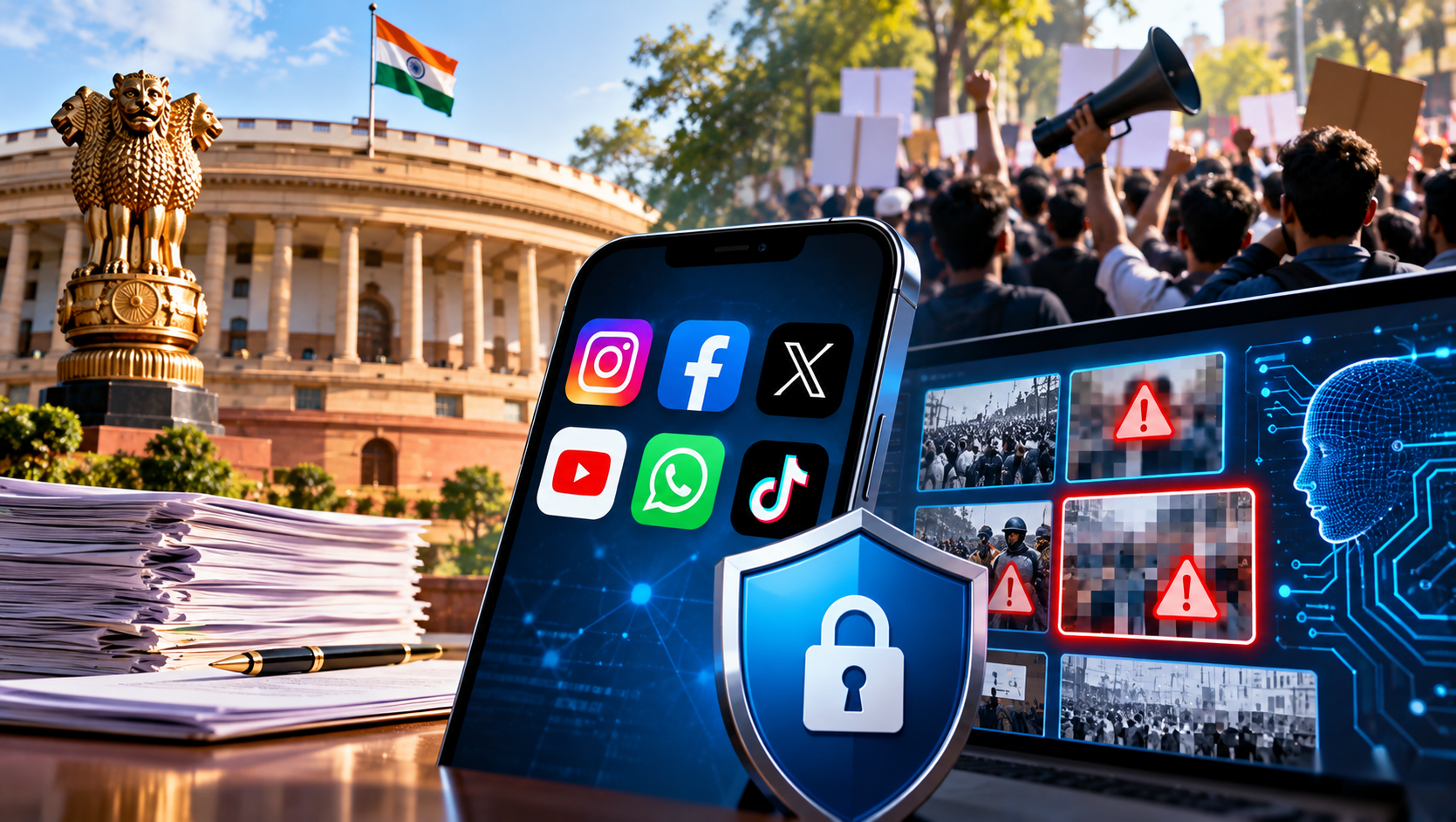
MeitY flags concerns over false, manipulated and misleading online posts that could disrupt public order, while asking platforms to label AI-generated material and cooperate with law enforcement under applicable IT rules
The Centre has urged major social media platforms to prioritise action against unlawful online content linked to ongoing protests, citing concerns that false, misleading or manipulated information could disturb public order and potentially incite violence.
The Ministry of Electronics and Information Technology (MeitY) is understood to have issued an advisory on October 8, asking platforms to identify problematic content and act on complaints received from authorised government bodies, including law enforcement agencies. The advisory also highlights the need to identify synthetically generated content, particularly material presented as a depiction of ongoing events.
The move comes amid growing concerns about how rapidly circulating online posts, edited videos and artificial intelligence-generated visuals can influence public perception during sensitive situations. It also places renewed attention on the responsibilities of social media companies under India's existing information technology framework.
Why Has the Government Issued the Advisory?
According to officials familiar with the development, the ministry is concerned about the circulation of information related to ongoing protests that may be false, misleading, manipulated or presented without essential context.
Such content, the government fears, could aggravate tensions, undermine public order and create law-and-order challenges. In sensitive situations, misleading footage or unverified claims can spread quickly before the authenticity of the material is established.
MeitY has therefore advised large social media platforms to identify unlawful content and prioritise action when complaints are received from authorised government agencies.
The advisory reflects the government's focus on limiting the circulation of content that may violate applicable laws. However, whether particular material is unlawful depends on the relevant legal provisions and circumstances; criticism, reporting and peaceful expression are not automatically unlawful simply because they concern protests.
AI-Generated Content Comes Under Greater Scrutiny
A key aspect of the advisory is the emphasis on synthetically generated material, including content created or altered using artificial intelligence.
The ministry has asked social media companies to label such material, particularly when it is presented as a depiction of events currently taking place. This is significant because AI tools can produce realistic images, videos and audio that may be difficult for ordinary users to distinguish from authentic recordings.
During protests or other sensitive events, fabricated footage or altered recordings can create a misleading impression of what happened, who was involved or how an incident unfolded.
Clear labelling could help users understand whether a piece of media has been generated or manipulated. Nevertheless, labels alone may not resolve every problem: platforms may also need effective reporting mechanisms, verification processes and timely responses to complaints.
The effectiveness of these measures will depend on how accurately synthetic content is identified, how consistently platforms apply their policies and whether users receive enough information to assess the reliability of material they encounter.
Social Media Firms Asked to Cooperate With Authorities
The advisory also calls for timely cooperation between social media platforms, law enforcement agencies and other authorised government bodies.
According to the official account, companies have been asked to provide information and assistance in accordance with applicable law and within the prescribed timelines under the Information Technology Rules, 2021.
These rules form part of India's regulatory framework governing intermediaries and their responsibilities concerning unlawful online material. Platforms may have obligations relating to grievance handling, compliance with valid legal directions and the preservation or disclosure of information where required by law.
For technology companies, the immediate operational challenge is to respond to authorised requests efficiently while maintaining appropriate legal and procedural safeguards. This can involve reviewing reported posts, assessing whether content violates applicable law or platform policies, and responding within the relevant deadlines.
The advisory does not, by itself, establish that every protest-related post must be removed. The legal basis of a request, the nature of the content and the applicable requirements remain important in determining the appropriate response.
Balancing Public Order With Freedom of Expression
The government's latest action raises a broader question about how authorities and technology companies should balance public safety with the right to express opinions and report events.
Social media platforms play an important role in allowing people to share eyewitness accounts, document demonstrations and discuss government policies. At the same time, deliberately fabricated content, incitement to violence and certain forms of unlawful communication can create serious risks.
A transparent and proportionate approach is therefore important. Content moderation decisions should distinguish between demonstrably unlawful material and legitimate reporting, criticism or peaceful political expression.
Clear explanations of moderation decisions, accessible grievance mechanisms and appropriate review procedures can help reduce the risk of legitimate content being restricted unnecessarily.
The treatment of AI-generated content presents an additional challenge because synthetic material can be used for satire, commentary, illustration or deception. Context and presentation are important when assessing how such material should be labelled or handled.
What the Advisory Means for Social Media Companies
The advisory could increase the operational demands on large platforms during periods of heightened public tension. Companies may need to review their processes for receiving government complaints, verifying reported material, identifying synthetic media and documenting their responses.
Platforms that operate across multiple jurisdictions must also navigate differing legal standards and content policies. In India, compliance with applicable domestic requirements will remain central to handling lawful government requests.
For technology businesses, content moderation has implications beyond regulatory compliance. Delayed responses or inconsistent enforcement can damage public trust, while overly broad restrictions can raise concerns about transparency and freedom of expression.
The immediate focus will be on how platforms implement the advisory and whether their responses are timely, legally grounded and proportionate to the risks involved.
What Users Should Keep in Mind
The advisory also underscores the importance of responsible online behaviour. Users should verify the origin and context of videos, images and claims before sharing them, particularly when the material concerns protests, public disturbances or alleged confrontations.
Old footage can be presented as a current event, edited clips can omit crucial context, and AI-generated visuals can appear authentic. Checking credible reporting, looking for the original source and avoiding the circulation of unverified allegations can help limit the spread of misinformation.
Users should also recognise that a government advisory or complaint does not automatically prove that a particular claim is false or unlawful. The circumstances and available evidence matter.
Outlook
MeitY's advisory signals closer attention to protest-related online content, particularly material that is misleading, manipulated or generated using artificial intelligence. By asking platforms to prioritise complaints from authorised bodies and cooperate with law enforcement under the applicable IT framework, the government is seeking faster responses to content it considers potentially harmful to public order.
The broader impact will depend on how consistently the advisory is implemented, how effectively synthetic media is labelled and whether platforms can respond to unlawful material without unnecessarily restricting legitimate expression.
For India's digital ecosystem, the central challenge will be to address genuine risks from misinformation and incitement while preserving transparency, accountability and space for lawful public debate.