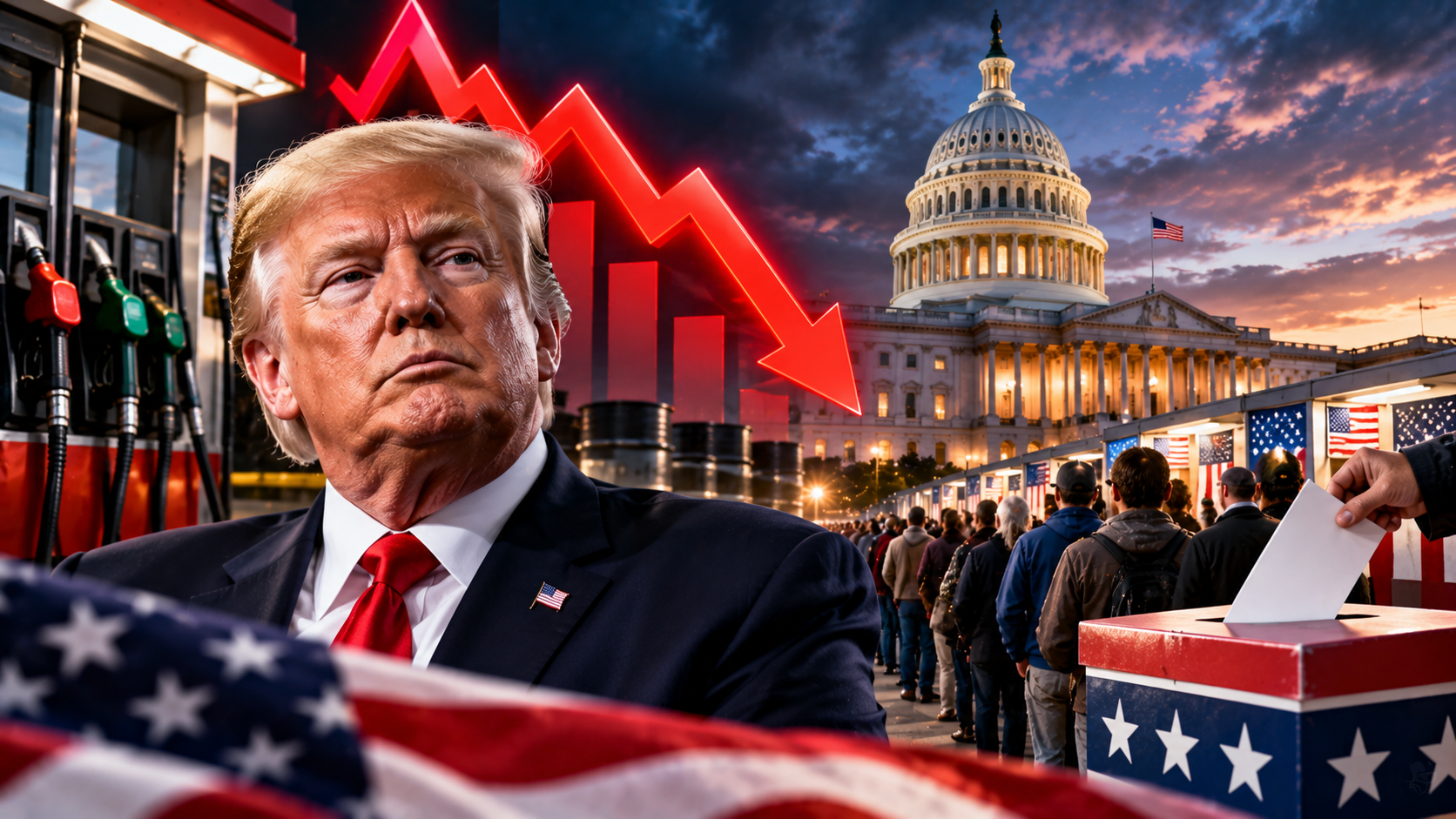
Democrats open a 12-point lead over Republicans in congressional voting preference as rising gasoline prices and economic concerns weigh on Trump’s popularity ahead of November 3 elections
US President Donald Trump’s approval rating has fallen to its lowest level across both of his presidential terms, adding to political pressure on the Republican Party ahead of the November 3, 2026, congressional midterm elections. A Reuters/Ipsos poll found that only 31% of Americans approved of Trump’s performance in office, down one percentage point from a survey conducted two weeks earlier.
The poll, which closed on Monday, October 19, points to growing voter dissatisfaction over economic conditions, particularly high gasoline prices and the administration’s handling of the economy. It also shows Democrats gaining ground in the national congressional voting preference, raising the possibility of a significant political setback for Republicans.
For Trump, the results present a challenge as his administration seeks to advance its policy agenda during the final two years of his term. For financial markets, the election could become an important source of uncertainty, particularly if a change in congressional control affects fiscal policy, taxation, trade and government spending.
Democrats Build a 12-Point Lead in Congressional Voting Preference
According to the Reuters/Ipsos survey, 47% of registered voters said they would vote for Democratic candidates if congressional elections were held immediately, compared with 35% who preferred Republicans. The 12-percentage-point advantage was the Democrats’ widest lead in the current election cycle.
Two weeks earlier, Democrats had led Republicans by seven percentage points, with 44% supporting Democratic candidates and 37% favouring Republicans. The latest results therefore indicate a widening gap in national voter preferences.
The so-called generic ballot measures which party voters prefer in congressional elections without necessarily naming individual candidates. Although it provides an indication of the national political environment, it does not directly predict which party will win control of the House of Representatives or the Senate.
Congressional outcomes depend on individual races, candidate quality, voter turnout and the distribution of support across states and electoral districts. Republicans may retain structural advantages in some contests even if Democrats lead nationally.
Nevertheless, a widening Democratic advantage could strengthen the party’s prospects of winning control of one or both chambers of Congress.
Rising Gasoline Prices Put Pressure on Household Finances
Economic dissatisfaction appears to be a major factor behind the decline in Trump’s approval rating. The poll found that 68% of Americans disapproved of his handling of the economy, including 37% of self-identified Republicans.
The survey also showed that voters preferred Democrats over Republicans as the party better equipped to manage the economy, by 40% to 33%.
Higher gasoline prices have emerged as a particular concern for American households. Fuel costs directly affect household budgets and can also increase transportation, logistics and distribution expenses for businesses. When fuel prices rise, consumers may have less money available for discretionary spending, while companies can face pressure on operating margins.
The poll linked the deterioration in Trump’s popularity partly to the rise in gasoline prices following US military strikes on Iran in February, conducted alongside US ally Israel. The conflict and its effects on energy markets have added to concerns over the cost of living.
For voters, the impact of energy prices can be immediate and visible, making fuel affordability an important political issue in the run-up to the midterms.
Women Voters Show Strong Preference for Democrats
The survey indicated that women were a significant factor in the widening Democratic lead. Approximately 50% of female voters said they would support Democratic candidates, compared with 32% who favoured Republicans.
Men also leaned towards Democrats, although the margin was narrower.
The results suggest that the Republican Party faces challenges across multiple voter groups rather than among a single demographic. However, national polling figures do not establish how these preferences will translate into votes in individual districts.
Turnout, local issues, candidate campaigns and the importance voters attach to the economy, immigration, healthcare and other policy areas could all influence the final result.
Why Control of Congress Matters for Trump’s Agenda
The November 3 elections will determine the balance of power in the US Congress during the remaining two years of Trump’s presidential term.
If Democrats gain control of either the House of Representatives or the Senate, the administration could face greater difficulty advancing legislation. Congressional control influences the passage of spending measures, tax legislation, regulatory initiatives and other policy priorities.
A divided government could also lead to more legislative negotiations, investigations and delays in implementing parts of the administration’s agenda. If Republicans retain control of both chambers, Trump may have greater scope to pursue his legislative priorities, although individual lawmakers and other political constraints would continue to matter.
The outcome could therefore shape the policy environment for businesses and investors well beyond election day.
Poll Results Reflect Public Sentiment, Not a Guaranteed Election Outcome
The Reuters/Ipsos poll was conducted online among 1,679 US adults, including 1,279 registered voters. The reported margin of error was two percentage points for all respondents and three percentage points for registered voters.
These margins indicate that the reported percentages are estimates rather than exact measurements of the entire electorate. The results also represent national sentiment at the time of the survey, not a definitive forecast of the outcome in every state or congressional district.
Campaign developments, economic data, fuel prices and voter turnout could change the political landscape before voting begins. The generic ballot should therefore be viewed as an indicator of the broader political mood rather than a direct prediction of congressional control.
Potential Implications for Financial Markets and Businesses
The election outlook could influence investor expectations around US fiscal policy, corporate taxation, government spending, energy policy and trade. Markets may react to changing expectations even before the election, particularly if polling suggests a meaningful shift in congressional control.
A divided government could make major policy changes more difficult to pass, potentially reducing uncertainty in some areas while creating delays in others. Conversely, a decisive electoral outcome could strengthen the ability of the winning party to advance its priorities, depending on the composition of Congress and the legislation involved.
Energy prices will remain an important factor to monitor. Sustained increases in gasoline and crude oil prices could affect inflation expectations, consumer spending and business costs. These developments may also influence expectations for interest rates and the broader direction of US financial markets.
However, a decline in presidential approval or a shift in voting preferences does not automatically translate into a predictable stock-market response. Investors will need to assess the specific policy implications alongside economic growth, inflation, corporate earnings and monetary policy.
Market Outlook
Trump’s 31% approval rating and the Democrats’ 12-point lead in congressional voting preference signal a challenging political environment for Republicans ahead of the November 3 midterms. Economic dissatisfaction, particularly over gasoline prices and the administration’s handling of the economy, appears to be an important source of pressure.
For investors, the key indicators to watch are subsequent polling trends, fuel prices, inflation data, consumer confidence and developments in the congressional campaigns. The eventual balance of power in Washington could influence expectations for fiscal policy, regulation, energy and trade.
The latest poll strengthens the possibility of a more contested final two years of Trump’s term, but it does not settle the election outcome. Until voting concludes, political uncertainty and economic developments are likely to remain important factors shaping market sentiment.