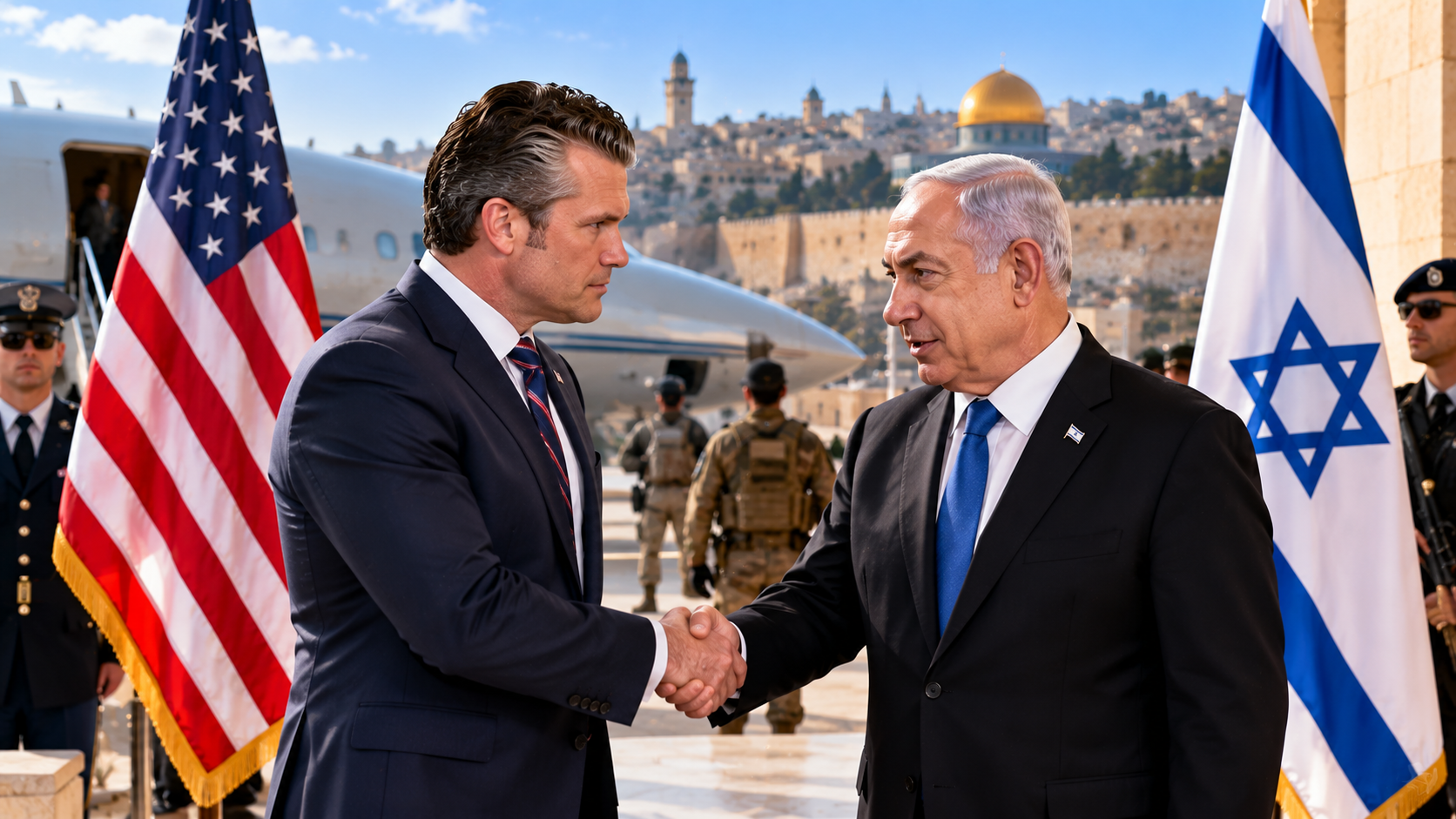
US Defence Secretary’s reported meeting with Israeli prime minister comes days before Israel’s parliamentary election, as Washington’s support for Netanyahu and the wider West Asian security situation remain under scrutiny
US Defence Secretary Pete Hegseth reportedly met Israeli Prime Minister Benjamin Netanyahu during an unannounced visit to Israel on Monday, October 19, 2026, according to a report by Axios citing two sources familiar with the matter. The visit comes at a politically sensitive moment, with Israel preparing for a parliamentary election and regional security concerns continuing to shape relations between Washington and Jerusalem.
Reuters said it could not immediately independently confirm the meeting. Hegseth, however, stated in a social media post that he had visited US service members within the area of responsibility of the US Central Command (CENTCOM), which covers West Asia, northeast Africa and parts of Asia.
The Pentagon declined to comment on the reported meeting, while Israel’s embassy in Washington did not immediately respond to a request for comment.
The reported engagement has drawn attention because of its timing, following US President Donald Trump’s public endorsement of Netanyahu’s re-election campaign and amid uncertainty over the future of Israel’s governing coalition.
Hegseth’s Visit Comes at a Sensitive Political Moment
The reported meeting took place as Israel approaches a parliamentary election that could reshape its domestic political landscape and influence the direction of its security and foreign policies.
Netanyahu’s religious-nationalist coalition is projected by opinion polls to lose its governing majority. However, opposition parties may also face difficulties assembling a coalition capable of forming a government.
The election is particularly significant because it is the first parliamentary vote since the Hamas attack of October 7, 2023, which triggered a major escalation in the Israeli-Palestinian conflict and contributed to wider regional instability.
Israel subsequently fought wars on multiple fronts, including in Gaza and Lebanon, while tensions involving Iran further complicated the regional security environment.
Against this backdrop, the reported meeting between Hegseth and Netanyahu could attract attention from political observers seeking to understand Washington’s security priorities and its engagement with Israel. However, the purpose and specific agenda of the reported meeting have not been officially confirmed.
Trump’s Endorsement Adds to the Political Significance
The reported visit followed Trump’s endorsement of Netanyahu ahead of the Israeli election. The US president’s intervention placed Washington’s relationship with the Israeli prime minister back in the spotlight after months of strained ties, according to previous reports.
The endorsement could be interpreted as a signal of political support for Netanyahu, although its effect on Israeli voters remains uncertain. Israel’s election outcome will depend on domestic political preferences, coalition arithmetic and the issues that voters consider most important.
US Vice President JD Vance adopted a different public position, declining to endorse Netanyahu when asked about the election in an interview with digital media outlet 2WAY on Monday.
Vance said he was focused on American candidates and the US midterm elections. He clarified that he was neither endorsing nor opposing Netanyahu, but was choosing not to become involved in Israel’s electoral contest.
The differing public positions underline the importance of distinguishing the administration’s broader relationship with Israel from the individual political positions expressed by senior US officials.
CENTCOM’s Role in Regional Security
Hegseth’s statement that he visited American service members in the CENTCOM area of responsibility provides a broader security context for the trip, although it does not independently confirm the reported meeting with Netanyahu.
CENTCOM oversees US military operations and security partnerships across a strategically important region that includes major energy-producing countries, key maritime routes and areas affected by ongoing conflicts.
The region is central to international energy markets because disruptions to oil production, shipping routes or regional infrastructure can influence crude prices, transportation costs and inflation expectations worldwide.
US military deployments and regional partnerships also play a role in deterrence, intelligence cooperation and the protection of American personnel and strategic interests.
The precise locations visited by Hegseth and the operational details of his trip were not established in the information available about the reported visit.
Regional Conflicts Continue to Shape US-Israel Relations
The relationship between Washington and Jerusalem remains closely connected to developments involving Gaza, Lebanon and Iran. Security cooperation, military assistance and regional diplomacy are likely to remain important elements of bilateral engagement.
At the same time, the political implications of the Israeli election could influence the priorities of the next government, including its approach to regional security, relations with the United States and efforts to address domestic concerns.
The reported meeting may therefore be viewed within a wider period of diplomatic and security engagement. Nevertheless, without an official account of the discussions, it would be premature to conclude that the visit was linked to a particular military operation, diplomatic initiative or election strategy.
What the Visit Could Mean for Regional Diplomacy
The timing of the visit highlights the intersection of US foreign policy, Israeli domestic politics and regional security. Washington’s relationship with Israel is strategically significant, but the extent to which political endorsements or high-level visits influence election outcomes is difficult to determine.
A stable diplomatic relationship could help maintain security coordination, while disagreements over regional policy or domestic political developments could complicate bilateral engagement. The next phase will depend on the Israeli election outcome, decisions by the US administration and developments across the region.
For regional governments and international observers, the key questions will concern continuity in security cooperation, the management of tensions with Iran and the prospects for reducing conflict across the region.
Market Outlook
The reported Hegseth-Netanyahu meeting comes at a time when geopolitical developments in West Asia remain important for global markets. Any escalation involving Israel, Iran or other regional actors could affect crude oil prices, shipping costs, insurance premiums and broader investor sentiment. Conversely, signs of de-escalation could ease some of these risk premiums.
For investors, the key indicators to monitor include developments in the Israeli election, official statements from Washington and Jerusalem, regional military activity and the security of major energy and shipping routes.
The reported meeting itself does not establish a change in US policy or signal an imminent escalation. Its significance will become clearer only if officials disclose the agenda or if subsequent diplomatic and security developments provide further context. Until then, markets are likely to remain sensitive to confirmed developments rather than speculation surrounding the visit.
Pete Hegseth Meets Benjamin Netanyahu During Unannounced Israel Visit Amid Regional Tensions
US Defence Secretary’s reported meeting with Israeli prime minister comes days before Israel’s parliamentary election, as Washington’s support for Netanyahu and the wider West Asian security situation remain under scrutiny
US Defence Secretary Pete Hegseth reportedly met Israeli Prime Minister Benjamin Netanyahu during an unannounced visit to Israel on Monday, October 19, 2026, according to a report by Axios citing two sources familiar with the matter. The visit comes at a politically sensitive moment, with Israel preparing for a parliamentary election and regional security concerns continuing to shape relations between Washington and Jerusalem.
Reuters said it could not immediately independently confirm the meeting. Hegseth, however, stated in a social media post that he had visited US service members within the area of responsibility of the US Central Command (CENTCOM), which covers West Asia, northeast Africa and parts of Asia.
The Pentagon declined to comment on the reported meeting, while Israel’s embassy in Washington did not immediately respond to a request for comment.
The reported engagement has drawn attention because of its timing, following US President Donald Trump’s public endorsement of Netanyahu’s re-election campaign and amid uncertainty over the future of Israel’s governing coalition.
Hegseth’s Visit Comes at a Sensitive Political Moment
The reported meeting took place as Israel approaches a parliamentary election that could reshape its domestic political landscape and influence the direction of its security and foreign policies.
Netanyahu’s religious-nationalist coalition is projected by opinion polls to lose its governing majority. However, opposition parties may also face difficulties assembling a coalition capable of forming a government.
The election is particularly significant because it is the first parliamentary vote since the Hamas attack of October 7, 2023, which triggered a major escalation in the Israeli-Palestinian conflict and contributed to wider regional instability.
Israel subsequently fought wars on multiple fronts, including in Gaza and Lebanon, while tensions involving Iran further complicated the regional security environment.
Against this backdrop, the reported meeting between Hegseth and Netanyahu could attract attention from political observers seeking to understand Washington’s security priorities and its engagement with Israel. However, the purpose and specific agenda of the reported meeting have not been officially confirmed.
Trump’s Endorsement Adds to the Political Significance
The reported visit followed Trump’s endorsement of Netanyahu ahead of the Israeli election. The US president’s intervention placed Washington’s relationship with the Israeli prime minister back in the spotlight after months of strained ties, according to previous reports.
The endorsement could be interpreted as a signal of political support for Netanyahu, although its effect on Israeli voters remains uncertain. Israel’s election outcome will depend on domestic political preferences, coalition arithmetic and the issues that voters consider most important.
US Vice President JD Vance adopted a different public position, declining to endorse Netanyahu when asked about the election in an interview with digital media outlet 2WAY on Monday.
Vance said he was focused on American candidates and the US midterm elections. He clarified that he was neither endorsing nor opposing Netanyahu, but was choosing not to become involved in Israel’s electoral contest.
The differing public positions underline the importance of distinguishing the administration’s broader relationship with Israel from the individual political positions expressed by senior US officials.
CENTCOM’s Role in Regional Security
Hegseth’s statement that he visited American service members in the CENTCOM area of responsibility provides a broader security context for the trip, although it does not independently confirm the reported meeting with Netanyahu.
CENTCOM oversees US military operations and security partnerships across a strategically important region that includes major energy-producing countries, key maritime routes and areas affected by ongoing conflicts.
The region is central to international energy markets because disruptions to oil production, shipping routes or regional infrastructure can influence crude prices, transportation costs and inflation expectations worldwide.
US military deployments and regional partnerships also play a role in deterrence, intelligence cooperation and the protection of American personnel and strategic interests.
The precise locations visited by Hegseth and the operational details of his trip were not established in the information available about the reported visit.
Regional Conflicts Continue to Shape US-Israel Relations
The relationship between Washington and Jerusalem remains closely connected to developments involving Gaza, Lebanon and Iran. Security cooperation, military assistance and regional diplomacy are likely to remain important elements of bilateral engagement.
At the same time, the political implications of the Israeli election could influence the priorities of the next government, including its approach to regional security, relations with the United States and efforts to address domestic concerns.
The reported meeting may therefore be viewed within a wider period of diplomatic and security engagement. Nevertheless, without an official account of the discussions, it would be premature to conclude that the visit was linked to a particular military operation, diplomatic initiative or election strategy.
What the Visit Could Mean for Regional Diplomacy
The timing of the visit highlights the intersection of US foreign policy, Israeli domestic politics and regional security. Washington’s relationship with Israel is strategically significant, but the extent to which political endorsements or high-level visits influence election outcomes is difficult to determine.
A stable diplomatic relationship could help maintain security coordination, while disagreements over regional policy or domestic political developments could complicate bilateral engagement. The next phase will depend on the Israeli election outcome, decisions by the US administration and developments across the region.
For regional governments and international observers, the key questions will concern continuity in security cooperation, the management of tensions with Iran and the prospects for reducing conflict across the region.
Market Outlook
The reported Hegseth-Netanyahu meeting comes at a time when geopolitical developments in West Asia remain important for global markets. Any escalation involving Israel, Iran or other regional actors could affect crude oil prices, shipping costs, insurance premiums and broader investor sentiment. Conversely, signs of de-escalation could ease some of these risk premiums.
For investors, the key indicators to monitor include developments in the Israeli election, official statements from Washington and Jerusalem, regional military activity and the security of major energy and shipping routes.
The reported meeting itself does not establish a change in US policy or signal an imminent escalation. Its significance will become clearer only if officials disclose the agenda or if subsequent diplomatic and security developments provide further context. Until then, markets are likely to remain sensitive to confirmed developments rather than speculation surrounding the visit.