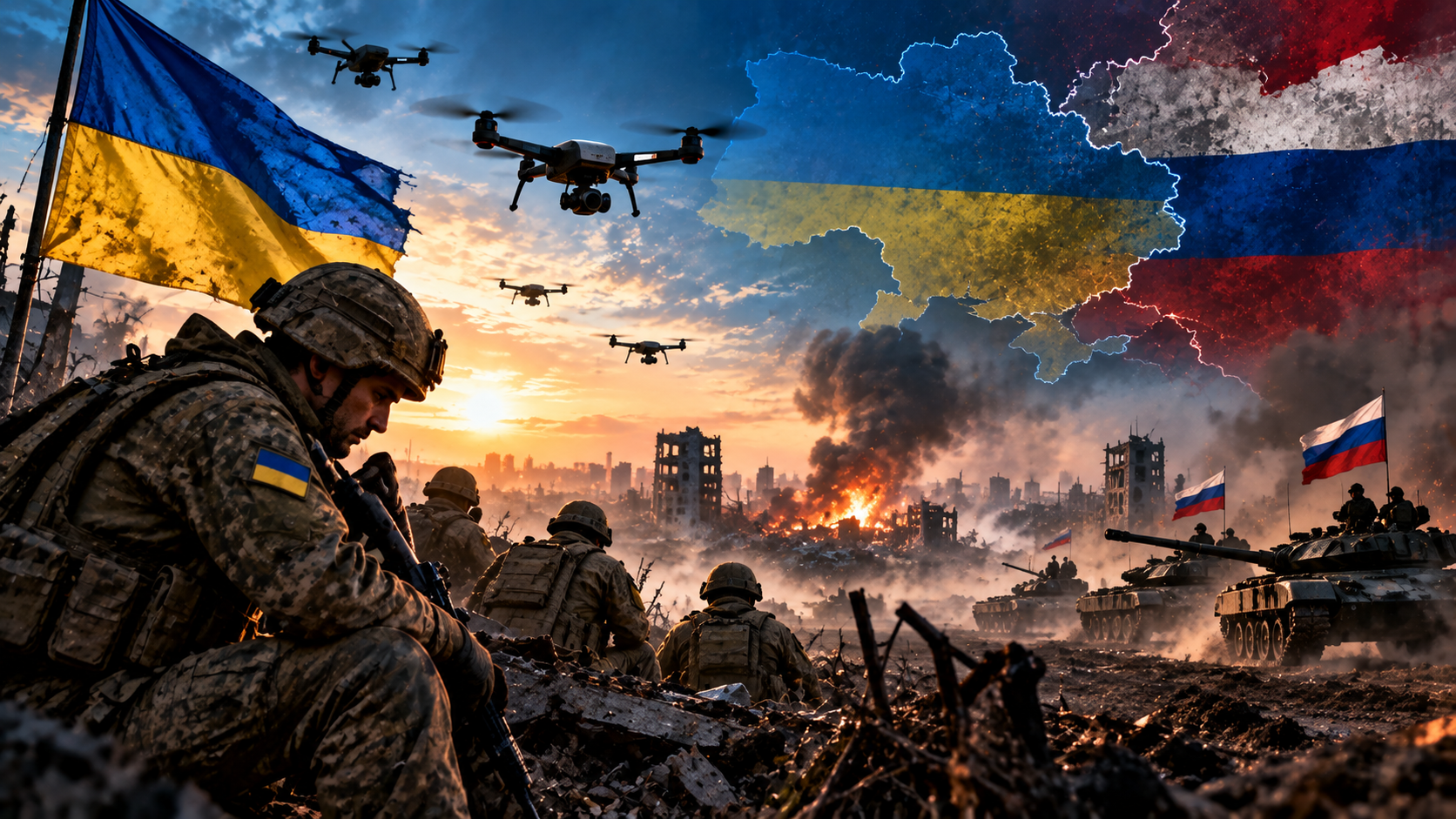
Long-running mobilisation problems, desertion and battlefield exhaustion have left some Ukrainian units badly understaffed, limiting Kyiv’s ability to rotate troops, exploit battlefield openings and mount large-scale offensives
Ukraine’s battlefield strategy has increasingly relied on drones, advanced surveillance systems and innovative tactics, but one of the country’s oldest problems remains unresolved: a shortage of combat-ready personnel.
More than four years after Russia launched its full-scale invasion, Ukrainian commanders and military analysts say manpower shortages are becoming increasingly difficult to overcome. Some frontline units are operating at only a fraction of their intended strength, reducing their ability to rotate exhausted troops, reinforce vulnerable positions or exploit temporary advantages against Russian forces.
The shortage is particularly significant because Ukraine faces a much larger opponent. Russia has a substantially larger population and has continued to recruit personnel through financial incentives and other measures.
For Ukraine, maintaining the existing defensive line is already consuming a significant share of available manpower. Launching sustained offensives requires additional reserves that Kyiv often does not have.
Frontline units struggle to maintain strength
The problem is particularly acute in eastern Ukraine, where Russian forces continue to apply pressure.
A deputy commander of the Da Vinci Wolves battalion operating in the Pokrovsk area said his unit was functioning at roughly half strength while its area of responsibility had expanded substantially.
The shortage means soldiers can remain on the frontline for extended periods without adequate opportunities for rotation.
That creates a difficult cycle. Exhausted troops become less effective, units suffer higher casualties and replacements become increasingly difficult to find. The resulting manpower gap then places even greater pressure on the remaining soldiers.
Military analysts say the issue is therefore not simply the total number of people in Ukraine’s armed forces. The more immediate challenge is ensuring that enough trained and capable personnel are available at the right locations at the right time.
Ukraine needs reserves to exploit battlefield opportunities
Ukraine’s sophisticated drone capabilities have changed the way the war is fought.
Drones can provide surveillance, target artillery and vehicles, deliver explosives and help commanders identify weaknesses in opposing positions. But technology cannot completely replace soldiers.
When Ukrainian forces identify an opportunity, commanders need trained personnel to move into and secure territory.
Without adequate reserves, a tactical success can remain isolated rather than developing into a broader offensive.
Nick Reynolds of the Royal United Services Institute has argued that Ukraine needs the ability to commit additional forces quickly without stripping personnel from other sections of the front.
That flexibility is currently limited.
The roughly 1,250-kilometre frontline requires large numbers of troops simply to maintain defensive positions, leaving fewer forces available for counterattacks or emergency reinforcement.
Mobilisation remains politically and socially difficult
Ukraine’s mobilisation challenge is complicated by the prolonged nature of the conflict.
After more than four years of war, convincing civilians to enter military service has become increasingly difficult. The prospect of an open-ended deployment, battlefield casualties and uncertain rotation schedules has weakened the willingness of some potential recruits to join.
Ukraine has also faced problems involving draft evasion and unauthorised absence.
Former Defence Minister Mykhailo Fedorov had cited millions of Ukrainian men as potentially avoiding military service, while authorities have also reported a significant number of desertions and unauthorised departures from units.
The government has been exploring measures to encourage soldiers who have left their units to return while attempting to make military service more attractive.
The challenge is finding a balance between maintaining military strength and preventing mobilisation policies from creating further social and economic strain.
Demographic pressure limits Ukraine’s options
Ukraine’s demographic situation makes mobilisation particularly difficult.
Years of war, displacement, migration and declining population have reduced the pool of men available for military service.
The country’s population is estimated at around 39 million, while the number of men in the principal mobilisation age group is considerably smaller.
Not all men within that age range are eligible or capable of frontline service. Some are wounded veterans, medically exempt or involved in essential economic activities.
The government has also granted large numbers of deferments, including exemptions linked to critical businesses and economic functions.
This leaves Kyiv with a difficult equation: expanding the military requires more personnel, but aggressively removing workers from the civilian economy could damage industries that are essential to sustaining the war effort.
Desertion and exhaustion create a self-reinforcing problem
Military analysts say the manpower crisis is closely connected with the conditions experienced by frontline troops.
Soldiers who spend long periods in combat without adequate rest face physical and psychological exhaustion. If replacements are unavailable, commanders have little choice but to keep experienced personnel in frontline positions.
That can eventually contribute to desertion and declining morale.
The resulting shortage then makes rotation even more difficult.
Analysts describe this as a cycle in which weaker units suffer higher casualties, require more replacements and consequently become harder to maintain.
Ukraine is therefore attempting to improve not only recruitment numbers but also how personnel are trained, organised and deployed.
Military reforms aim to create stronger formations
Ukraine’s Defence Ministry has been pursuing reforms designed to improve the effectiveness of its armed forces.
One proposal has involved concentrating resources in fewer but stronger formations rather than spreading limited personnel and equipment across a larger number of weaker units.
The approach would allow high-performing units to receive additional manpower and equipment while less effective formations could be reorganised or consolidated.
The strategy is intended to improve battlefield effectiveness without necessarily requiring a proportional increase in the total size of the military.
Reforms to military contracts have also sought to make infantry service more attractive by offering improved pay and clearer terms of service.
However, these changes will take time to have an impact.
Finding skilled soldiers is another challenge
The shortage is not limited to infantry.
Modern warfare requires specialists capable of operating drones, electronic warfare systems, communications equipment, surveillance platforms and increasingly sophisticated weapons.
The Ukrainian military has developed significant expertise in drone warfare, but replacing experienced specialists is difficult.
A trained drone operator or technical specialist cannot necessarily be replaced by a newly mobilised recruit without extensive training.
This creates another reason why manpower shortages can have an impact beyond simple troop numbers.
The loss of experienced personnel can reduce the effectiveness of entire units even when those units remain nominally operational.
Russia also faces manpower pressures
Ukraine is not the only side confronting the challenge of sustaining troop numbers.
Russia also faces significant personnel requirements after years of fighting.
Following its partial mobilisation in 2022, Russia has increasingly relied on financial incentives, contracts and recruitment campaigns to attract new soldiers.
Russia's much larger population gives Moscow a considerably larger potential recruitment pool, although sustaining casualties and maintaining a steady flow of trained personnel remains a major challenge.
The difference in demographic scale means Ukraine cannot simply attempt to match Russia soldier-for-soldier.
Instead, Kyiv has increasingly sought to compensate through technology, precision weapons, drones, defensive fortifications and more efficient use of limited personnel.
Small Ukrainian offensives remain possible
Despite the manpower shortage, Ukraine has demonstrated that it can still conduct localised operations.
Ukrainian forces have made limited advances in areas including the Lyman region and parts of the Dnipropetrovsk area.
According to figures cited by Ukrainian President Volodymyr Zelenskyy, Russian forces have occupied roughly 990 square kilometres of Ukrainian territory since the beginning of 2026, while Ukrainian forces have retaken around 820 square kilometres.
The figures indicate a much more fluid battlefield in some areas than a simple narrative of continuous Russian advance would suggest.
However, military analysts caution that local gains do not necessarily translate into a major change in the overall balance of the war.
Without sufficient reserves, Ukraine may be capable of launching tactical counterattacks but struggle to sustain large-scale breakthroughs.
The strategic importance of manpower is growing
The war has demonstrated that technology can dramatically change battlefield tactics, but it has not eliminated the need for soldiers.
Drones can identify targets and destroy equipment. Artificial intelligence and electronic warfare can improve battlefield awareness. Long-range weapons can strike targets far behind the frontline.
But territory ultimately has to be occupied and defended by people.
That makes manpower particularly important for Ukraine as the war enters another prolonged phase.
A temporary battlefield advantage can disappear if there are insufficient troops to exploit it.
What Ukraine needs next
The immediate challenge for Kyiv is not simply to recruit more soldiers.
It needs a system capable of generating a sustainable flow of trained personnel, rotating frontline units more frequently, reducing desertion, improving training and ensuring that experienced specialists remain available.
Better military contracts, improved conditions of service and clearer rotation policies could help address some of the underlying problems.
At the same time, Ukraine will need to continue investing in drones and other technologies that allow a smaller force to generate greater battlefield effects.
The balance between manpower and technology could become one of the defining factors of the next stage of the war.
Geopolitical and Strategic Outlook
Ukraine’s manpower shortage could become an increasingly important constraint on its military strategy.
The country’s ability to defend its existing positions appears stronger than its ability to generate large, sustained offensives. That distinction matters because reclaiming significant territory requires not only superior technology and firepower but also sufficient reserves to advance, secure and hold captured areas.
For Russia, Ukraine’s personnel shortage could create opportunities to maintain pressure along multiple sections of the frontline. For Kyiv, the priority will be preventing local shortages from turning into broader defensive weaknesses.
The coming months are therefore likely to test whether Ukraine’s military reforms, mobilisation changes and technology-driven battlefield strategy can compensate for its demographic disadvantage.
The central question is no longer simply how many drones or weapons Ukraine can deploy. It is whether the country can maintain enough trained, rested and motivated personnel to turn those technological advantages into lasting battlefield gains.