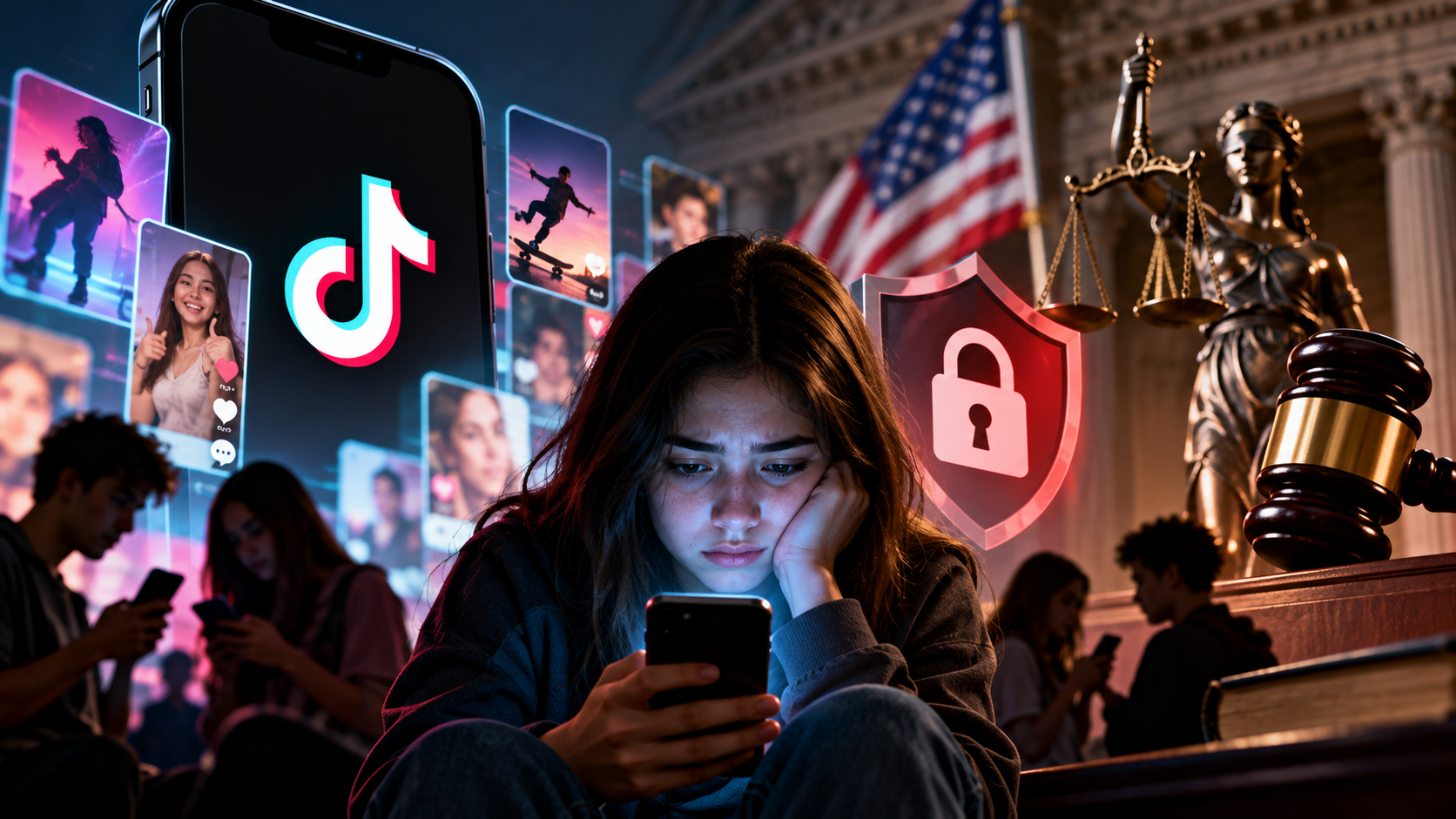
New York Attorney General Letitia James expands child-safety lawsuit, alleging TikTok withheld a safety feature from 10% of US users in a 2021 experiment involving about 15 million people
TikTok is facing fresh allegations in the United States over its approach to protecting young users, after New York Attorney General Letitia James accused the social-media platform of conducting secret experiments that allegedly left some users with fewer safety protections.
The new allegations were added to New York's existing child-safety lawsuit against TikTok. They centre on a 2021 algorithmic test in which the company allegedly withheld a newly developed safety feature from around 10 per cent of US users to determine whether the feature affected the amount of time people spent on the platform.
According to the allegations, the experiment involved approximately 15 million US users, including teenagers.
New York Expands Existing Child-Safety Lawsuit
The latest claims were based on information from a confidential TikTok document that became part of the legal proceedings.
James alleged that TikTok's decision to exclude a portion of users from the safety feature meant those users were exposed to an experience that was potentially less safe by design.
The amended lawsuit also states that a teenager who later died by suicide was among the users who did not receive the safety features being tested.
The allegation is part of a wider legal challenge concerning how social-media platforms design, test and operate products used by children and teenagers. The lawsuit does not by itself establish that TikTok's experiment caused the teenager's death.
TikTok Defends Platform Testing
TikTok has acknowledged that it conducts experiments involving portions of its platform traffic, but rejected the suggestion that such testing makes the platform less safe.
In a court filing, the company said some tests can involve users continuing to receive the original version of a product or feature while another group receives a modified experience.
The company argued that such testing is part of the normal process of developing and evaluating new products and features.
TikTok maintains that it continuously makes improvements to its platform and uses real-world testing to understand how new features perform before wider implementation.
Focus Turns to Algorithmic Experiments
The case highlights growing scrutiny of A/B testing and other algorithmic experiments conducted by major technology platforms.
Technology companies routinely divide users into groups to compare different versions of products, recommendation systems and safety features. Such experiments can help companies determine whether a change improves user experience or changes engagement.
However, the legal and ethical questions become more complicated when the feature being tested relates directly to user safety, particularly when children and teenagers are involved.
Regulators and lawmakers are increasingly examining whether platforms should apply stronger safeguards when conducting experiments involving minors.
Youth Mental Health Remains a Major Legal Issue
New York is among more than a dozen US states that have brought legal action against TikTok over allegations that its platform can harm young users' mental health and that the company has misrepresented aspects of its safety practices.
The lawsuits form part of a much broader legal campaign targeting the business practices of major social-media companies.
State attorneys general, individual users and school districts have filed thousands of cases involving allegations concerning youth safety, addictive platform design and the impact of social-media use on children.
Many of these cases have been consolidated into multidistrict proceedings, although some state-level lawsuits continue separately.
TikTok Faces Pressure From Other Settlements
TikTok's legal exposure has increased as other major technology companies have reached settlements involving similar youth-safety allegations.
In September, TikTok agreed to pay up to $300 million to resolve a comparable case in Alabama, while several other state cases remain pending.
The company is therefore facing pressure on multiple fronts as states continue to pursue claims concerning the design and operation of its platform.
Meta Settlement Raises the Stakes
The legal environment became even more significant after Meta Platforms reached a settlement agreement with nearly every US state over youth-safety issues.
Under the agreement, Meta committed to changes in how its platforms operate and agreed to pay as much as $18 billion.
An unusual element of the settlement links part of Meta's future payments to actions by other social-media companies.
Around $5.3 billion of Meta's payout over the next decade is reportedly dependent on whether TikTok and Snap implement comparable platform changes and make similar contributions towards state initiatives designed to support children.
The structure increases the pressure on competing social-media platforms to demonstrate that they are taking youth safety seriously.
Regulatory Scrutiny Could Change Platform Design
The lawsuits could have consequences extending beyond financial settlements.
If courts or regulators impose new requirements, social-media companies may need to change how recommendation algorithms operate, how teenagers access certain features and how safety tools are introduced and tested.
Companies could also face greater scrutiny over internal research and product-testing practices.
For TikTok, the latest allegations could therefore increase both legal and compliance costs while requiring the company to reassess how safety-related features are tested before being rolled out across its user base.
The Business Impact Could Be Significant
The legal challenges represent a growing risk for social-media companies because youth engagement is an important part of their user ecosystems.
Stricter restrictions could affect engagement, advertising exposure and the way platforms optimise recommendation systems.
At the same time, companies that fail to address safety concerns could face potentially larger financial penalties, regulatory restrictions and reputational damage.
Investors will therefore be watching whether the latest lawsuits result in additional settlements, operational changes or new regulatory standards across the industry.
Social-Media Safety Becomes a Global Business Issue
The controversy illustrates how questions around online safety have moved beyond technology and into corporate governance, regulation and financial risk.
Social-media platforms are increasingly expected to demonstrate that their algorithms and product-development practices account for the risks faced by younger users.
The outcome of the US litigation could influence how companies design future safety systems and conduct user experiments, particularly where minors are involved.
Outlook
TikTok's latest legal challenge highlights the growing scrutiny facing social-media companies over youth safety and algorithmic design.
The central issue will be whether courts accept the argument that withholding a safety feature during an experiment constituted an unacceptable reduction in protection for users, or whether TikTok's testing practices are viewed as a standard part of technology development.
For investors, the case represents another layer of regulatory and litigation risk for the global social-media industry. Potential settlements, mandated product changes and higher compliance costs could affect profitability, while stricter safety standards could reshape the way platforms compete for young users.
With TikTok, Meta, Snap and YouTube facing thousands of related lawsuits, youth safety is increasingly becoming a material business and regulatory issue rather than simply a reputational concern.