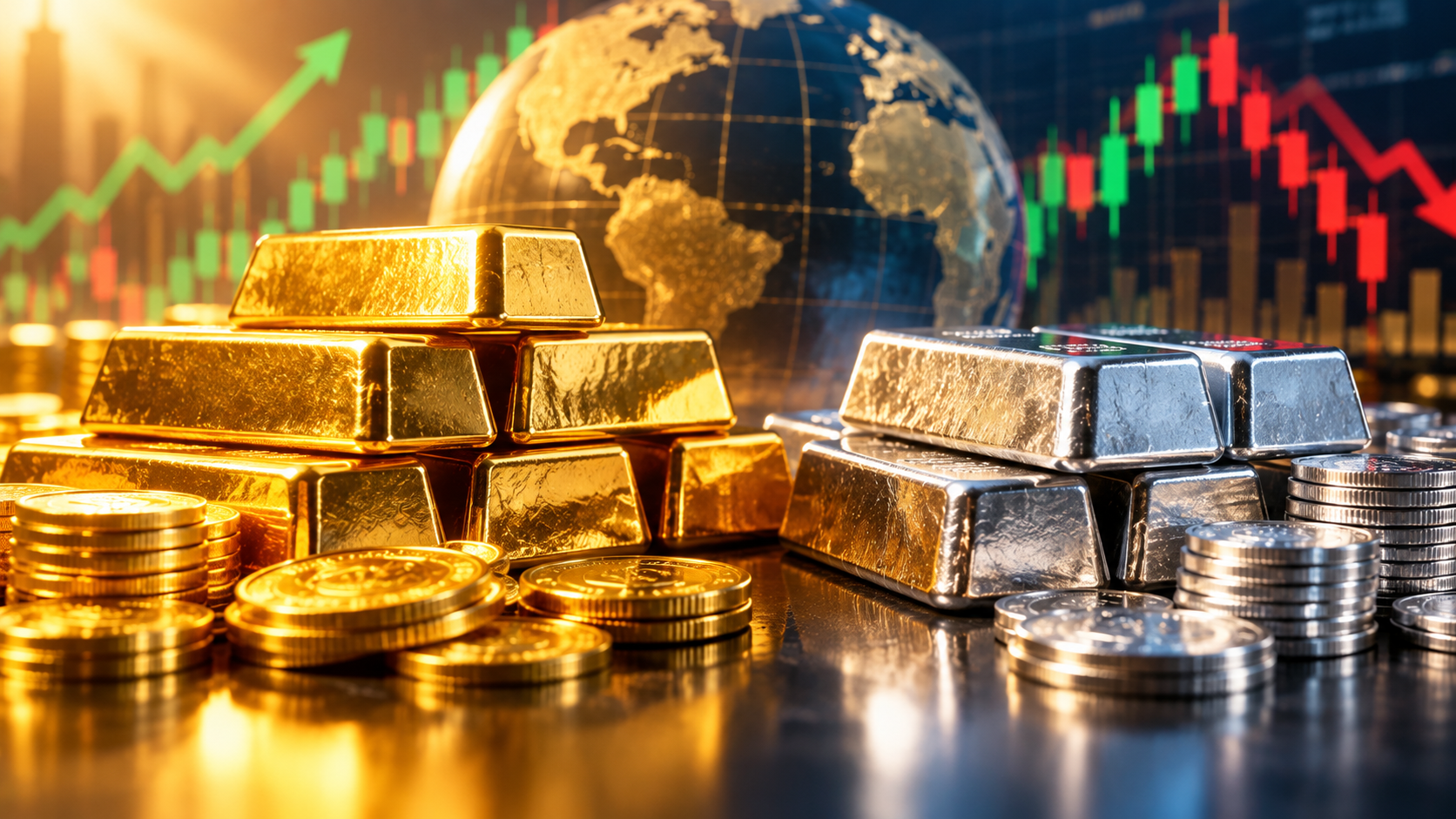
Gold Trades Near ₹1.48 Lakh per 10 Grams on MCX, While Silver Hovers Around ₹2.19 Lakh per Kg; Technical Indicators Signal Selling Pressure in Both Metals
Gold and silver prices witnessed divergent movements on Wednesday, October 14, 2026, as gold futures edged higher while silver futures remained under pressure in domestic and international markets. On the Multi Commodity Exchange (MCX), gold traded around ₹1.48 lakh per 10 grams, whereas silver hovered near ₹2.19 lakh per kilogram. In the international market, gold futures on COMEX traded close to $4,188 per ounce, while silver remained around $59.49 per ounce.
The contrasting performance highlights the different trading dynamics in the precious metals market. Although gold attracted modest buying interest during early trade, technical indicators pointed towards continued selling pressure. Silver also faced weakness, with rising open interest alongside declining prices suggesting that traders were building fresh short positions.
Investors are closely monitoring technical levels, movements in the US dollar, interest-rate expectations and broader economic developments to assess the near-term direction of precious metals.
Gold Futures Edge Higher on MCX
Gold futures opened higher on Wednesday, with the benchmark December contract on MCX opening at ₹1,48,631 per 10 grams, up ₹181 from its previous close of ₹1,48,450.
However, the initial gains moderated during the session. At the time of the reported market update, the contract was trading at ₹1,48,480, up ₹30 from the previous close.
Despite the modest recovery, the metal remained below its earlier peak of ₹1,80,779 per 10 grams recorded this year, according to the report.
The limited upside suggests that buyers are approaching the market cautiously, particularly as technical indicators point towards selling pressure. Market participants will look for sustained buying above immediate resistance levels before assessing whether gold can establish a stronger recovery.
For domestic investors, international gold prices, currency movements and local market premiums can all influence the price of bullion. Consequently, changes in global futures prices may not translate proportionately into domestic retail prices.
International Gold Prices Remain Firm
In the international market, COMEX gold futures opened at $4,184.20 per ounce, compared with the previous close of $4,177.30. The contract subsequently traded at approximately $4,187.80 per ounce, gaining around $10.50 from the previous close.
Gold had reached a reported high of $5,586.20 per ounce earlier in the year. The gap between that peak and current levels highlights the substantial price fluctuations witnessed in the bullion market.
The direction of international gold prices will depend partly on expectations regarding US monetary policy, movements in Treasury yields, the strength of the dollar and demand for safe-haven assets.
Gold generally benefits when investors seek protection against economic or geopolitical uncertainty. However, higher interest rates and rising real yields can increase the opportunity cost of holding a non-yielding asset, potentially limiting its upside.
Investors should therefore distinguish between short-term price recoveries and a sustained change in the broader trend.
Silver Futures Decline on MCX
Silver futures remained weaker than gold during early trade. The benchmark December silver contract on MCX opened at ₹2,19,001 per kilogram, down ₹216 from its previous close of ₹2,19,217.
At the time of the reported update, silver was trading at ₹2,18,991 per kilogram, representing a decline of ₹226.
Silver had reached a reported high of ₹4,20,048 per kilogram earlier this year, reflecting the significant volatility in the domestic silver market.
Unlike gold, silver has substantial industrial applications in areas such as solar energy, electronics, electrical equipment and other manufacturing activities. Its price is therefore influenced not only by investment demand and monetary policy expectations but also by industrial demand and economic growth prospects.
Concerns over global manufacturing activity, changes in investor positioning and fluctuations in the dollar can contribute to short-term volatility in silver futures.
For traders, the ability of silver to hold above its immediate support levels will be important in determining whether the current weakness remains limited or develops into a deeper correction.
COMEX Silver Trades Near $59.50 per Ounce
International silver futures also remained under pressure. COMEX silver opened at $59.41 per ounce, compared with the previous closing price of $59.52.
The contract was subsequently trading at approximately $59.49 per ounce, down $0.03 from the previous close.
Silver had reached a reported high of $121.79 per ounce earlier in the year. The substantial difference between the peak and current price indicates that the metal has experienced considerable price swings.
The latest movement suggests that buying interest remains cautious. Market participants will monitor industrial demand expectations, changes in speculative positions and the relative performance of gold to determine whether silver can regain momentum.
A sustained recovery would require stronger buying interest and an improvement in price action around important technical resistance levels. Conversely, a breakdown below support could encourage further selling by short-term traders.
Gold Technical Outlook: Support at ₹1,47,820
According to Ajay Kedia, Director of Kedia Advisory, technical selling pressure was building again in gold. Open interest increased by 2.83 per cent to 17,548 contracts as prices declined, a combination that can indicate the addition of fresh short positions.
The following levels were identified for the domestic gold futures contract:
-
Immediate support: ₹1,47,820 per 10 grams
-
Next support: ₹1,47,190 per 10 grams
-
Immediate resistance: ₹1,49,535 per 10 grams
-
Higher resistance target: ₹1,50,620 per 10 grams
Gold's ability to sustain above the support zone could help limit further declines. However, a break below ₹1,47,820 may expose the contract to the next support near ₹1,47,190.
On the upside, a sustained move above ₹1,49,535 could improve the technical outlook and open the way towards ₹1,50,620.
These levels are technical reference points rather than guaranteed price targets. Traders should also consider volatility, trading volumes and broader market developments before taking positions.
Silver Technical Outlook: Fresh Short Positions Indicate Caution
Silver's technical indicators also pointed towards continued selling pressure. Open interest increased by 8.74 per cent to 19,291 contracts as prices declined, suggesting that fresh short positions may have been established.
The key domestic silver futures levels are:
-
Immediate support: ₹2,17,460 per kilogram
-
Next support: ₹2,15,695 per kilogram
-
Immediate resistance: ₹2,22,280 per kilogram
-
Higher resistance target: ₹2,25,335 per kilogram
A sustained move below ₹2,17,460 could increase the risk of a decline towards ₹2,15,695. On the other hand, a recovery above ₹2,22,280 may improve the near-term outlook and bring ₹2,25,335 into focus.
The rise in open interest alongside falling prices is consistent with fresh short selling, although open-interest data alone cannot establish traders' intentions with certainty.
Silver traders should pay particular attention to price behaviour around support and resistance, as the metal can experience sharp movements during periods of changing industrial-demand expectations or shifts in global risk sentiment.
What Is Driving the Divergence Between Gold and Silver?
The difference in performance between gold and silver reflects their distinct roles in the global commodities market.
Gold is primarily influenced by investment demand, central-bank purchases, interest-rate expectations, currency movements and safe-haven flows. Silver, meanwhile, combines precious-metal characteristics with significant industrial exposure.
This difference can lead the two metals to move in opposite directions over short periods. Gold may receive support from defensive investment demand even when silver faces pressure from concerns about industrial activity or speculative positioning.
The US dollar and bond yields remain important variables for both metals. A stronger dollar can make dollar-denominated commodities more expensive for buyers using other currencies, while rising real yields can reduce the relative attractiveness of non-interest-bearing assets.
Domestic prices are also influenced by the rupee-dollar exchange rate, import-related costs and local market conditions. Indian investors should therefore avoid relying exclusively on international futures prices when assessing domestic bullion valuations.
Market Outlook: Gold Shows Relative Resilience, but Technical Caution Remains
Gold and silver are displaying a mixed trend, with gold registering modest gains while silver continues to face selling pressure. However, the increase in open interest alongside price weakness in both metals suggests that traders remain cautious despite gold's early recovery.
For gold, ₹1,47,820 and ₹1,47,190 are the key support levels to monitor, while ₹1,49,535 and ₹1,50,620 represent important upside reference points. For silver, the immediate support zone lies around ₹2,17,460–₹2,15,695, while resistance is positioned at ₹2,22,280 and ₹2,25,335.
A sustained breakout above resistance could improve the near-term outlook, whereas a decisive move below support may reinforce selling pressure.
Investors with a long-term allocation to precious metals should consider their investment objectives, portfolio diversification needs and risk tolerance rather than reacting solely to daily price movements. Short-term traders, meanwhile, should account for the possibility of sharp reversals and use disciplined risk management.
Overall, gold is showing relative resilience compared with silver, but neither metal has yet demonstrated an unambiguous bullish signal. The next directional move will depend on price action around key technical levels, global interest-rate expectations, dollar movements and broader investment demand.