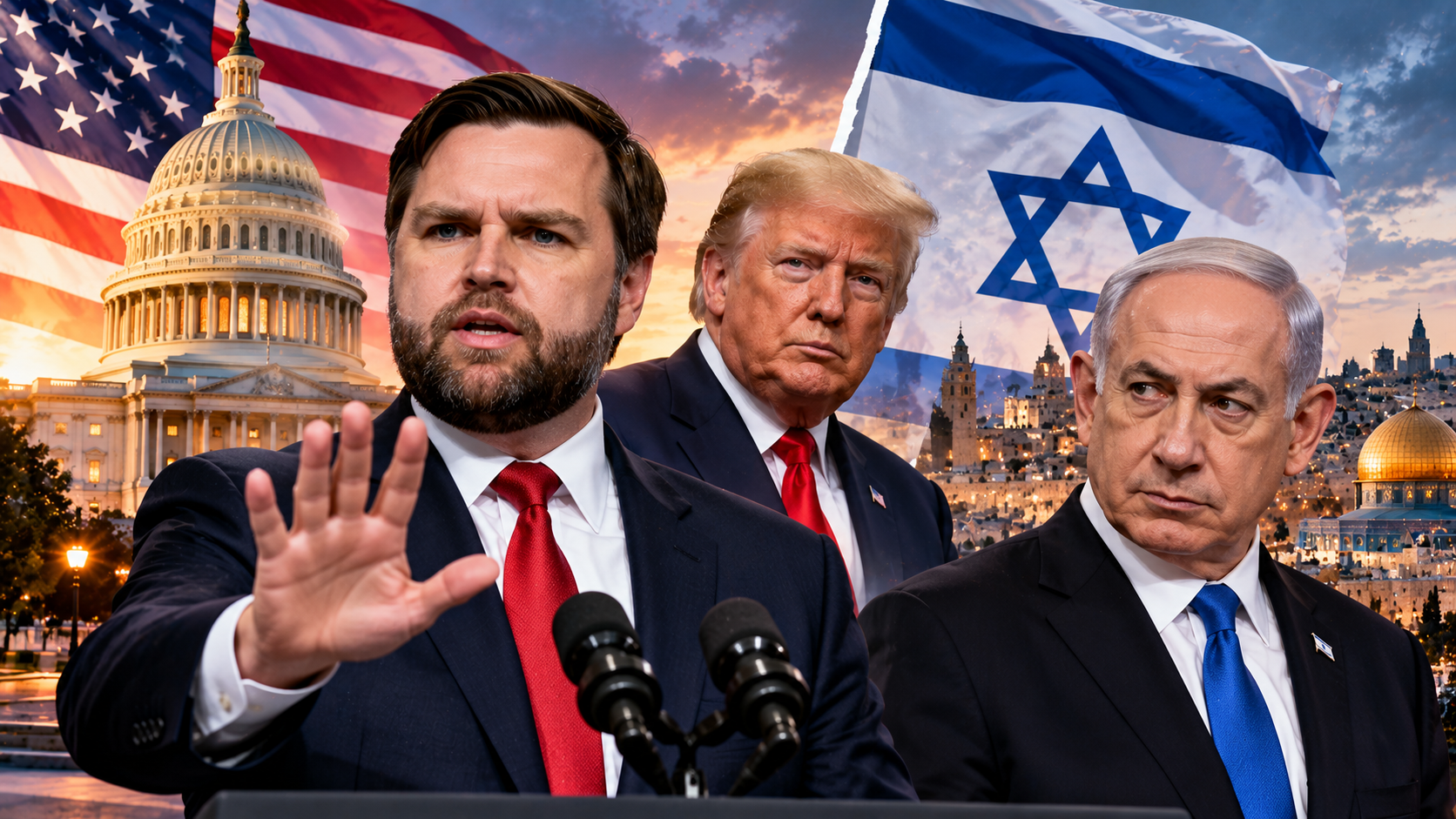
US Vice President JD Vance has declined to back Israeli Prime Minister Benjamin Netanyahu’s re-election campaign, a day after President Donald Trump endorsed the Israeli leader. Vance’s decision highlights the administration’s political sensitivities surrounding Israel, domestic electoral priorities and divisions within Republican ranks.
Vance Draws a Line Between US and Israeli Elections
US Vice President JD Vance has declined to endorse Israeli Prime Minister Benjamin Netanyahu for re-election, distancing himself from President Donald Trump’s public backing of the Israeli leader.
Speaking in an interview with journalist Mark Halperin on Monday, Vance said Trump’s endorsement carried exceptional political influence but stressed that his own priority was supporting American candidates ahead of the upcoming US midterm elections.
Vance said he endorsed candidates in the United States and was concentrating on the midterms rather than becoming involved in Israeli elections.
His comments came a day after Trump endorsed Netanyahu, who faces a politically challenging re-election contest. The contrast between the two positions has drawn attention to how senior figures in the US administration are approaching Israel’s domestic politics.
Vance’s decision does not necessarily indicate a formal disagreement with Trump. Instead, his remarks suggest a preference to keep his political activities focused on domestic electoral priorities while avoiding a direct commitment to a foreign leader’s campaign.
Trump’s Endorsement Places Israel at the Centre of Political Debate
Trump’s endorsement of Netanyahu comes at a sensitive time for US-Israel relations, with the alliance facing scrutiny over regional security, the conflict involving Iran and disagreements about the direction of Middle East policy.
Netanyahu has acknowledged Trump’s support and highlighted the threat posed by Iran as a key security concern for Israel.
For the US administration, the relationship with Israel also has domestic political significance. Support for Israel remains an important issue for sections of the Republican Party, including conservative voters and organisations that advocate a strong bilateral relationship.
However, the issue has also exposed differences within conservative circles over foreign policy, the limits of US involvement in overseas conflicts and the administration’s approach to negotiations in the Middle East.
Vance’s decision to avoid endorsing Netanyahu allows him to maintain his stated focus on US elections without publicly challenging the president’s position.
Midterm Elections Take Priority for Vance
Vance made the comments while travelling to campaign for Republican Senate nominee Michael Whatley in North Carolina.
The US midterm elections are an important political test for the governing party, determining control of Congress and influencing the administration’s ability to advance its legislative agenda.
Republicans are seeking to strengthen their electoral position while navigating disagreements over foreign policy, economic priorities and the party’s broader political identity.
By concentrating on American candidates, Vance is signalling that his immediate political responsibilities lie with Republican electoral efforts rather than campaigns in other countries.
The approach also reflects the distinction between Trump's highly personalised style of international political engagement and Vance’s stated focus on domestic campaigning.
Vance’s Previous Support for Viktor Orban Draws Attention
Vance has previously campaigned for a foreign political leader. Last spring, he supported then-Hungarian Prime Minister Viktor Orban ahead of Hungary’s parliamentary election, in which Orban’s party subsequently lost.
That episode provides a point of comparison with Vance’s current decision not to endorse Netanyahu.
Although Vance has demonstrated a willingness to participate in overseas political campaigns, his latest remarks suggest he does not intend to do so in Israel’s election at this stage.
The difference may also reflect the political circumstances surrounding each contest and the importance of maintaining a clear focus on the US midterms.
Vance’s position leaves Trump as the more prominent administration figure publicly associated with Netanyahu’s re-election bid.
Questions Over Vance’s Position on Israel and Antisemitism
Vance’s comments come amid continuing scrutiny from some Jewish Republicans over his approach to Jewish Americans and the US alliance with Israel.
Last month, he addressed the Republican Jewish Coalition, a prominent Republican organisation that advocates a strong relationship between Washington and Jerusalem and opposes antisemitism.
According to the report, Vance left a positive impression on the audience but did not disavow conservative podcast host Tucker Carlson. Carlson had faced criticism after interviewing Nick Fuentes, who has been widely identified as an antisemite.
The episode has contributed to broader questions within Republican circles about the boundaries of political alliances, the treatment of antisemitism and the relationship between conservative media figures and party leadership.
These debates are particularly sensitive ahead of the midterm elections, as both major political parties seek to appeal to voters concerned about antisemitism, Israel’s security and the future of US foreign policy.
Differences Over Iran and the Future of US-Israel Policy
Vance’s position on Netanyahu must also be viewed against earlier disagreements over the direction of Middle East policy.
In June, Vance criticised elements of Israel’s government for opposing Trump’s efforts to resolve the conflict with Iran. In July, he argued that some figures within the Israeli government were attempting to influence American public opinion in ways that could undermine negotiations.
Those comments highlighted tensions over the balance between supporting Israel’s security and determining the extent of US involvement in regional conflicts.
The administration’s approach involves several competing considerations: protecting US interests, maintaining strategic partnerships, responding to regional security threats and determining whether diplomatic negotiations can prevent further escalation.
Vance’s refusal to endorse Netanyahu does not, by itself, establish a change in US policy towards Israel. However, it illustrates how electoral considerations and differing views about foreign policy can influence the public positions of senior American political figures.
Market and Geopolitical Implications
The immediate significance of Vance’s comments is political rather than financial. Nevertheless, developments involving US-Israel relations and Iran can have broader implications for international markets if they affect regional stability, energy supplies or expectations about diplomatic negotiations.
Any escalation in tensions involving Iran and Israel could increase uncertainty across the Middle East, potentially influencing crude oil prices, shipping risks and investor sentiment. Conversely, progress towards diplomatic arrangements could help reduce geopolitical risk premiums.
Investors should distinguish between political statements and concrete policy decisions. Vance’s refusal to endorse Netanyahu does not itself signal a change in US military, diplomatic or economic policy.
The market impact will depend more directly on developments affecting regional security, sanctions, energy infrastructure and the prospects for negotiations.
Outlook: Domestic Politics and Foreign Policy Remain Interconnected
Vance’s decision to concentrate on the US midterms rather than endorse Netanyahu underscores the political sensitivity surrounding Israel within the Republican Party.
Trump has publicly backed the Israeli leader, while Vance has chosen not to participate in the re-election debate. The distinction allows the vice president to maintain his focus on domestic campaigning without explicitly challenging the president.
The issue also highlights wider discussions within Republican ranks about support for Israel, antisemitism, conservative media and the limits of American involvement in overseas conflicts.
For now, Vance’s comments represent a decision not to endorse a foreign leader, rather than a formal break with Trump or a confirmed shift in US policy towards Israel. The evolving relationship between domestic electoral calculations and Middle East diplomacy will remain an important factor in the political outlook as the US midterms approach.