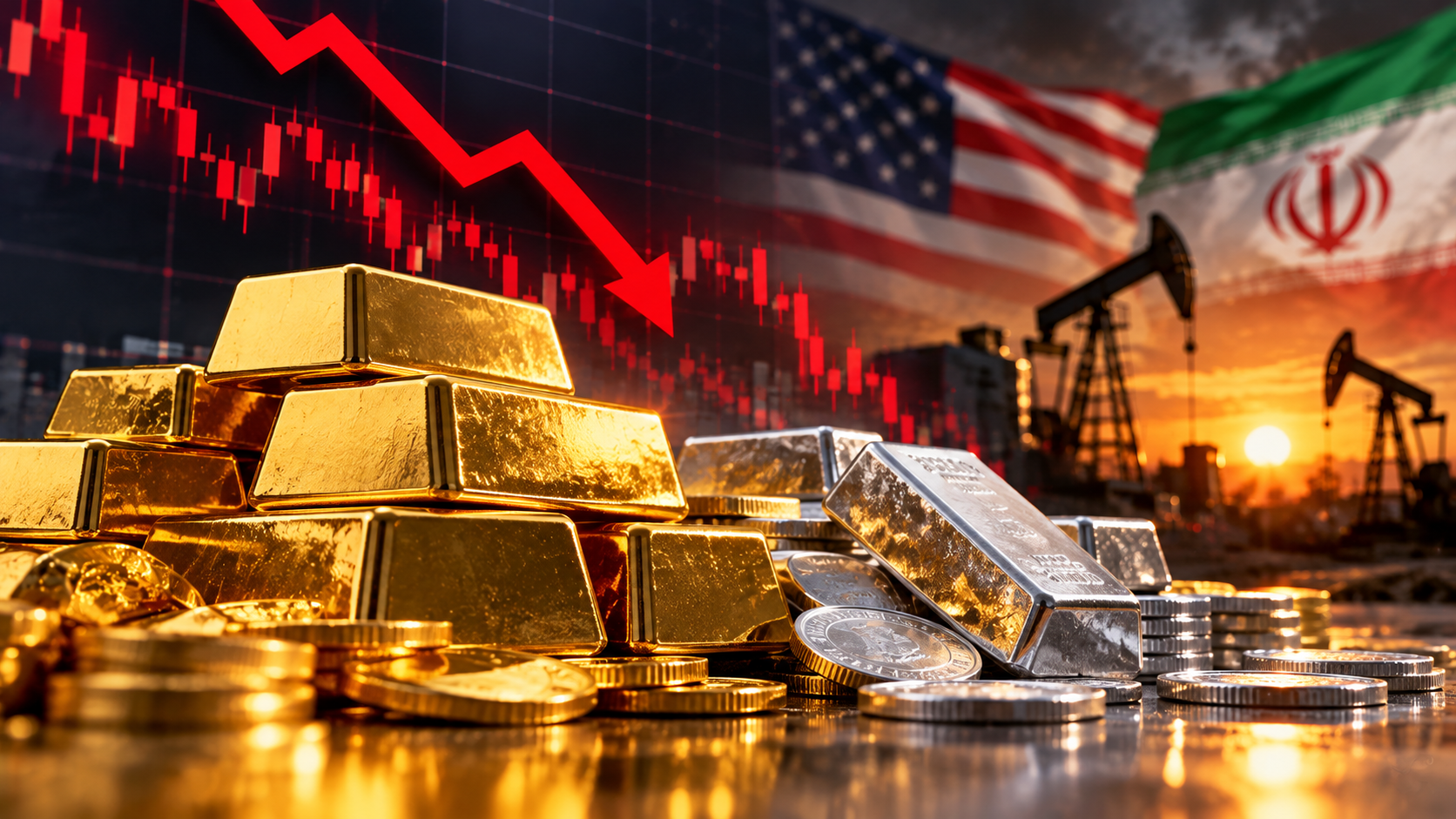
Silver Also Slides Sharply; Strong Dollar, Higher Oil Prices and Rising US Rate Expectations Pressure Precious Metals
Gold and silver prices came under heavy selling pressure on Monday, September 28, as elevated crude oil prices, a stronger US dollar and growing expectations of further Federal Reserve tightening reduced demand for non-yielding precious metals.
On the domestic market, MCX gold futures slipped below the ₹1.50 lakh-per-10-gram mark, while silver futures declined below ₹2.30 lakh per kg. In international markets, Comex gold fell towards $4,230 an ounce and silver dropped below $62.50 an ounce.
The sell-off came as uncertainty surrounding US-Iran diplomacy kept crude oil prices elevated. Brent crude briefly moved above $106 a barrel, adding to concerns that prolonged energy-price pressure could keep inflation elevated and encourage tighter monetary policy.
MCX Gold Breaks Below ₹1.50 Lakh
The benchmark October gold contract on the Multi Commodity Exchange opened ₹751 lower at ₹1,50,100 per 10 grams, against its previous close of ₹1,50,851.
Selling pressure intensified after the opening. The contract was trading around ₹1,48,100, down ₹2,781 from the previous close at the time of the reported update.
The move places gold below a psychologically important ₹1.50 lakh level and extends the correction from its record levels earlier in the year.
Moneycontrol's September 28 market update also showed domestic and international gold prices under pressure, with spot gold declining more than 1.6 per cent in early trade.
Silver Falls Below ₹2.30 Lakh
Silver witnessed an even sharper decline.
The benchmark December silver contract on MCX opened ₹2,396 lower at ₹2,32,300 per kg, compared with the previous close of ₹2,34,696.
Selling intensified during the session, with the contract trading around ₹2,28,550, down ₹6,146.
Silver had previously touched a record high of ₹4,20,048 per kg earlier this year, highlighting the magnitude of the correction from its peak.
The international market also reflected the weakness, with Comex silver falling below $62.50 an ounce.
Comex Gold Drops to Seven-Week Low
Gold prices were under pressure across global markets.
Comex gold opened around $4,315 an ounce against the previous close of $4,321.20 and subsequently fell to approximately $4,224.60.
Reuters reported that spot gold was down about 2.1 per cent at $4,198.10 an ounce early Monday, putting the metal on track for its biggest daily decline since September 1. US gold futures were also down about 2.1 per cent.
The decline represents a significant reversal from gold's record levels earlier in the year.
Strong Dollar Adds Pressure on Bullion
One of the key factors weighing on gold is the strength of the US dollar.
Gold is internationally priced in dollars, so a stronger US currency can make bullion more expensive for buyers holding other currencies. This can reduce demand and increase downward pressure on prices.
The dollar has strengthened as markets have increasingly priced in a higher-for-longer US interest-rate environment. Reuters reported that the dollar index had reached a two-month high as investors reassessed the Federal Reserve's policy path.
The relationship between the dollar, Treasury yields and gold is therefore likely to remain an important driver for precious metals in the near term.
Rising Oil Prices Complicate the Gold Trade
Ordinarily, geopolitical tensions can support gold because investors often seek safe-haven assets during periods of uncertainty.
The current situation is more complicated.
The US-Iran standoff has pushed crude oil prices higher, increasing concerns about inflation. Higher energy costs can encourage central banks to maintain restrictive monetary policy for longer.
That has created a countervailing force for gold: while geopolitical uncertainty can support safe-haven demand, higher inflation expectations and rising interest-rate expectations can reduce the attractiveness of a non-interest-bearing asset.
Reuters reported that rising oil prices were strengthening expectations of further US rate hikes, contributing to Monday's sharp decline in gold.
Fed Rate Outlook Becomes a Major Market Driver
The Federal Reserve's monetary-policy outlook has become increasingly important for bullion prices.
Recent comments from Fed officials have highlighted persistent inflation risks. The Fed recently raised its target interest-rate range to 3.75–4.00 per cent, while some policymakers have indicated that additional tightening could be required if inflation remains elevated.
Higher interest rates generally increase the opportunity cost of holding assets such as gold and silver that do not generate interest income.
Consequently, every major US inflation, employment and economic-growth reading could trigger fresh moves in precious metals.
US-Iran Developments Remain Crucial
The geopolitical situation remains another major variable for commodity markets.
Uncertainty over a possible US-Iran agreement and the reopening of the Strait of Hormuz has contributed to sharp movements in crude oil. Moneycontrol reported that Brent crude rose to around $106 a barrel on Monday after doubts emerged over the prospects for a near-term truce.
Any meaningful improvement in diplomatic conditions could reduce the geopolitical premium in crude and potentially ease inflation concerns.
Conversely, renewed tensions could push oil higher and increase uncertainty around global monetary policy.
For gold, this creates a complicated backdrop in which safe-haven demand and higher-rate pressures can work in opposite directions.
Gold's Correction From Record Highs
Gold had reached exceptionally high levels earlier this year, with the contract mentioned in the report touching ₹1,80,779 per 10 grams on MCX.
Internationally, Comex gold had reached around $5,586 an ounce earlier this year.
The subsequent correction has therefore been substantial.
Moneycontrol reported that gold had already fallen significantly from its recent peak as the dollar strengthened and US Treasury yields climbed.
The current decline suggests that traders are increasingly focusing on monetary-policy expectations rather than treating geopolitical uncertainty alone as a reason to buy bullion.
Silver Faces Additional Volatility
Silver's price movement can be more volatile than gold because it has both investment and industrial demand.
In addition to changes in investor sentiment, silver prices can respond to expectations for manufacturing activity, industrial consumption and global economic growth.
The sharp decline below $62.50 an ounce and below ₹2.30 lakh per kg on MCX therefore reflects both the broader precious-metals sell-off and changing expectations about global monetary and economic conditions.
Silver's earlier peak of ₹4,20,048 per kg also leaves considerable room for volatility as traders reassess valuations.
Key Levels for Gold and Silver
According to the levels cited in the report, gold could trade within a range of approximately ₹1,49,505 to ₹1,52,685 per 10 grams during Monday's session.
For silver, the indicated trading range was ₹2,29,965 to ₹2,39,565 per kg.
These levels should be viewed as market reference points rather than assured price targets. The direction of crude oil, the US dollar, Treasury yields and geopolitical developments could cause prices to move outside these ranges.
What Investors Should Watch
The immediate focus for precious-metals investors is likely to remain on four major factors: crude oil prices, the US dollar, Treasury yields and expectations surrounding the Federal Reserve's next policy moves.
US economic data scheduled through the week could provide additional clues about inflation and employment conditions. Strong economic data combined with persistent inflation could reinforce expectations of higher interest rates, while weaker data could revive expectations of monetary easing.
Developments around US-Iran diplomacy and the Strait of Hormuz will also remain important because of their direct impact on energy prices.
For Indian investors, the rupee will add another layer to domestic bullion prices. Even if international gold prices decline, a weaker rupee can partially cushion the fall in MCX prices.
Market Outlook
Gold and silver are entering a highly volatile phase as two powerful forces compete for market attention. Geopolitical uncertainty and potential safe-haven demand can support precious metals, while elevated oil prices, a stronger dollar and expectations of further US rate hikes are creating significant downside pressure.
For gold, the ₹1.50 lakh level has become an important psychological reference after the October MCX contract slipped below it. The ₹1,49,505–₹1,52,685 zone cited by analysts provides a near-term framework for tracking price action.
Silver remains more volatile, with ₹2.30 lakh per kg emerging as an important level after the December contract moved below it.
The next major moves in precious metals are likely to depend on the interaction between US monetary policy, crude oil prices, dollar strength and developments in the US-Iran situation.