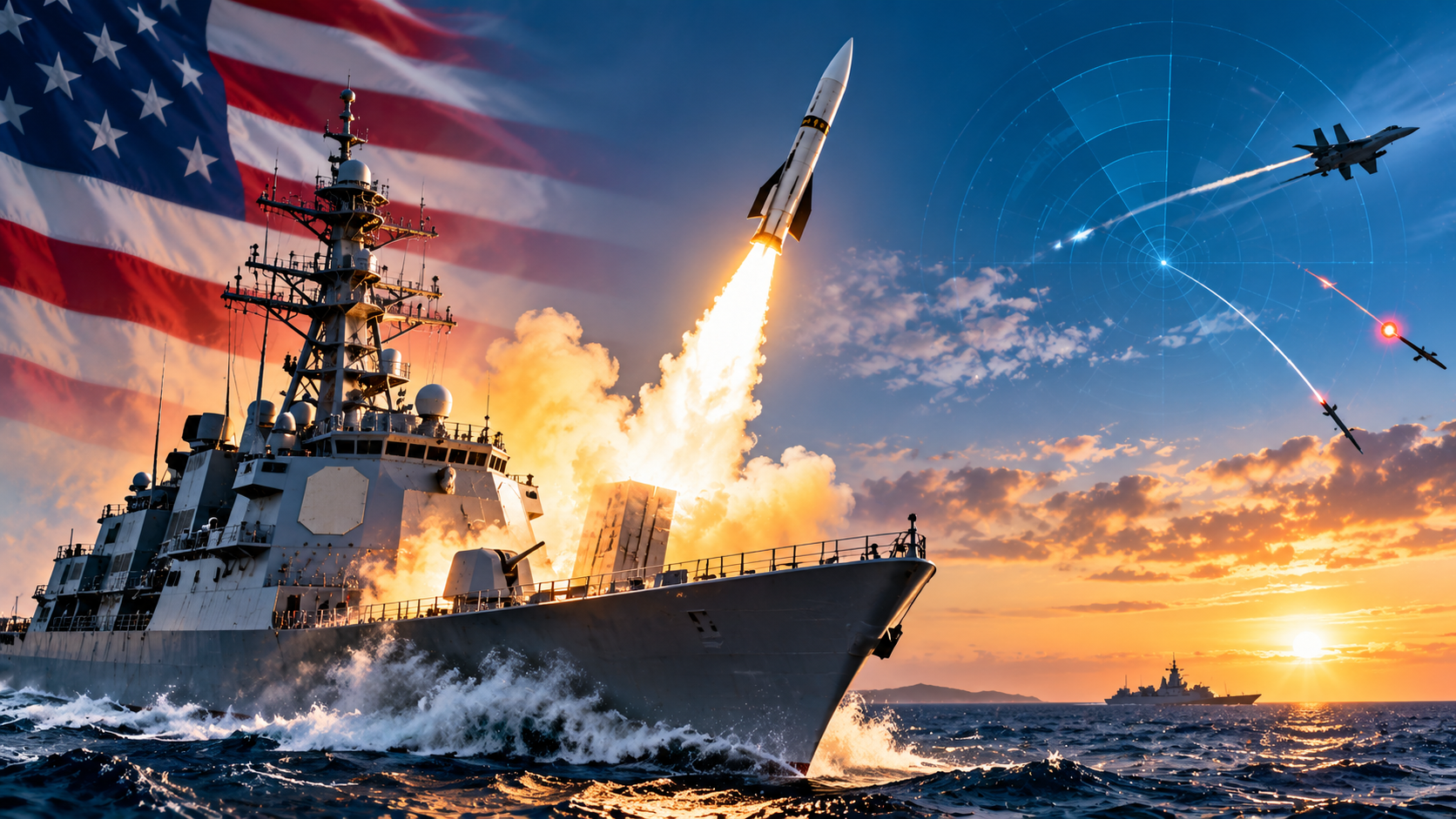
Five-year agreement, with an additional two-year option, aims to expand supplies of the versatile Standard Missile-6 as the United States moves to replenish weapons stockpiles and strengthen defence readiness.
RTX Corporation has secured a contract worth up to $24.4 billion from the US Navy to accelerate production of the Standard Missile-6 (SM-6), a key weapon used to counter aerial, ballistic-missile and maritime threats. The agreement marks another major step in Washington's efforts to expand domestic weapons manufacturing capacity and replenish military inventories amid heightened geopolitical tensions.
According to the US Navy's announcement, the contract runs for five years and includes an additional optional two-year period. The deal follows another major agreement awarded to RTX earlier in the week, valued at $20.7 billion, to double production of air-to-air missiles.
RTX shares rose less than 1% in after-hours trading in New York following the announcement.
$24.4 Billion Deal Targets Higher Missile Output
The latest contract is designed to increase the availability of SM-6 missiles and accelerate deliveries to the US Navy. The scale and duration of the agreement provide a longer-term framework for expanding production and meeting military procurement requirements.
The award also builds on five framework agreements RTX reached with the US Department of Defense in February. Those agreements were intended to increase manufacturing capacity and speed up deliveries of key weapons systems.
The latest contract follows Washington's broader push for defence manufacturers to increase output as military planners seek to replenish inventories drawn down during the war with Iran. US President Donald Trump has pressed major defence contractors to expand their production capabilities.
For manufacturers, sustained procurement commitments can help support investment in facilities, equipment, workforce capacity and supply chains.
Why the SM-6 Missile Is Strategically Important
The Standard Missile-6 is a multi-role missile designed to engage different types of threats. According to the report, it is the only missile in the US arsenal designed to intercept aircraft, high-altitude ballistic missiles and ships.
The weapon is a key component of the Aegis combat systems deployed on US Navy cruisers and destroyers. Its ability to address multiple threat categories makes it an important element of the Navy's layered defence capabilities.
Increasing SM-6 production could therefore help the Navy improve the availability of a weapon used across several operational requirements. However, the contract's ultimate impact will depend on how quickly manufacturing capacity expands and missiles can be delivered.
Pentagon Pushes Defence Industry to Expand Manufacturing
The RTX agreement forms part of a wider effort by the Pentagon to address production constraints affecting critical weapons systems.
Defence contractors have historically been cautious about committing substantial capital to additional manufacturing capacity without firm, long-term purchasing commitments from the military. Framework agreements and large procurement contracts are intended to reduce that uncertainty and encourage investment.
By offering greater visibility into future demand, such arrangements can help manufacturers plan production schedules and secure components from suppliers. They may also support efforts to reduce bottlenecks that can delay weapons deliveries.
The RTX contract demonstrates the scale of procurement commitments being considered as the US seeks to strengthen its defence industrial base.
Lockheed Martin and Northrop Grumman Also Expand Capacity
RTX is not the only major defence manufacturer pursuing higher production volumes. The report notes that the Pentagon has reached framework agreements with other companies, including Lockheed Martin.
In August, Northrop Grumman and Lockheed Martin announced two agreements aimed at expanding production capacity for key components used in interceptor missiles. The stated objective was to increase interceptor output by three to four times.
These initiatives indicate a broader focus on improving the manufacturing capacity required for advanced missile systems rather than relying solely on existing production lines.
Coordinating production across prime contractors and component suppliers will remain important because missile manufacturing depends on specialised parts, technical expertise and complex supply chains.
What the Contract Means for RTX
The $24.4 billion award strengthens RTX's position as a major supplier of advanced weapons to the US military and provides a substantial procurement commitment over several years.
The agreement may support longer-term production planning and help the company expand output of a strategically important missile system. Together with the separate $20.7 billion air-to-air missile agreement, it highlights the scale of current US defence procurement initiatives.
Nevertheless, the headline contract value should not automatically be interpreted as immediate revenue or profit. The timing of deliveries, production costs, contract execution and the exercise of the optional period will influence the financial contribution over time.
Investors will also be watching whether RTX can increase manufacturing capacity efficiently while meeting delivery schedules and maintaining the performance standards required for defence equipment.
Market Outlook: Defence Spending and Production Capacity in Focus
The latest contract highlights how geopolitical tensions and military inventory requirements are influencing defence procurement. Long-term agreements can provide manufacturers with greater demand visibility, while governments seek to address shortages and strengthen weapons availability.
For RTX, the key factors to monitor include the pace of SM-6 production, delivery execution, manufacturing investment and the financial terms associated with the contract. Developments in other defence programmes and supplier capacity will also shape the industry's production outlook.
Although the contract represents a significant procurement commitment, its eventual financial impact will depend on execution over the coming years. The broader defence sector's performance will similarly be influenced by government spending priorities, supply-chain readiness and the ability of manufacturers to convert orders into completed deliveries.