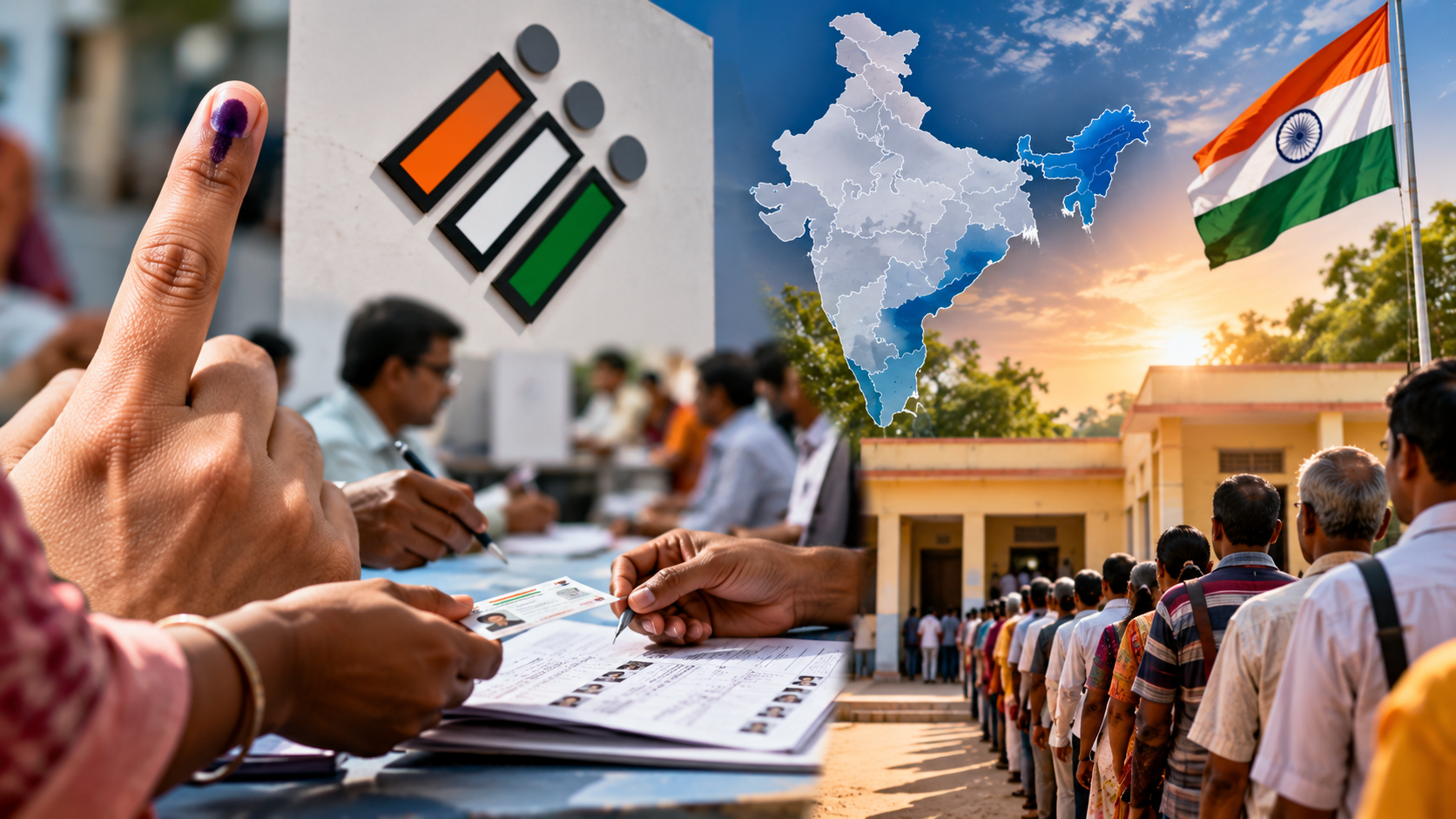
Election Commission directs states and Union Territories to compare electoral rolls before and after the Special Intensive Revision, identify eligible voters who may have been left out, and facilitate fresh enrolment through Form 6.
The Election Commission of India (ECI) has directed 20 states and Union Territories where the Special Intensive Revision (SIR) of electoral rolls has been completed to launch a special enrolment drive for eligible voters whose names may have been left out of the revised lists. The initiative aims to identify omissions, facilitate fresh registrations and ensure that eligible citizens have an opportunity to be included in the electoral rolls.
The directive comes amid controversy surrounding deletions during the SIR exercise and concerns about the number of voters missing from revised electoral lists. According to a report by The Indian Express cited by Business Standard, the Commission issued written instructions on September 29 and reiterated them during a video conference with state Chief Electoral Officers (CEOs) on Thursday.
Special Drive to Cover Left-Out and First-Time Voters
The ECI has instructed Chief Electoral Officers, District Election Officers and Electoral Registration Officers (EROs) in the states and UTs that have completed the SIR process to conduct a special enrolment campaign through the continuous updation mechanism.
The drive will focus on two groups: eligible voters whose names may have been omitted during the revision and young citizens registering as voters for the first time. Authorities have been asked to facilitate their applications using the prescribed Form 6.
The exercise is intended to provide an avenue for eligible individuals to seek inclusion in the electoral rolls even after the intensive revision has concluded. The Commission's instructions apply to the 20 states and Union Territories where the SIR process is already complete.
Form 6 to Be Used Without the Additional Declaration
A key element of the directive concerns the application process for new voter registrations. The ECI has instructed authorities to use the statutory Form 6 without an additional question introduced in the online application in July.
That question asked applicants whether they, or their parents, had been included in the electoral roll following the previous SIR. The online form had required applicants to answer the question before submitting their applications.
The September 29 communication clarified that the declaration would be limited to the SIR phase. Consequently, first-time voters and people seeking inclusion in states where the revision has been completed can use the regular Form 6 without that additional declaration.
The issue had also drawn attention after Election Commissioner Sukhbir Singh Sandhu described the addition as “unauthorised/illegal”, according to the report. The latest instruction clarifies the application procedure for the post-SIR enrolment drive.
States Asked to Compare Electoral Rolls Before and After SIR
Separately, the Commission has asked states to compare the electoral rolls prepared before the SIR exercise with the revised lists produced afterwards.
State authorities have been instructed to identify voters whose names were deleted and prepare lists to help determine whether any eligible electors may have been left out. Chief Electoral Officers have also been asked to seek assistance from political parties and their booth-level agents during this exercise.
Such comparisons can help officials identify cases requiring further examination and provide a basis for eligible voters to seek inclusion through the prescribed process. The instruction places additional emphasis on reviewing omissions alongside the broader revision of electoral rolls.
Maharashtra Issues Safeguards Against Hasty Deletions
While the SIR exercise is still under way in Maharashtra, the state's election authorities have directed officials not to remove voters' names without adequate scrutiny and an opportunity for the concerned individuals to respond.
A note issued by the Chief Electoral Officer's office on Thursday to officials handling Mumbai City and Mumbai Suburban districts states that voters should receive sufficient opportunity to submit the necessary documents. It also calls for a hearing and an appropriate order before a decision is taken to exclude a name.
The note emphasises that eligible voters should not remain excluded from the electoral rolls and that there should be no obstruction to their right to vote.
Electoral Registration Officers have been instructed to avoid hasty negative decisions and ensure that cases receive complete scrutiny. These safeguards are intended to provide procedural protection to voters whose eligibility or documentation is under examination.
Home Visits for Voters Facing Documentation Queries
The Maharashtra instructions also implement the Commission's September 26 decision concerning voters who have received notices because they could not be mapped to the relevant records or because officials identified logical discrepancies.
Under the arrangement described in the report, these voters do not need to appear personally for hearings in the specified circumstances. Instead, Booth Level Officers (BLOs) will visit their homes, collect the required documents and upload them for consideration by the ERO.
Voters who have already received hearing notices will be informed by telephone or WhatsApp that they do not need to attend in person. Special camps have also been scheduled for October to facilitate the process.
Where a case remains unresolved after a BLO's visit, the Maharashtra note provides an additional opportunity for the voter to submit documents. A hearing and an order must follow before the person's name is removed from the electoral roll.
What Eligible Voters Should Know
The latest directions highlight the importance of checking electoral registration details and following the official process where a name is missing or documentation is required.
Eligible citizens seeking fresh inclusion in states where SIR has been completed can apply through Form 6 under the procedure specified by the ECI. Voters who receive notices or whose records contain discrepancies should follow the instructions issued by the relevant election authorities and retain the documents submitted in support of their applications.
The special drive does not, by itself, establish that every deleted name represents an eligible voter who was wrongly excluded. The comparison of pre- and post-SIR lists, examination of individual cases and prescribed enrolment procedures are intended to help identify omissions and determine eligibility.
Outlook: Electoral Roll Accuracy and Voter Access in Focus
The ECI's latest instructions bring two aspects of electoral administration into focus: the revision of voter lists and the process for ensuring that eligible citizens can obtain registration. Comparing old and revised rolls, facilitating Form 6 applications and providing opportunities to submit documents may help authorities examine potential omissions.
The effectiveness of the exercise will depend on how consistently the directions are implemented, how accessible enrolment procedures are to eligible citizens and how carefully disputed cases are reviewed. The process will also remain under public scrutiny as states address concerns over deletions and work to maintain accurate electoral rolls.
For voters, the immediate priority is to verify their registration status and use the official enrolment or correction procedures applicable to their circumstances.