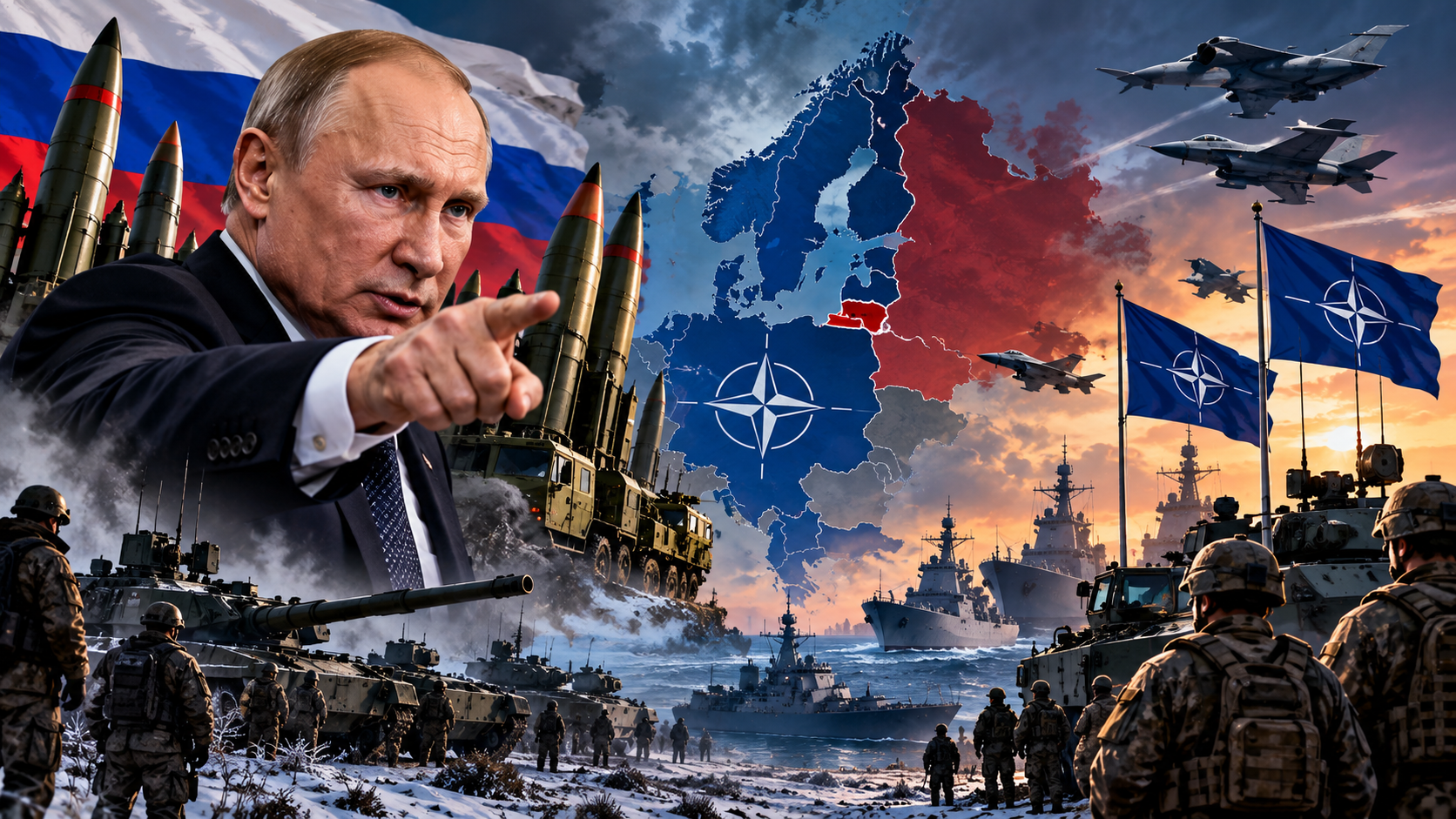
Russian President Vladimir Putin has warned that Moscow would consider using all available weapons, potentially including nuclear arms, if NATO attempts to attack or isolate Russian territory. The remarks come amid rising tensions between Russia and Western countries over military exercises, the war in Ukraine and security in the Baltic region.
Putin Issues Strong Warning to NATO
Russian President Vladimir Putin said on Thursday that Russia would respond to any direct attack on its territory with the weapons available to the country, escalating his warnings amid strained relations with NATO and European governments.
Speaking at a meeting of the Valdai Discussion Club, Putin rejected suggestions that Moscow was preparing to attack European countries. He argued that Western governments were increasing tensions by discussing preparations for a possible future conflict with Russia, conducting military exercises in the Baltic Sea region and taking action against Russian vessels.
Putin described Moscow’s position as a response to what he characterised as attempts to intimidate Russia. He said that, if a direct attack occurred, the use of the country’s full military arsenal would become a consideration.
Although his comments did not specify which weapons Russia would deploy in a particular scenario, the reference to its entire arsenal raised concerns because Russia possesses nuclear weapons. The statements represent a warning about a possible response to an attack, rather than confirmation that Moscow has decided to use nuclear arms.
Kaliningrad Emerges as a Key Flashpoint
The Russian president’s remarks followed warnings from Moscow concerning Kaliningrad, a Russian exclave located between NATO members Poland and Lithuania on the Baltic Sea.
Kaliningrad is strategically important because it hosts Russia’s principal Baltic naval base and other military installations. The region also has nuclear-capable Iskander missile systems, making it a significant part of Russia’s military posture in the area.
Russian diplomatic missions in Europe have alleged that NATO could be preparing an air and naval blockade of the exclave. Moscow has warned that an attempt to isolate Kaliningrad from the rest of Russia would be treated as a serious threat to its territorial integrity.
Russia’s Embassy in Ireland said Moscow would be prepared to use its entire arsenal, including nuclear weapons, if NATO countries attempted to cut off the region. These statements reflect Russia’s position; the supplied report does not establish that NATO is planning such a blockade.
NATO Rejects Russia’s Allegations
NATO has rejected the suggestion that its military activities are intended to threaten Russian territory. Alliance spokesperson Allison Hart said the organisation strongly condemned threats involving force and what she described as irresponsible nuclear rhetoric.
NATO reiterated that it is a defensive alliance and that its military exercises do not pose a threat to any part of Russia. Secretary-General Mark Rutte also urged Moscow to stop its war against Ukraine, which was in its fifth year at the time of the report.
The exchange illustrates the opposing positions of the two sides. Moscow says Western military activity is increasing the risk of confrontation, while NATO maintains that its activities are defensive and argues that Russia’s actions in Ukraine are a central source of regional insecurity.
Baltic Sea Military Exercises Add to Regional Tensions
NATO members have conducted military exercises in the Baltic region in recent months, with further drills planned for October, according to the report. The alliance also launched Operation Baltic Sentry last year to help protect critical undersea infrastructure, including communication cables and pipelines.
On August 18, NATO held an exercise over northern Poland and the Baltic region involving several aircraft, including a US EA-37B Compass Call designed for electronic warfare and communications disruption.
Such exercises are part of the wider military activity taking place in a region where NATO and Russian forces operate in close geographical proximity. While military drills can serve training and deterrence purposes, they can also become a source of suspicion when relations between opposing sides are already strained.
The strategic position of Kaliningrad adds to these sensitivities. Military planners on both sides pay close attention to the region because of its location, its naval facilities and its missile deployments.