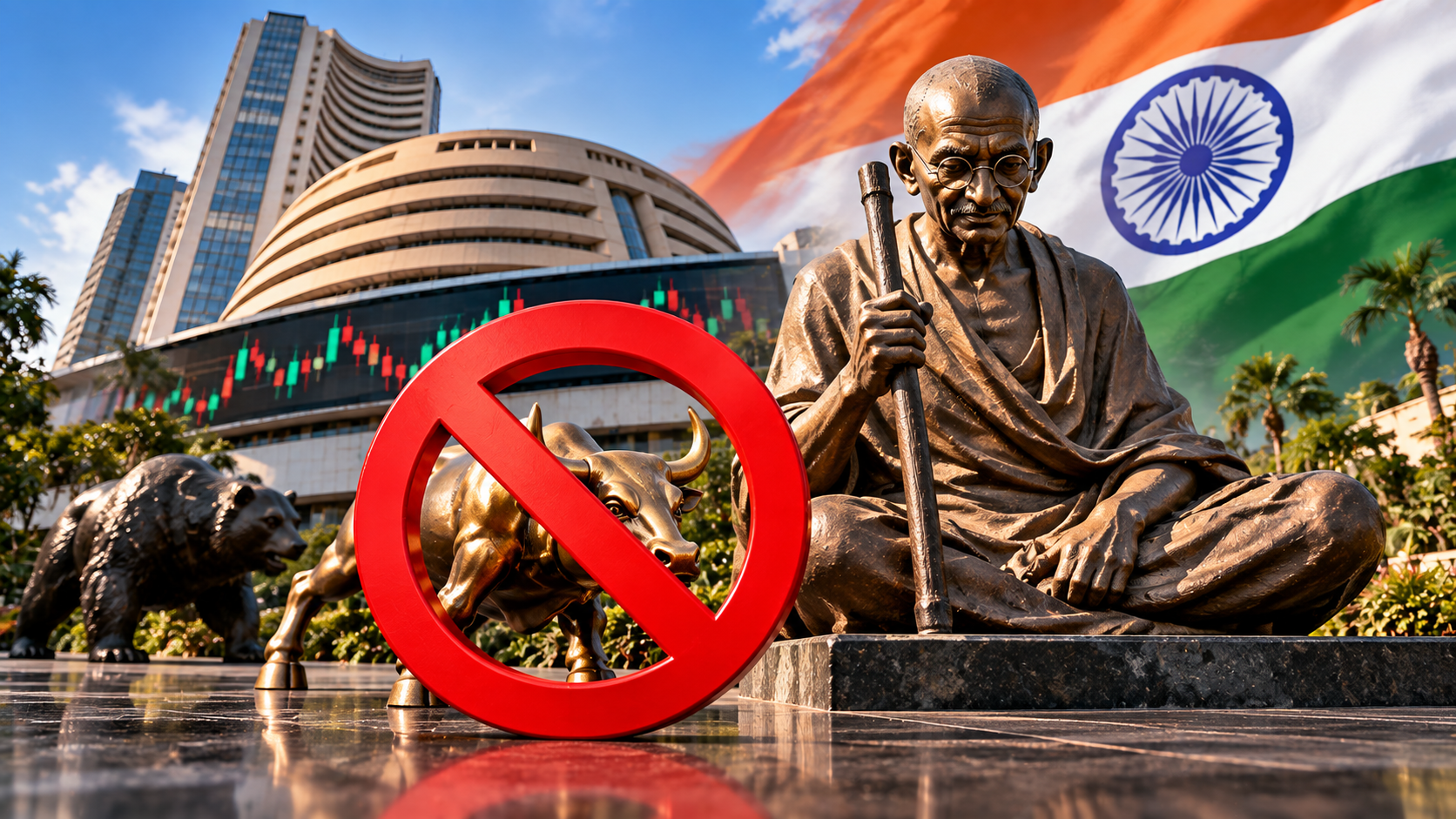
Equity, derivatives and other trading segments remain shut on October 2, while the October 3–4 weekend extends the market break to three consecutive days. Dussehra is the next scheduled trading holiday on October 20.
BSE and NSE Remain Closed on Gandhi Jayanti
India’s stock markets are closed on Friday, October 2, 2026, on account of Gandhi Jayanti, the national holiday commemorating Mahatma Gandhi’s birth anniversary. The Bombay Stock Exchange (BSE) and the National Stock Exchange (NSE) will not conduct regular trading across their equity, derivatives and securities lending and borrowing (SLB) segments.
Trading on the Multi Commodity Exchange (MCX) is also suspended for both the morning and evening sessions, according to the reported holiday schedule.
With Saturday, October 3, and Sunday, October 4, falling on the regular weekend closure, investors will have three consecutive days without trading activity on the major domestic exchanges.
When Will the Stock Market Reopen?
Trading on the BSE and NSE is scheduled to resume on Monday, October 5, 2026. Investors will need to wait until the next trading session to react to developments during the extended break.
The regular equity market session runs from 9:15 AM to 3:30 PM, Monday through Friday, with a pre-open session from 9:00 AM to 9:15 AM. These timings apply on normal trading days and are subject to exchange notifications.
October 20 Is the Next Scheduled Market Holiday
After Gandhi Jayanti, the next scheduled stock market holiday in October is October 20 for Dussehra, according to the holiday calendar cited in the report. Investors should check the official BSE and NSE calendars for any exchange-specific updates before planning transactions.
The reported remaining holidays for 2026 include Diwali-Balipratipada on November 10, Prakash Gurpurb on November 24 and Christmas on December 25.
Sensex and Nifty Extend Losing Streak Before the Holiday
The market holiday follows a weak session on Thursday, October 1, when benchmark indices declined for the fourth consecutive trading day amid foreign fund outflows, elevated bond yields and rising crude oil prices.
The BSE Sensex fell 570.59 points, or 0.79%, to close at 71,909.70. During the session, it dropped as much as 1,187.41 points, or 1.63%, to an intraday low of 71,292.88.
The NSE Nifty 50 declined 198.50 points, or 0.88%, to settle at 22,421.95. Selling pressure reflected concerns about overseas fund flows, borrowing costs and energy prices, which can influence inflation expectations and corporate expenses.
What the Extended Break Means for Investors
Although domestic exchanges are closed, developments in global markets, crude oil prices, currency movements and international bond yields may continue to influence sentiment. Any significant change in these factors over the weekend could shape trading activity when Indian markets reopen.
Investors should also distinguish between an exchange holiday and the availability of other financial services. Settlement schedules, banking services and commodity-market operations may follow separate calendars and should be verified with the relevant institution or exchange.
Market Outlook
The next trading session on October 5 will bring investors’ attention back to the domestic market after the three-day break. Given the recent declines in the Sensex and Nifty, market participants are likely to monitor foreign institutional investor activity, crude oil trends, global market cues and bond yields for direction.
The holiday itself does not indicate a change in market fundamentals. The opening direction on Monday will depend on fresh information and trading conditions when the exchanges resume operations. Investors may wish to review their exposure and risk limits before placing orders, particularly if international developments lead to a gap-up or gap-down opening.