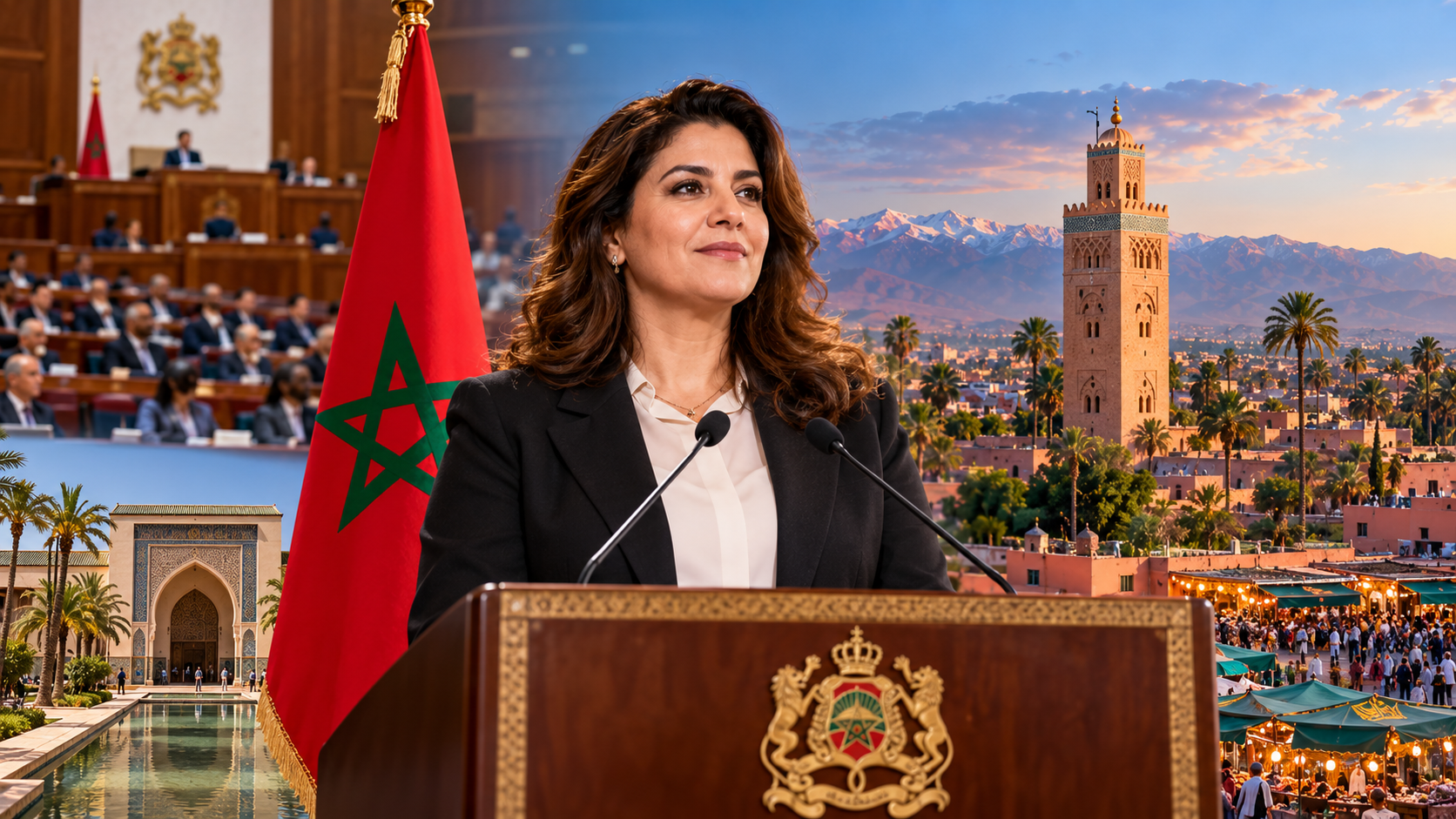
The veteran Marrakesh mayor and former urban planning minister has been tasked with forming Morocco’s next government after PAM emerged as the largest party in the 2026 parliamentary election
Morocco has entered a new political phase after King Mohammed VI appointed Fatima Ezzahra El Mansouri as the country’s first woman prime minister on September 29, 2026. The 50-year-old lawyer, former urban planning minister and long-serving mayor of Marrakesh has been tasked with forming a new government following the parliamentary elections held on September 23.
Her appointment follows the victory of the Authenticity and Modernity Party (PAM), which secured 97 of the 395 seats in Morocco’s House of Representatives. The result made PAM the largest party but left it well short of the 198 seats required for an outright majority. El Mansouri’s immediate political task is therefore to negotiate a coalition capable of supporting her government.
A Historic Appointment for Morocco
El Mansouri’s elevation marks the first time a woman has been appointed to lead the Moroccan government.
Following her meeting with King Mohammed VI, El Mansouri described the appointment as a historic moment and said it represented a source of pride for Moroccan women.
Her appointment also places Morocco among Arab countries that have appointed women to the highest levels of government. International reports differ in how they count women who have served as heads of government in the Arab world, depending on whether current and former officeholders are included, but El Mansouri is unquestionably the first woman to hold the position in Morocco.
Who Is Fatima Ezzahra El Mansouri?
Born in Marrakesh in 1976, El Mansouri trained as a lawyer and pursued higher education in France and the United States.
She obtained an advanced studies diploma from the University of Montpellier in France and also studied Anglo-Saxon business law at New York University.
Her political career began at the local level. In 2009, she became mayor of Marrakesh, making her the first woman to hold the city's mayoral position. She later returned to lead the Marrakesh municipal council following the 2021 elections and also built parliamentary experience through successive terms in the House of Representatives.
Her career has therefore combined municipal administration, parliamentary politics and national policymaking.
From Marrakesh Mayor to National Government
El Mansouri moved into the national government in October 2021, when she was appointed Minister of National Spatial Planning, Urban Development, Housing and Urban Policy.
During her tenure, her ministry was involved in several major policy areas, including Morocco’s direct housing-support programme, urban planning and spatial-development reforms, as well as efforts connected with rehousing people affected by the 2023 Al Haouz earthquake.
Her previous experience in urban development is particularly relevant as Morocco prepares for another period of large infrastructure and construction investment linked to the 2030 FIFA World Cup.
PAM Wins the Election but Needs Coalition Partners
The September 23 parliamentary election significantly reshaped Morocco’s political landscape.
PAM emerged as the largest party with 97 seats, followed by the National Rally of Independents (RNI) with 66 and the Istiqlal Party with 65. The Justice and Development Party (PJD) won 54 seats.
With 395 seats in the House of Representatives, a party needs 198 seats for an absolute majority. PAM therefore cannot govern alone and must assemble a coalition.
Coalition discussions have already begun. El Mansouri and PAM representatives have held talks with parties including RNI and Istiqlal, while discussions with other political groups are also underway.
The arithmetic gives PAM several potential routes to a parliamentary majority. PAM, RNI and Istiqlal together hold 228 seats, although the eventual composition of the governing coalition will depend on political negotiations and party decisions.
A Government Formed Amid Low Election Turnout
The political transition is also taking place against the backdrop of relatively low voter participation.
Turnout in the September election was around 38%, according to election reporting, substantially below the roughly 51% recorded in 2021. The election followed youth-led protests and public concerns surrounding employment, healthcare, education and living costs.
For the incoming government, this creates an important policy challenge: translating economic and infrastructure investment into improvements that are visible to households, particularly younger Moroccans.
Jobs, Inflation and Living Costs Among Key Challenges
Economic concerns are expected to be among the major issues facing El Mansouri’s administration.
The supplied report highlights unemployment, rising living costs and persistent social disparities, particularly among younger people.
PAM campaigned on an economic programme that included an annual growth target of around 5%, inflation of 2% and the creation of at least one million jobs over a five-year period. Reuters also reported that the incoming administration is expected to address youth dissatisfaction and pursue economic reforms.
Whether those targets can be achieved will depend on economic growth, private investment, labour-market conditions and the government's ability to convert large infrastructure projects into broader employment opportunities.
The 2030 World Cup Adds a Major Economic Dimension
One of the most important responsibilities of the new government will be overseeing the final stages of preparations for the 2030 FIFA World Cup.
Morocco is set to co-host the tournament with Spain and Portugal, creating significant requirements for stadiums, transport networks, hospitality, tourism infrastructure and urban development.
The World Cup is therefore not simply a sporting event for Morocco. It represents a major infrastructure and investment programme, with billions of dollars expected to be deployed across sectors associated with the tournament.
For El Mansouri, her background in urban planning and housing could become particularly relevant as the country moves toward the final phase of preparations.
Urban Development Could Become a Key Policy Area
El Mansouri's professional background gives the incoming government an experienced figure in urban development and housing policy.
Morocco's major cities are experiencing continued development, while infrastructure investment is expanding beyond traditional urban centres.
Her previous responsibilities included spatial planning, housing and urban policy, areas that intersect with transportation, construction, real estate and public infrastructure.
This could make urban development one of the areas closely watched during her tenure, particularly as Morocco balances large-scale infrastructure investment with affordability and access to housing.
What Comes Next for El Mansouri?
The immediate priority is government formation.
Because PAM does not control a parliamentary majority, El Mansouri must complete coalition negotiations and establish a government capable of securing legislative support.
Coalition discussions with RNI and Istiqlal are particularly important because their combined seats with PAM would provide a parliamentary majority. Other parties are also being consulted, while the PJD has indicated that it intends to remain in opposition.
Once the coalition structure is established, attention will shift from political negotiations to economic and social policy.
Morocco’s Next Five Years
El Mansouri inherits a government agenda shaped by several parallel priorities: employment generation, inflation management, social services, housing, infrastructure development and preparations for the 2030 World Cup.
Her background provides experience across municipal government, parliament and national urban-policy administration. However, the scale of the challenges facing the new administration extends well beyond any single policy area.
The government's ability to form a stable parliamentary coalition will determine how effectively it can translate its election programme into legislation and public policy.
Regional and Economic Outlook
Fatima Ezzahra El Mansouri’s appointment is a significant institutional milestone for Morocco and places a woman at the head of the country's government for the first time.
The next phase will be less about the symbolism of the appointment and more about government formation and policy execution. Coalition negotiations, employment, household purchasing power, public services, housing and infrastructure will be among the issues shaping the new administration's early agenda.
At the same time, the 2030 World Cup gives Morocco a major investment and infrastructure programme that could influence construction, tourism, transportation and urban development for years.
For businesses and investors watching Morocco, the key developments will be the composition of El Mansouri’s coalition, the economic policies adopted by the new government, the pace of infrastructure spending and the implementation of the country’s long-term development programme.