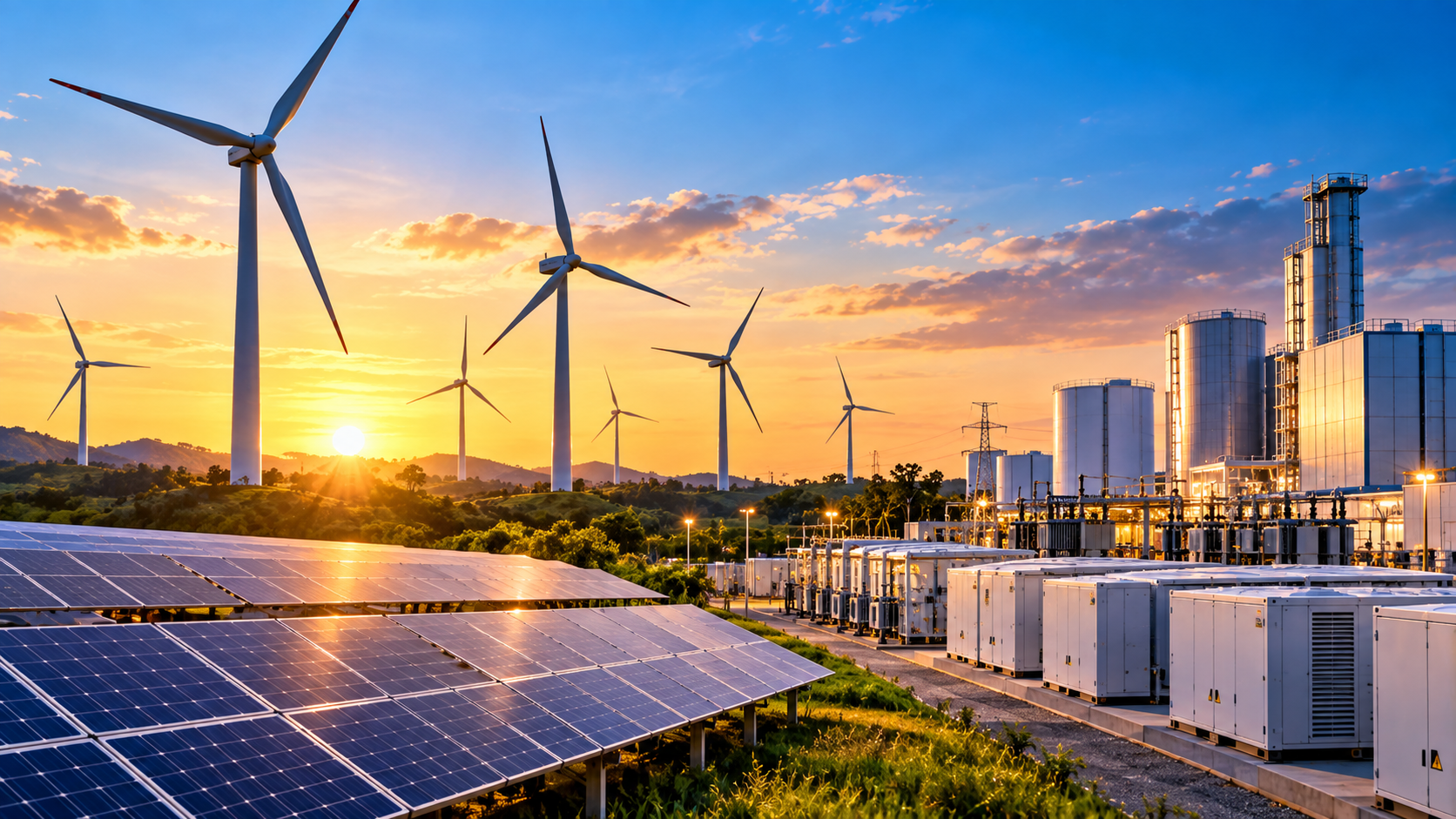
INOXGFL Group’s renewable-energy platform proposes an ₹8,000-crore fresh issue and ₹2,000-crore offer for sale, with proceeds from the fresh issue earmarked largely for debt repayment and general corporate purposes
Inox Clean Energy Ltd, the renewable-energy platform of the INOXGFL Group, has filed its Draft Red Herring Prospectus (DRHP) with the Securities and Exchange Board of India (Sebi) for a proposed initial public offering of up to ₹10,000 crore.
The proposed issue comprises a fresh issue of up to ₹8,000 crore and an offer for sale (OFS) of up to ₹2,000 crore by the selling shareholder. Promoters Devansh Jain and Avarna Jain are associated with the company.
The proposed IPO would mark a significant public-market event for the INOXGFL Group and provide investors with direct exposure to a renewable-energy platform spanning power generation and solar equipment manufacturing.
₹8,000 Crore Fresh Issue to Fund Debt Repayment
According to the company, proceeds from the fresh issue will be used towards repayment and prepayment, either fully or partly, of outstanding borrowings taken by Inox Clean Energy and certain of its direct and indirect subsidiaries.
The balance of the proceeds will be used for general corporate purposes.
The proposed allocation makes deleveraging one of the central elements of the IPO. For a capital-intensive renewable-energy company, reducing debt can be significant because project development and asset ownership require substantial upfront investment before generating recurring power revenues.
Business Standard reported that approximately ₹6,000 crore of the IPO proceeds could be directed towards debt repayment.
Renewable IPP Portfolio Reaches 9.29 GW
Inox Clean Energy operates as an integrated renewable-energy platform with independent power producer (IPP) activities forming one of its principal business verticals.
As of August 31, 2026, its aggregate renewable IPP portfolio stood at 9.29 GW across India and Africa.
The portfolio comprised:
-
2.37 GW of operational capacity
-
0.80 GW under construction
-
2.99 GW of pipeline capacity
-
3.13 GW of future capacity
The mix indicates that the company's renewable-energy platform extends beyond assets already generating electricity and includes a sizeable development pipeline.
Its IPP business involves developing, acquiring, owning and operating renewable power assets.
Solar Manufacturing Adds Another Growth Engine
Inox Clean Energy's business is not limited to renewable power generation. The company also has a solar equipment manufacturing operation.
Its operational solar module manufacturing capacity stood at 6 GW across India and the United States as of the period disclosed in the IPO filing.
The solar manufacturing business produces modules for the renewable-energy market and also has backward integration into solar-cell manufacturing.
This combination of IPP assets and manufacturing capabilities gives the company exposure to different parts of the renewable-energy value chain, although each business carries its own capital, technology, execution and market risks.
Africa Expansion Broadens the Platform
The company's renewable-energy portfolio is spread across India and Africa, providing geographical diversification beyond the domestic market.
The broader INOXGFL Group has also been expanding its renewable-energy footprint through acquisitions and development initiatives.
In February 2026, the group announced that Inox Clean Energy, through subsidiary Inox Neo Energies, had emerged as the successful bidder to acquire Wind World's approximately 600 MW operational IPP portfolio through the NCLT-approved resolution process. The assets are spread across several wind-rich states, including Gujarat, Maharashtra, Karnataka, Tamil Nadu, Rajasthan, Madhya Pradesh and Andhra Pradesh.
The acquisition was presented by the group as part of its strategy to expand Inox Clean's operational renewable portfolio and move towards its medium-term target of 10 GW of installed IPP capacity.
INOXGFL's Broader Renewable Ecosystem
Inox Clean Energy sits within a larger renewable-energy ecosystem that includes listed group companies such as Inox Wind and Inox Green Energy Services.
Inox Wind manufactures wind turbines and provides wind-energy solutions, while Inox Green operates in the renewable-energy operations and maintenance segment.
The group has therefore built exposure across several stages of the renewable-energy value chain, ranging from equipment manufacturing to project development, power generation and asset maintenance.
This ecosystem can create potential operating synergies, although investors will also need to consider the financial relationships and capital requirements among group entities.
Earlier Investment Plans Highlight the Scale of Ambition
The group's renewable-energy expansion plans have been substantial. In 2025, INOXGFL outlined plans to invest around ₹50,000 crore in renewable-energy operations by FY29, with a significant portion directed towards Inox Clean Energy's IPP and solar businesses.
The group's strategy has focused increasingly on hybrid renewable projects, including combinations of wind and solar generation, as well as round-the-clock renewable power solutions.
Such projects can potentially improve power-generation profiles compared with relying on a single intermittent renewable source, but they also require substantial capital expenditure, sophisticated project execution and access to transmission infrastructure.
Why the IPO Matters for Investors
The proposed IPO gives public-market investors an opportunity to participate in a large renewable platform at a time when India's electricity demand and renewable-energy capacity requirements are expanding.
The company's combination of operational assets, projects under construction and a large pipeline provides multiple potential sources of future growth.
Its solar manufacturing capacity adds another structural opportunity as India continues to develop domestic renewable-energy manufacturing capabilities.
At the same time, the IPO's large fresh issue means that investors will need to closely examine the company's leverage, cash flows, project-level debt, capital expenditure requirements and the economics of its power-generation assets once the full DRHP disclosures are evaluated.
Debt Reduction Could Be a Key IPO Theme
The planned use of a substantial portion of fresh IPO proceeds for debt repayment is particularly important.
Renewable IPP businesses typically require significant initial investment because developers have to finance land, equipment, construction and grid connectivity before projects generate stable operating cash flows.
Reducing borrowings can potentially lower interest costs and strengthen the balance sheet. However, the company is simultaneously targeting substantial capacity expansion, which could require fresh capital in the future.
Therefore, investors will need to assess whether deleveraging through the IPO can be maintained alongside the company's expansion ambitions.
Renewable Energy Opportunity Comes With Execution Risks
India's clean-energy transition creates a long-term opportunity for renewable developers and equipment manufacturers, but project execution remains critical.
Delays in land acquisition, transmission connectivity, equipment delivery, construction or commissioning can postpone revenue generation. Renewable projects are also exposed to interest rates, financing costs, power tariffs, regulatory changes and counterparty risks.
For the manufacturing business, changes in technology, module prices, raw-material costs and competitive intensity can influence margins.
The company's growing presence across geographies also introduces additional operational and regulatory considerations.
INOXGFL Group's Listed Companies
The INOXGFL Group's renewable-energy ecosystem includes three listed entities in India: Gujarat Fluorochemicals Ltd, Inox Wind Ltd and Inox Green Energy Services Ltd.
Gujarat Fluorochemicals is primarily associated with the group's chemicals and advanced-materials businesses, while Inox Wind and Inox Green provide exposure to wind-energy equipment and renewable O&M services.
The proposed listing of Inox Clean Energy would add another major renewable-focused entity to the group's public-market presence.
What Investors Should Watch in the DRHP
The filing of the DRHP is only the first stage of the IPO process. Investors should examine the detailed prospectus disclosures before drawing conclusions about valuation or the attractiveness of the issue.
Key factors to monitor include:
Debt and deleveraging: How much debt will be repaid from the IPO and how will the company's leverage change after the issue?
Cash-flow generation: Whether operational renewable assets are generating sufficient cash to support interest payments, maintenance and expansion.
Project pipeline: How quickly the 2.99 GW pipeline and 3.13 GW future-capacity portfolio can move towards construction and commissioning.
Solar manufacturing economics: Capacity utilisation, margins, technology mix and competitiveness of the 6 GW manufacturing platform.
Capital expenditure: The amount of additional funding required to execute future projects.
Regulatory environment: Changes in renewable-energy policies, tariffs, open-access regulations and grid connectivity rules.
Geographical exposure: The financial and operational contribution of assets in India compared with those in Africa.
Market Outlook
Inox Clean Energy's proposed ₹10,000-crore IPO is significant for India's renewable-energy primary market, particularly because the company combines an IPP portfolio with solar manufacturing capabilities.
The 9.29 GW aggregate renewable portfolio, including operational, under-construction and pipeline assets, provides the company with a sizeable platform for future expansion. The proposed use of fresh capital for debt repayment could also strengthen its financial position if executed as planned.
However, the eventual investment case will depend heavily on the valuation, detailed financial disclosures, cash-flow generation and capital requirements revealed in the final offer documents. Investors should therefore assess the DRHP's debt, profitability, project-level economics and related-party disclosures alongside the broader renewable-energy growth opportunity.
The IPO will also be closely watched because it could become one of the largest renewable-energy offerings in India's private sector and potentially provide a new listed avenue for investors seeking exposure to the country's expanding clean-energy infrastructure.