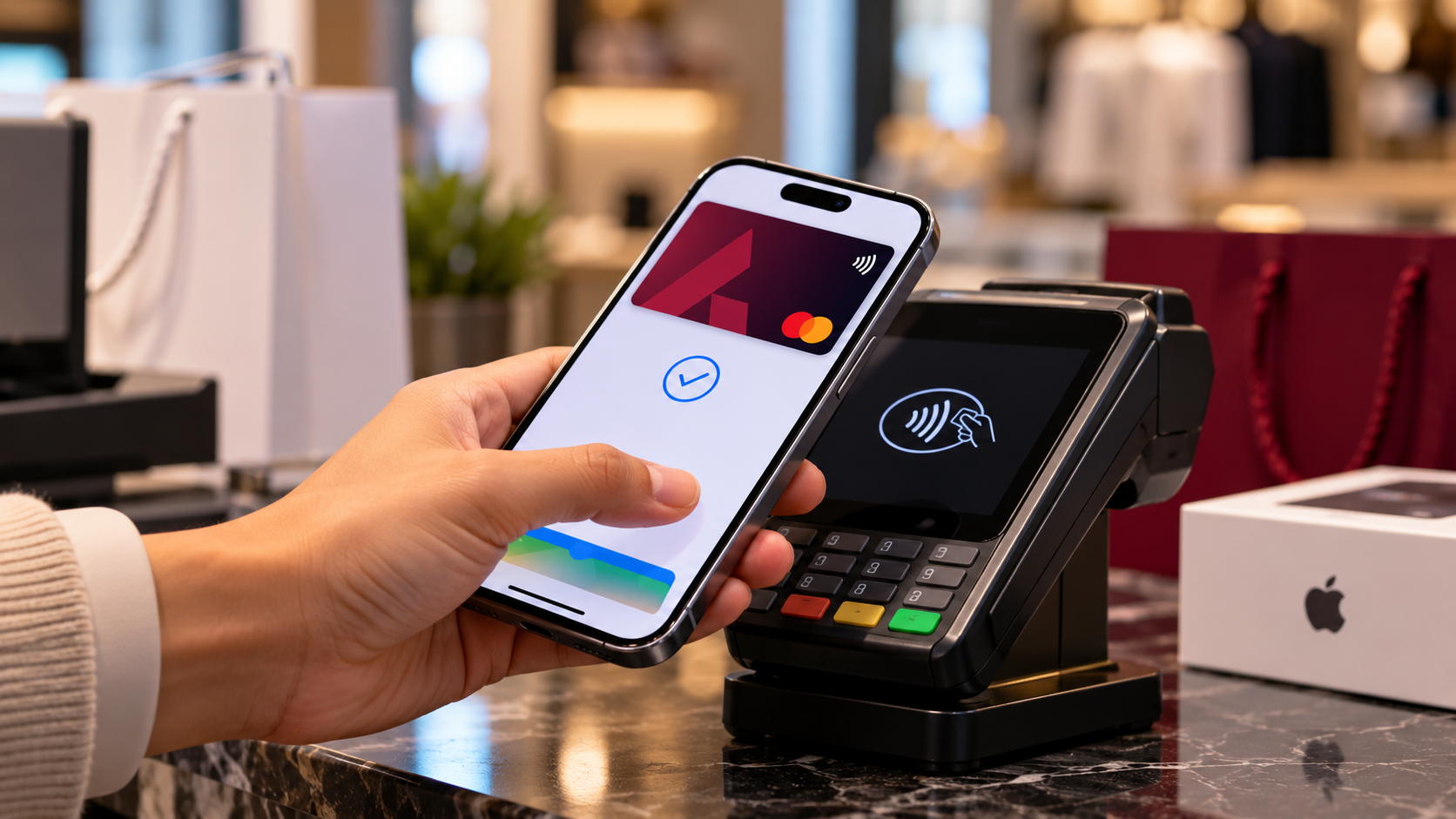
Apple Pay makes its India debut with Axis Bank, allowing eligible credit cardholders to pay through iPhone, iPad and Apple Watch across stores, apps and websites
Axis Bank has launched Apple Pay in India for its eligible Visa and Mastercard credit card customers, marking the entry of Apple's contactless payments service into one of the world's largest digital payments markets.
The launch, announced on September 30, makes Axis Bank the first Indian banking partner for Apple Pay. Customers can add eligible Axis Bank credit cards to Apple Wallet and use compatible Apple devices for payments at stores, within apps and online. Apple has confirmed that the service is available on iPhone, iPad and Apple Watch, while support for Mac is planned for a later stage.
The development brings Apple's payment ecosystem into India's rapidly expanding card and contactless-payment market, although the initial rollout remains narrower than the country's dominant UPI ecosystem.
Apple Pay officially enters India
Apple Pay has been available internationally for years, but India remained one of the major markets where the service had not been launched.
With the Axis Bank partnership, customers can add supported Visa and Mastercard credit cards either through the Axis Bank mobile banking application or directly through Apple Wallet. Once activated, the card can be used for contactless transactions at supported merchant terminals as well as for payments within participating apps and websites.
Axis Bank has said customers will continue to receive the rewards and benefits associated with their existing credit cards while using Apple Pay.
The service is expected to be rolled out across customers over the coming weeks, rather than becoming available to every eligible customer simultaneously.
How the service works
Apple Pay allows users to store a digital version of an eligible payment card in Apple Wallet.
At a compatible merchant terminal, users can authenticate the transaction using their Apple device and complete a contactless payment without physically presenting the credit card.
Apple's India launch announcement said the service can also be used for purchases within apps and on the web. The company said users can make payments without repeatedly entering card information or relying on conventional checkout authentication such as manually entering a PIN or OTP at the point of purchase.
This could make Apple Pay particularly relevant for consumers who already use Apple devices for shopping, travel, food and other digital services.
Security and tokenisation at the centre
Security is one of the key components of Apple's payment architecture.
When a credit card is added to Apple Pay, the actual card number is not stored on the device or Apple's servers and is not shared directly with merchants. Instead, Apple Pay uses a unique Device Account Number, which is encrypted and stored in the device's Secure Element.
The payment networks also use tokenisation technology to protect transaction credentials. Mastercard has said its tokenisation system generates a unique cryptographically secured token for Apple Pay transactions, reducing the need to expose the underlying card details during payment.
Visa has similarly highlighted tokenisation as a key part of the payment infrastructure supporting the service.
The architecture means that the digital payment credential used by the device is different from the physical card number, adding another layer between the customer's actual card details and the merchant.
UPI and RuPay are not part of the initial launch
Despite India's enormous UPI ecosystem, Apple Pay's initial Indian offering is focused on credit cards.
UPI payments and RuPay cards are not supported at launch, according to current reports. Debit cards are also outside the initial Axis Bank rollout.
This is an important distinction because UPI has become the dominant digital-payment mechanism in India, particularly for everyday transactions and QR-code payments.
Apple Pay's initial positioning is therefore closer to a digital wallet for eligible cardholders than a direct replacement for India's UPI infrastructure.
Why the Axis Bank partnership matters
For Axis Bank, the Apple Pay integration adds another digital-payment channel for its credit card customers and strengthens its position in the premium mobile-payment segment.
The bank has been investing heavily in technology and digital banking as consumer behaviour shifts towards mobile-first financial services.
Apple Pay also gives Axis Bank access to Apple's established device ecosystem, allowing its eligible cardholders to use their existing credit cards through a payment interface built into Apple devices.
For Apple, partnering with a major Indian bank provides an entry point into India's large and increasingly affluent base of smartphone and credit-card users.
India offers a large digital payments opportunity
India's payments market is already one of the world's most advanced in terms of digital transaction adoption.
UPI has driven mass-market digital payments, while credit cards have continued to gain importance for higher-value purchases, travel, dining, e-commerce and other discretionary spending.
Apple Pay's arrival therefore adds another layer to an already competitive ecosystem involving banks, card networks, fintech companies and payment platforms.
The opportunity for Apple could become considerably larger if the company expands the service to additional banks, card networks and payment methods.
More banks could follow
Axis Bank is the first Indian bank to support Apple Pay, but the launch is unlikely to represent the final shape of Apple's payments strategy in the country.
Earlier reports indicated that Apple had been in discussions with other major Indian lenders, including ICICI Bank and HDFC Bank, as well as Visa and Mastercard, ahead of the India launch.
Broader bank participation would be important for Apple Pay to move beyond an initial niche among Axis Bank cardholders.
The eventual addition of more issuers could significantly expand the number of consumers able to use the service.
What it means for consumers
For eligible Axis Bank credit card customers, Apple Pay essentially adds a digital version of their existing card to supported Apple devices.
There is no separate credit line created through Apple Pay, and the underlying credit card's existing rewards, limits and applicable terms continue to apply.
The principal change is the payment experience: customers can use an Apple device rather than carrying the physical card for supported transactions.
According to Moneycontrol, the initial rollout is expected to cover categories such as food and beverage, travel, fashion and lifestyle, with the merchant and app ecosystem expected to expand over time.
Implications for banks and payment networks
The launch also brings together three important components of India's card-payment ecosystem: the bank that issues the card, the global network that processes the transaction and the technology platform through which the consumer makes the payment.
Axis Bank provides the card relationship, while Visa and Mastercard provide the payment-network infrastructure. Apple supplies the wallet, device authentication and tokenisation framework.
This model could become increasingly relevant as banks compete not only on credit limits and rewards but also on how seamlessly their cards integrate with smartphones, wearables and other connected devices.
The bigger competitive picture
Apple Pay's India debut comes at a time when digital payments are increasingly moving from standalone payment applications towards embedded experiences.
UPI dominates everyday digital payments, while cards remain important for credit-based consumption. Digital wallets linked directly to smartphones and wearables add another layer of convenience.
Apple Pay's initial limitation to selected card networks means it does not immediately challenge UPI across the entire payments market. Instead, its early opportunity lies in the credit-card segment and among consumers already invested in Apple's hardware ecosystem.
The extent to which Apple expands bank partnerships and introduces additional payment capabilities will determine how broadly the service can scale in India.
Market Outlook
Axis Bank's Apple Pay partnership is strategically significant because it combines one of India's major credit-card issuers with Apple's global payments platform and the infrastructure of Visa and Mastercard.
For Axis Bank, the service can strengthen customer engagement and add another digital channel for its card portfolio. For Apple, the launch provides a foothold in India's large and rapidly evolving payments market.
However, the initial service has clear limitations: UPI, RuPay and debit cards are not supported at launch, while the number of participating banks is currently limited.
The key developments to watch will therefore be the expansion of Apple Pay to additional Indian banks, wider merchant and app acceptance, possible support for additional card networks and any future integration with India's broader digital-payment ecosystem.
For the banking and payments industry, the launch signals another step towards a more device-centric and tokenised payment environment, where convenience, security and seamless integration increasingly influence how customers choose to transact.