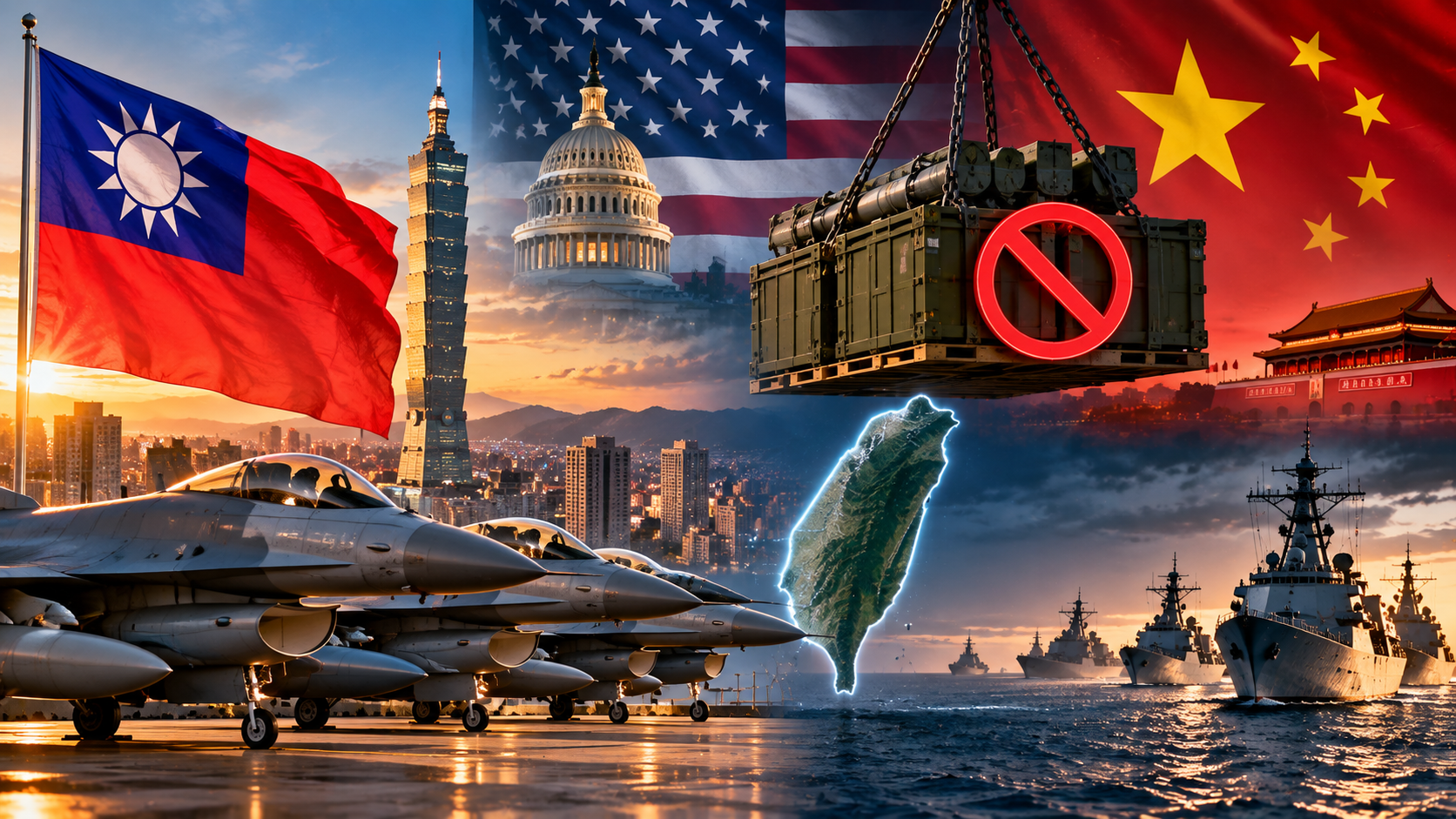
Taiwan says existing US defence cooperation continues as Washington maintains the pending weapons package amid sensitive US-China relations and delays in F-16V deliveries
Taiwan said on Tuesday that there has been no change in its existing arms sales and defence cooperation with the United States, even as a proposed $14 billion weapons package remains on hold.
Taiwan Defence Minister Wellington Koo said Taipei continues to communicate with Washington on individual arms deals and has received no notification that the US has changed its policy towards the island. His comments come shortly after a meeting between US President Donald Trump and Chinese President Xi Jinping, where Taiwan remained one of the sensitive issues in broader US-China relations. (AP News)
$14 Billion Arms Package Remains Pending
The proposed package, worth about $14 billion, has been awaiting approval from the Trump administration for months.
Trump had indicated after his May meeting with Xi that he had discussed the proposed Taiwan arms package with the Chinese leader. The package was subsequently kept in abeyance. Reuters reported in September that Taiwan was continuing to maintain close contact with Washington to seek implementation of the planned arms sales. (Investing.com)
The package is separate from earlier US arms sales already approved for Taiwan. Its continued delay has therefore become an important indicator for Taipei as it assesses the direction of US policy amid efforts by Washington and Beijing to manage their broader relationship.
Taiwan Says Existing Cooperation Has Not Changed
Koo said Taiwan had not received any notification indicating a change in existing US arms sales or military cooperation.
The defence minister's comments provide an important distinction between existing agreements and the pending $14 billion package. While the latter remains unresolved, Taiwan says previously agreed defence cooperation continues.
Reuters reported that the United States remains bound by the 1979 Taiwan Relations Act, under which Washington provides Taiwan with the means to maintain its self-defence capabilities. (Reuters)
Taiwan's government has repeatedly emphasised the importance of receiving weapons already ordered and maintaining the timetable for deliveries.
66 F-16V Fighters Add to Delivery Focus
One of the most closely watched programmes involves 66 advanced F-16V fighter jets ordered by Taiwan.
Koo said the aircraft had reached a production stage that would allow them to move towards delivery. The programme has faced delays related to the pandemic, production issues and testing.
Taiwan had originally expected deliveries earlier, but the schedule was pushed back. In March, Koo said delivery of the first aircraft during the third quarter of 2026 was considered feasible. (Focus Taiwan - CNA English News)
Reuters reported on September 29 that the F-16 programme remains part of a wider backlog of previously ordered US weapons, with Taiwan seeking clarity on delivery schedules. (Reuters)
The delivery of these aircraft is being watched closely because it involves an already approved procurement programme rather than the separate $14 billion package still awaiting approval.
Taiwan-China Tensions Remain a Major Factor
US arms sales to Taiwan remain one of the most sensitive issues in Washington-Beijing relations.
China considers Taiwan part of its territory and has repeatedly called on the United States to stop supplying weapons to the island. Taiwan rejects Beijing's sovereignty claims and maintains that decisions about its future should be made by its people.
For Washington, Taiwan policy also involves a longstanding framework of unofficial relations and defence commitments under US law.
The combination of these positions means that arms sales can become intertwined with wider negotiations involving trade, technology, security and diplomatic relations between the world's two largest economies.
Trump-Xi Talks Add Another Layer of Uncertainty
The status of the Taiwan arms package has attracted renewed attention following Trump's latest meeting with Xi.
Reuters reported that the recent summit produced limited progress on several major disagreements, while Taiwan arms sales remained among the unresolved issues. (Reuters)
The issue could remain sensitive as Washington and Beijing continue discussions on their broader relationship.
Taiwanese officials have nevertheless indicated that communication with Washington remains active. Deputy Foreign Minister Wu Chih-chung said before the latest defence minister comments that Taipei expected the pending arms sale to proceed, although the package remained subject to US approval. (Taiwan News)
US Defence Industry Also Watching the Delay
The uncertainty is not limited to Taiwan's defence planning.
US defence companies involved in Taiwan-related programmes also have a commercial interest in the timing of government approvals and deliveries. Reuters reported earlier in September that Anduril founder Palmer Luckey said the delay in Taiwan arms sales was affecting the company's business. (Investing.com)
Long defence procurement cycles mean that delays in approvals can affect production schedules, supplier planning and revenue visibility for contractors.
At the same time, existing contracts can continue moving through manufacturing and testing even while new packages await political approval.
F-16V Delivery Could Become an Important Test
The F-16V programme is particularly important because it provides a visible test of whether already approved defence cooperation is progressing.
Taiwan's 66-aircraft order was approved by Washington in 2019 and is separate from the pending $14 billion package. The first deliveries have faced delays, with aircraft requiring production, testing and other procedures before transfer to Taiwan. (Taipei Times)
Taiwan's defence ministry has been closely monitoring the programme, while the first aircraft have reportedly progressed through the US production and testing process.
Broader Strategic and Economic Implications
The uncertainty surrounding the arms package has implications beyond defence procurement.
The Taiwan Strait is strategically important to global trade and technology supply chains, particularly because Taiwan is a major centre for semiconductor manufacturing.
Any significant deterioration in US-China relations or tensions around Taiwan could therefore affect investor sentiment, technology supply chains, shipping routes and global risk assets.
For markets, the immediate focus is likely to remain on whether the pending arms package receives approval and whether previously agreed deliveries continue without further delays.
What Investors and Businesses Should Watch
Several developments could influence the geopolitical and market outlook:
-
Status of the pending $14 billion US arms package
-
Delivery schedule for Taiwan's F-16V aircraft
-
Further US-China diplomatic meetings
-
China's response to continued US-Taiwan defence cooperation
-
Any changes in Washington's Taiwan policy
-
Potential impact on semiconductor and technology supply chains
-
Defence-sector procurement announcements and contractor activity
-
Developments in the Taiwan Strait that could affect regional risk sentiment
These factors will be particularly relevant for investors with exposure to semiconductor manufacturing, aerospace and defence, shipping, technology hardware and Asian markets.
Market Outlook
For financial markets, the immediate issue is less about a change in existing US-Taiwan defence cooperation and more about the uncertainty surrounding the timing of the additional $14 billion package.
Taiwan's defence minister has said that existing sales remain unchanged, while Reuters reports that discussions over individual deals are continuing. (Reuters)
The delayed F-16V deliveries and pending weapons package will remain important indicators for the direction of US-Taiwan defence ties. At the broader market level, developments in the Taiwan Strait could have implications for semiconductor supply chains, technology stocks, defence companies and Asian risk sentiment.
With Washington and Beijing continuing high-level engagement, investors will be watching whether Taiwan-related issues remain contained within diplomatic negotiations or become a source of renewed geopolitical tension.