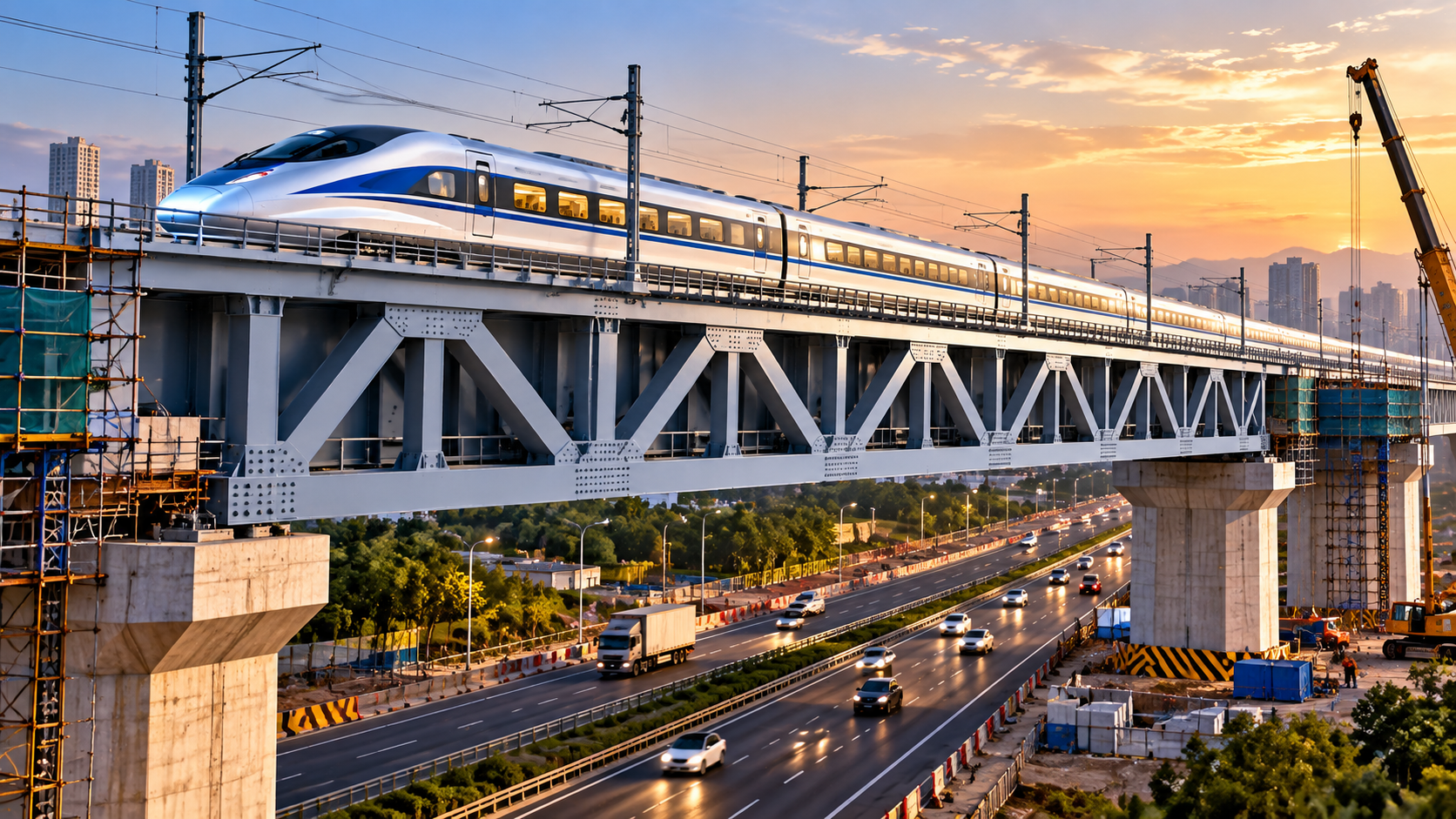
100-metre, 1,405-tonne structure launched over NH-3 in Bhiwandi as construction of India’s first high-speed rail corridor advances
The Mumbai-Ahmedabad Bullet Train project has reached another major construction milestone with the installation of its first steel bridge in Maharashtra. The 100-metre-long structure, weighing approximately 1,405 metric tonnes, was launched over National Highway-3 at Dive-Anjur village in the Bhiwandi area of Thane district.
The installation was carried out by the National High-Speed Rail Corporation Limited (NHSRCL) during a planned night traffic block to minimise disruption to highway users. The bridge is 14 metres high and 14 metres wide and forms part of the specialised infrastructure being developed for India’s first dedicated high-speed rail corridor.
16 of 28 Steel Bridges Completed
According to NHSRCL, 28 steel bridges are planned along the Mumbai-Ahmedabad High-Speed Rail corridor. With the latest installation, 16 of these structures have been completed.
Steel bridges are being deployed at locations where the high-speed rail alignment needs to cross existing highways, expressways, major rivers and railway lines. Such structures are particularly useful where longer spans are required without significantly interfering with existing transport infrastructure.
The latest bridge therefore represents not only progress on an individual structure but also the advancement of one of the technically demanding components of the high-speed rail corridor.
Bridge Fabricated 1,300 Km Away
One of the notable aspects of the project is the distance between the fabrication facility and the installation site.
The bridge was fabricated at a specialised workshop in Tiruchirappalli, Tamil Nadu, roughly 1,300 kilometres from Bhiwandi. After fabrication, the components were transported to Maharashtra using heavy trailers, assembled at the site and subsequently moved into their final position.
The fabrication process involved precision cutting, drilling, welding and painting in accordance with approved engineering designs and specifications. Reports also said the steel underwent ultrasonic testing, while personnel involved in welding and supervision were certified for the specialised work.
Complex Launch Operation
Installing a structure of this size over a busy national highway required detailed planning and coordination.
The bridge was assembled on temporary trestles before being moved into its final position. The operation used specialised skid arrangements and high-strength bolting systems. Protective coating was also applied to improve the structure’s durability, while elastomeric bearings were incorporated to help manage movement and vibrations.
An automated mechanism was used to pull the completed bridge into position during a scheduled night traffic block. Conducting the operation during restricted highway hours helped limit the impact on road traffic.
Engineering and Domestic Manufacturing Capability
The project highlights the scale of engineering required to build a high-speed railway through densely developed parts of western India.
Fabricating the bridge in Tamil Nadu and transporting it more than 1,000 kilometres to Maharashtra demonstrates the use of specialised manufacturing and logistics capabilities across different regions. The use of domestic fabrication facilities also aligns with the project's broader emphasis on indigenous engineering and manufacturing capability.
For infrastructure companies, such large projects create demand across areas including steel fabrication, heavy engineering, transportation, construction equipment, electrical systems, signalling, civil construction and specialised railway technology.
Mumbai-Ahmedabad Corridor Takes Shape
The Mumbai-Ahmedabad High-Speed Rail corridor is designed to connect Mumbai and Ahmedabad through a dedicated high-speed railway system. The corridor spans approximately 508 kilometres and passes through Maharashtra, Gujarat and the Union Territory of Dadra and Nagar Haveli and Daman and Diu.
The project involves extensive civil and structural works, including viaducts, bridges, stations, tunnels and other specialised railway infrastructure. The Maharashtra portion presents additional engineering challenges because of dense urban development, existing road and railway networks and other major infrastructure crossings.
The latest steel bridge installation adds to the visible progress on these complex sections of the corridor.
Implications for Infrastructure and Industrial Companies
Large-scale railway projects such as the Mumbai-Ahmedabad corridor can have a broad supply-chain impact. Engineering and construction companies can potentially participate in civil works, structural fabrication, project management, electrical systems, signalling and other specialised packages.
Steel demand is another important component because bridges, viaducts and other structural elements require significant quantities of specialised steel and fabricated components.
However, the business impact for individual companies depends on their order-book exposure, contract terms, execution schedules, margins and working-capital requirements. Investors therefore need to distinguish between the overall infrastructure opportunity and the financial impact on specific listed companies.
High-Speed Rail Construction Enters a More Visible Phase
The completion of 16 of the planned 28 steel bridges indicates continued progress in one of the corridor's specialised construction areas. As additional structures are completed, the focus will increasingly shift toward integrating civil infrastructure with tracks, stations, signalling, electrical systems and other operational components.
The project is intended to bring significantly faster rail connectivity between Mumbai and Ahmedabad once operational. Its construction is also expected to provide experience in high-speed railway engineering and project execution that could be relevant to future high-speed rail investments in India.
Market Outlook
The latest steel bridge installation is a positive development from an infrastructure-execution perspective and highlights the growing scale of specialised engineering work associated with the Mumbai-Ahmedabad High-Speed Rail project.
For the broader infrastructure and industrial ecosystem, continued progress on large railway projects can support demand for construction, steel, engineering, logistics and specialised equipment. However, investors should track actual order inflows, execution progress, revenue recognition, margins and cash flows rather than relying solely on the headline size of the project.
The completion of 16 of 28 planned steel bridges provides a measurable indicator of progress, while future milestones across the corridor will remain important for assessing the pace of overall project execution.