Most Small Merchants Could Remain Outside UPI MDR
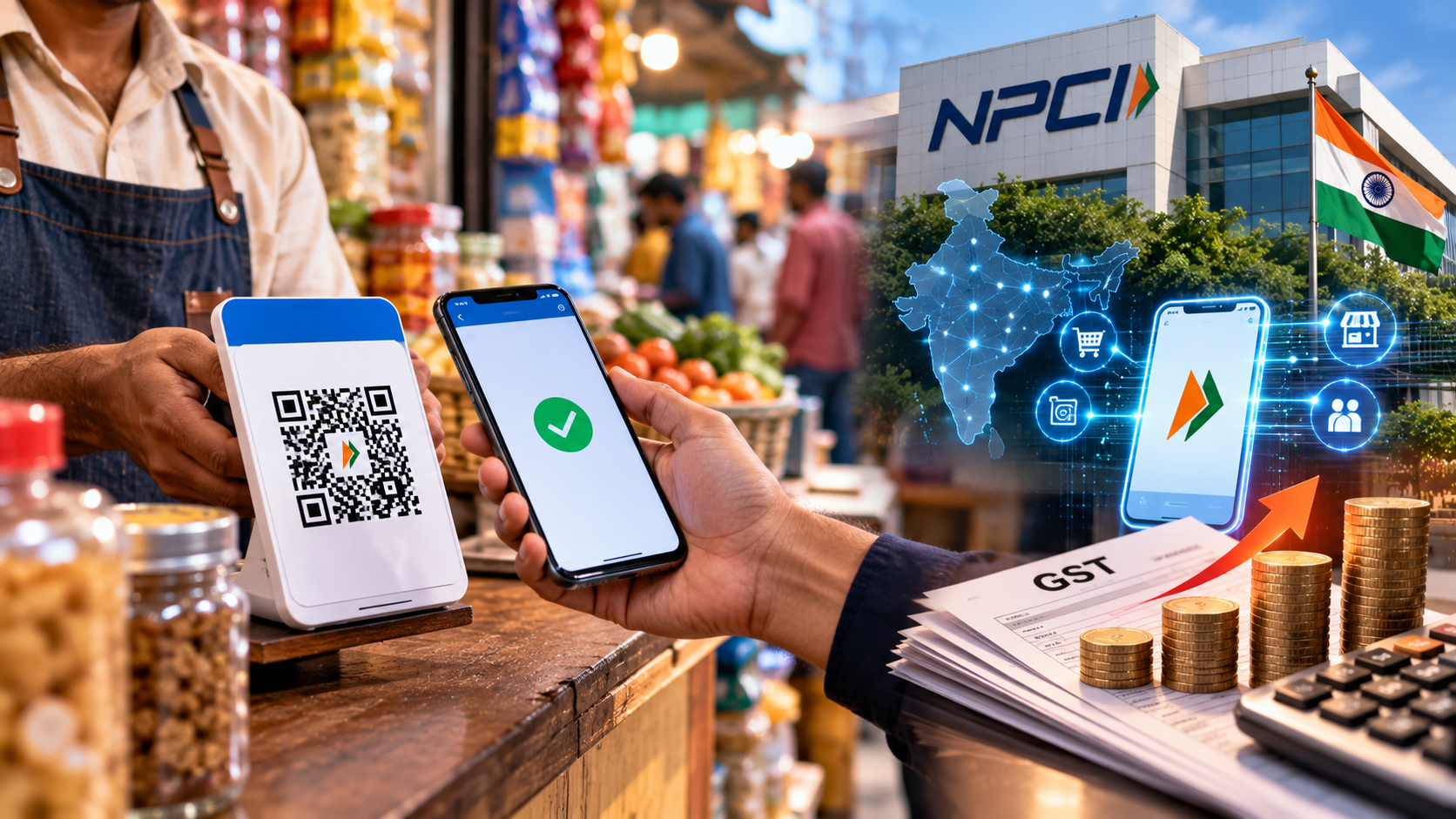
Around 75% of India's more than 60 million digital-payment accepting merchants may remain insulated from the new Merchant Discount Rate (MDR) on certain UPI transactions, according to National Payments Corporation of India (NPCI) Managing Director and CEO Dilip Asbe.
The new framework, scheduled to take effect from October 15, introduces a 0.4% MDR on eligible person-to-merchant (P2M) UPI transactions above ₹2,000. Asbe said three-fourths of merchants have never recorded a transaction exceeding ₹2,000 and therefore would not be affected by the policy.
The clarification comes amid concerns among traders and business associations over the impact of introducing a merchant-side charge on a payment system that has historically been free for consumers.
UPI Will Remain Free for Consumers
The new MDR is a charge on eligible merchants and is not a fee imposed directly on customers.
Under the framework, consumers can continue to make UPI payments without paying a separate transaction fee. Peer-to-peer payments also remain free, while the MDR applies only to specified merchant transactions.
For eligible P2M transactions above ₹2,000, the MDR is 0.4%. The charge is capped at ₹300 for transactions of ₹75,000 or more.
For example, a ₹10,000 eligible merchant transaction would attract an MDR of ₹40, while a ₹1 lakh transaction would be subject to the ₹300 cap rather than a ₹400 charge.
How the New MDR Structure Works
The ₹2,000 threshold applies on a per-transaction basis rather than as a daily limit.
Transactions of ₹2,000 or less will not attract MDR. Certain categories, including railways, telecom, insurance, fuel and other specified services, have a concessional flat MDR of ₹5 for transactions above ₹2,000.
Small merchants operating under the person-to-person-merchant (P2PM) framework can also remain exempt under specified conditions. Businesses receiving up to ₹1 lakh a month through UPI QR payments can qualify for zero MDR, subject to their classification under the framework.
Majority of MDR Value Expected From Large Businesses
Asbe's assessment is based not only on the number of merchants but also on where the value of MDR collections is expected to come from.
According to NPCI, about 80% of total MDR value is expected to come from businesses recording more than ₹1,000 crore in annual gross merchandise value (GMV). A further portion is expected to come from merchants with annual GMV above ₹1 crore.
As a result, a large share of the MDR burden is expected to fall on businesses that already accept other MDR-bearing payment instruments, including credit cards.
Asbe said the industry does not expect a major impact on overall UPI transaction volumes and value from the new framework.
Concern Over Merchants Passing Charges to Consumers
One of the biggest concerns surrounding the new system is whether merchants could indirectly recover the MDR from customers by increasing prices or encouraging alternative payment methods.
NPCI has said consumers cannot be charged the MDR directly. The government has also been examining mechanisms to ensure merchants do not pass the new cost through to customers.
Asbe said the real risk of consumer charges was concentrated among a relatively small portion of MDR value. Banks, payment aggregators, acquiring banks and NPCI are expected to work together to prevent merchants from transferring the charge to customers.
However, merchant associations have raised concerns that even a relatively small recurring payment cost could matter for businesses operating on thin margins.
Traders Plan 'No UPI Day' Protest
The introduction of MDR has generated resistance from sections of the retail and trading community.
Traders and business associations have announced a "No UPI Day" on October 2 to protest the planned charges. Some merchants have expressed concern that the additional cost could make them more inclined to accept cash for larger purchases.
A survey by LocalCircles also found significant resistance among surveyed merchants, with only 17% saying they were willing to bear a 0.4% MDR on UPI payments above ₹2,000. The survey covered more than 32,000 responses across 242 districts.
Government May Review 18% GST on MDR
Another major development is the possibility of relief on the Goods and Services Tax applicable to MDR.
Currently, the merchant-side payment service attracts an 18% GST on the MDR amount. The government has indicated that the GST Council could consider relief on this tax, although any change in GST rates would require consideration by the Council rather than a unilateral decision by the Union finance ministry.
The GST Council is scheduled to meet on October 7, although it has not been confirmed that the UPI MDR issue will be on the formal agenda.
Why GST Relief Matters
The GST is charged on the payment service fee rather than on the underlying UPI transaction value.
For example, if an eligible ₹10,000 UPI transaction generates ₹40 of MDR, the 18% GST would apply to the ₹40 charge, rather than to the entire ₹10,000 payment.
Businesses registered under GST may be able to claim input tax credit on eligible GST paid on MDR, potentially reducing the effective burden for those businesses.
A reduction or restructuring of GST on MDR could therefore lower the overall cost of accepting eligible high-value UPI payments for merchants.
UPI's Massive Transaction Ecosystem
The debate comes as UPI has become one of India's most important digital-payment networks.
August 2026 alone saw around 25 billion UPI transactions with a total value of approximately ₹30 trillion, according to Reuters.
Within merchant payments, groceries and supermarkets were among the largest categories by transaction value in August, followed by debt collection agencies and securities brokers, according to NPCI data cited by Business Standard.
The sheer scale of UPI means even a small change in the economics of the network can have implications for banks, payment aggregators, fintech companies and merchants.
Impact on Banks and Fintech Companies
The introduction of MDR creates a new revenue opportunity across the digital-payments ecosystem.
Banks, payment aggregators and UPI applications can potentially earn a share of the fees generated by eligible merchant transactions, although the distribution of the MDR depends on the structure of the payment transaction.
For listed fintech companies, the development could create an additional monetisation opportunity in their payments businesses. One MobiKwik Systems, for example, has said the new MDR framework could generate revenue through its TPAP and merchant-acquiring businesses.
At the same time, payment companies will need to balance monetisation with merchant retention and transaction growth.
Will UPI Adoption Be Affected?
The long-term impact on UPI usage remains uncertain.
Supporters of the new framework argue that charging merchants for selected high-value transactions can create a more sustainable economic model for the payments ecosystem without imposing costs directly on consumers.
Critics, meanwhile, have warned that some merchants could encourage customers to use cash for larger purchases if they view MDR as an additional operating expense.
The actual impact will depend on how merchants absorb the cost, how payment companies implement the framework and whether the government provides GST relief.
Supreme Court Challenge Adds Another Layer of Uncertainty
The new MDR framework has also faced legal scrutiny.
A public interest litigation filed in the Supreme Court has challenged the framework for imposing MDR on certain UPI transactions above ₹2,000. The petition questions aspects of the amended payment framework and its implementation.
This means the regulatory and legal framework surrounding UPI charges could continue to evolve even as the October 15 implementation date approaches.
What Merchants and Customers Should Know
For customers, the immediate message is that UPI itself remains free under the new framework. The MDR is a merchant-side charge and cannot simply be added as a separate UPI transaction fee.
For merchants, the key issues are classification, transaction size and monthly UPI receipts. Businesses should check with their acquiring bank or payment service provider to understand whether they fall under P2M or an exempt P2PM category.
Merchants should also monitor any changes announced by NPCI, the government or the GST Council before October 15.
Market Outlook
The introduction of UPI MDR marks a significant change in the economics of India's digital-payment ecosystem, but its impact is likely to be uneven.
With around 75% of digital-payment accepting merchants reportedly having never recorded a transaction above ₹2,000, a large number of smaller businesses may remain outside the new charge. The larger impact is expected among high-value merchants and businesses that already process significant volumes through MDR-bearing payment instruments.
For banks, payment aggregators and fintech companies, the framework could create a new monetisation channel. For merchants, the key variable will be the actual cost after MDR, GST and any applicable exemptions or caps.
The proposed review of the 18% GST on MDR could further change the economics before the October 15 rollout. Investors should therefore track the GST Council's decisions, implementation guidelines, legal developments and early transaction data to assess whether the new framework strengthens UPI's financial sustainability without materially affecting adoption.