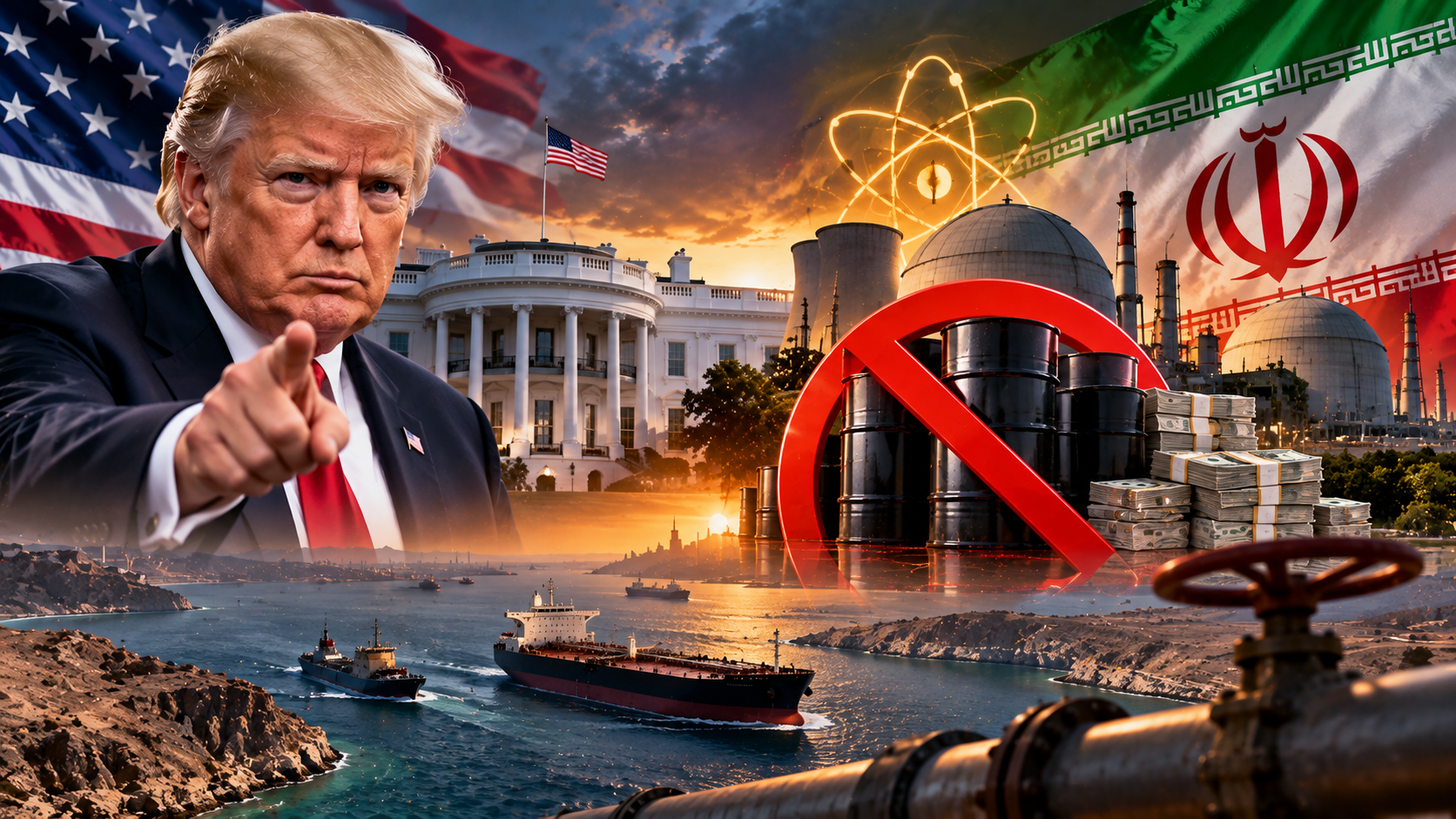
US President Rejects Reports of Frozen-Funds Release and Sanctions Easing as Mediators Pursue Fresh Diplomatic Efforts
US President Donald Trump has denied reports that Washington offered Iran sanctions relief and access to frozen Iranian funds in exchange for concrete steps on Tehran's nuclear programme, adding another layer of uncertainty to diplomatic efforts aimed at ending the conflict.
Trump responded on Monday to reports from Axios and CNN that the United States was prepared to consider sanctions relief and the release of frozen Iranian assets if Tehran made tangible progress on nuclear issues. Trump rejected those reports, saying he had offered Iran nothing. Reuters reported that the Axios account cited unidentified US officials, while CNN also relied on an unnamed US official.
The conflicting accounts come as US and Iranian officials continue separate discussions through mediators in an effort to find a possible route towards ending the seven-month conflict.
Trump Rejects Reports of a Possible Concession
Trump's denial followed reports that sanctions relief could potentially form part of a future agreement with Iran.
According to the reports, any relief would be conditional on Tehran taking concrete steps concerning its nuclear programme. The reported framework also included the possible release of Iranian funds currently frozen under US-led sanctions.
Trump has rejected that characterization, meaning there is currently no confirmed agreement between Washington and Tehran providing sanctions relief or access to frozen funds.
The distinction is important because the reports describe potential terms under discussion rather than a finalized diplomatic agreement.
US-Iran Contacts Continue Through Mediators
Despite Trump's rejection of the reported concessions, diplomatic contacts between the two sides have continued.
US and Iranian officials separately spoke with mediators on Monday as efforts intensified to find a negotiated path to ending the conflict. Reuters reported that further discussions were expected to focus on an amended version of a seven-day proposal presented by Iran during the UN General Assembly.
Iranian Foreign Minister Abbas Araqchi has said Tehran is awaiting Washington's response to its latest proposal. Iranian officials have also indicated that any reopening of the Strait of Hormuz would be linked to the conditions Tehran has presented.
Iran's Proposal Includes the Strait of Hormuz
The Strait of Hormuz has emerged as a central issue in the negotiations because it is one of the world's most important energy-shipping routes.
Iran has previously said it could reopen the waterway within seven days if the United States eased military pressure and lifted its blockade of Iranian ports.
Reuters reported that Iran's seven-day proposal envisaged an end to hostilities in Iran and Lebanon, the unfreezing of Iranian assets, an end to sanctions on Iranian oil and the lifting of the US blockade on Iranian ports. In return, Iran would allow the Strait of Hormuz to reopen and resume nuclear negotiations.
The US position on those conditions remains disputed, and Trump has previously rejected an Iranian proposal.
Nuclear Programme Remains at the Centre of the Dispute
Iran's nuclear programme remains one of Washington's principal concerns.
Trump has repeatedly identified the weakening of Iran's nuclear capabilities as a key objective of the US military campaign. Iran, meanwhile, denies seeking nuclear weapons and says its nuclear programme is intended for peaceful purposes.
Any durable diplomatic agreement would therefore likely have to address questions surrounding Iran's nuclear activities, verification and the future of sanctions.
The two sides also face disagreements over sequencing: whether sanctions and other restrictions should be removed before Iran takes action, or whether Tehran must first take verifiable steps before receiving economic relief.
Seven Months of Conflict Have Disrupted Energy Markets
The diplomatic uncertainty is also being closely watched by global energy markets.
The conflict began in late February with US and Israeli attacks on Iran, followed by Iranian strikes on Israel and Gulf states hosting US military bases, according to Reuters. The prolonged fighting has disrupted energy transportation and contributed to volatility in global crude prices.
Brent crude has recently moved above $100 a barrel as concerns over supply disruptions intensified. Reuters reported that Brent settled at $105.28 a barrel on September 27 after rising amid uncertainty over the Strait of Hormuz and the prospects for negotiations.
Any credible progress towards de-escalation could therefore influence oil prices, shipping conditions and inflation expectations.
Why the Strait of Hormuz Matters to Markets
The Strait of Hormuz is a critical transit route for global energy supplies. Prolonged disruption can increase shipping costs and raise concerns about the availability of crude and refined petroleum products.
For India, sustained high crude prices can have wider macroeconomic consequences because the country is heavily dependent on imported energy.
Higher oil prices can increase the import bill, put pressure on the rupee and raise costs for industries such as aviation, transportation, chemicals, logistics and manufacturing.
A reduction in geopolitical risk, on the other hand, could potentially ease some of those pressures if it leads to improved energy flows and lower risk premiums.
Conflicting Reports Make the Diplomatic Path Unclear
The latest developments illustrate the uncertainty surrounding the negotiations.
Reports citing unnamed US officials have suggested that Washington could consider economic concessions if Iran takes concrete nuclear-related steps. Trump has publicly rejected that account.
At the same time, mediators continue to engage separately with both sides, indicating that diplomatic channels remain active. Reuters reported that Iranian officials expect mediators to communicate Washington's position regarding Tehran's proposal.
The absence of a publicly confirmed framework means the precise terms of any potential agreement remain unclear.
Oil and Financial Markets Remain Highly Sensitive
Financial markets are likely to continue reacting to developments surrounding the conflict, particularly through crude oil and interest-rate expectations.
Higher oil prices can add to inflationary pressure, while sustained inflation can influence expectations for central-bank policy. Reuters reported that markets were increasingly pricing the possibility of another Federal Reserve rate hike as oil prices and inflation concerns remained elevated.
The US dollar has also strengthened alongside higher oil prices and Treasury yields, creating additional pressure for emerging-market currencies.
For India, the combination of expensive crude, a stronger dollar and higher global yields remains an important external risk factor.
What Happens Next?
The immediate focus will be on whether US-Iran diplomatic contacts produce a framework that both sides are prepared to accept.
Key issues include the future of Iran's nuclear programme, sanctions, frozen Iranian assets, the US blockade, the Strait of Hormuz and the sequencing of any reciprocal steps.
The conflicting public statements also mean that investors and policymakers will likely wait for official announcements before treating reports of sanctions relief as an established development.
Market Outlook
The latest US-Iran developments remain particularly important for markets because the diplomatic outcome could influence crude oil prices and the stability of energy supply routes.
For Indian markets, a sustained escalation could keep oil prices elevated and add pressure through the trade deficit, inflation, rupee and corporate input costs. Conversely, credible progress towards a negotiated settlement could reduce some of the geopolitical premium embedded in energy prices.
For now, there is no confirmed US offer of sanctions relief or frozen-funds release, based on Trump's public denial. At the same time, diplomatic channels remain active, with mediators continuing discussions between Washington and Tehran.
The next major market-moving signals will therefore come from developments around the nuclear negotiations, sanctions policy, the Strait of Hormuz and the direction of crude oil prices.