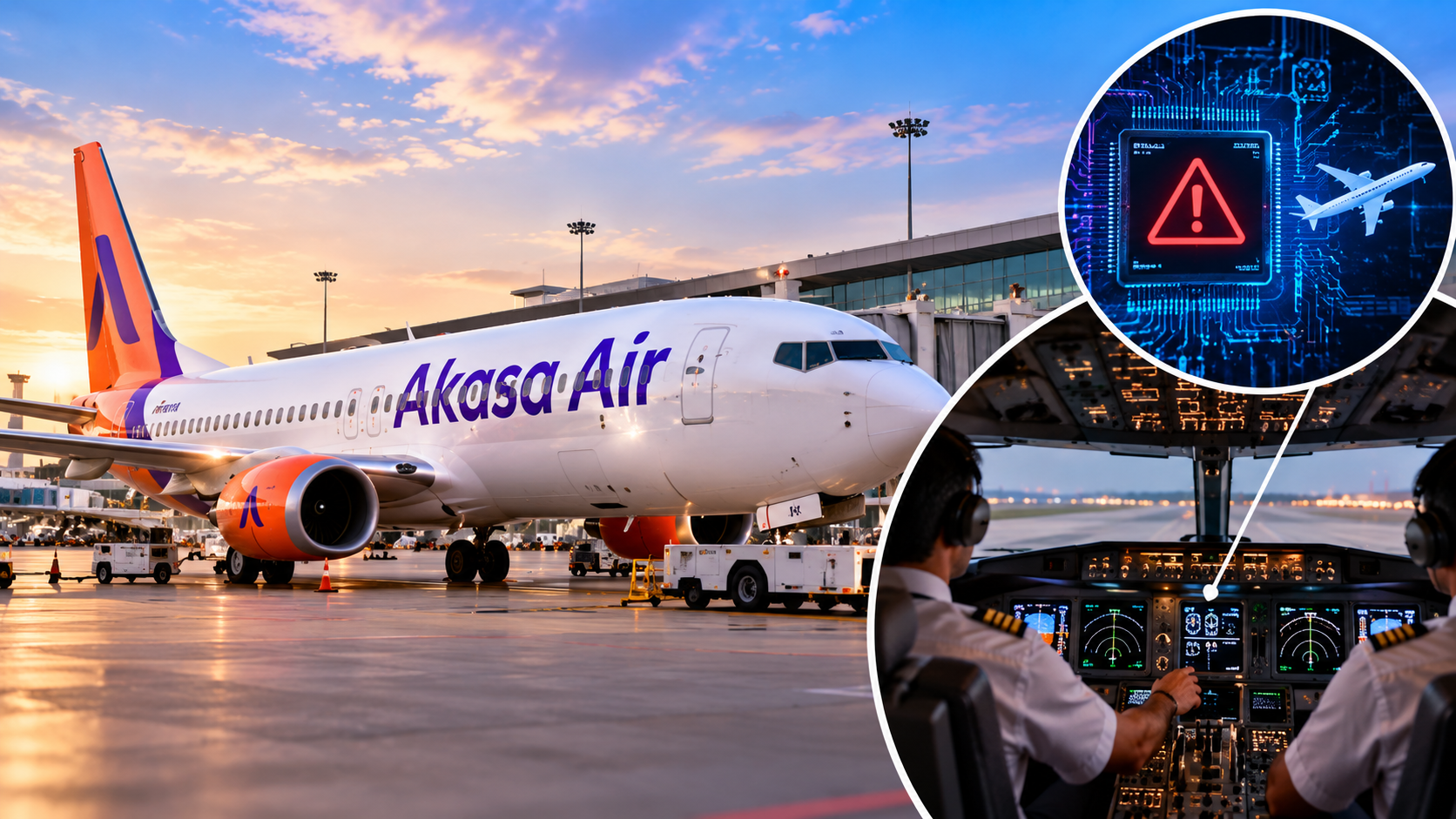
Airline says it is coordinating with Boeing and continues to operate its 737 MAX fleet under established procedures after software issue affecting automated flight guidance is identified
Akasa Air has said that a software issue identified in certain Boeing 737 MAX aircraft does not affect the safety of its operations, as the airline coordinates with Boeing on the issue and continues to follow established procedures and applicable regulatory requirements.
The statement came after Boeing disclosed a software problem that could result in pilots losing access to automated flight guidance during a specific landing scenario. Boeing said it had already informed 737 operators about the issue and was working on a permanent software solution.
Akasa Air said its aircraft continue to operate safely and that passenger and crew safety remains its priority.
What Is the Boeing 737 MAX Software Issue?
The issue relates to the aircraft's automated flight-guidance system and can arise during a specific missed-approach or go-around situation.
A missed approach occurs when pilots discontinue a landing and initiate another approach. According to Boeing's explanation, the software issue can occur when the flight crew changes the planned flight path or altitude after a missed approach.
In such circumstances, the aircraft may not provide the expected level of automated flight guidance, potentially increasing pilot workload compared with normal operations.
Boeing has said that existing pilot procedures can be used to safely manage the situation while engineers work on a permanent software update.
Akasa Air Says Operations Remain Safe
Akasa Air said it is closely coordinating with Boeing and confirmed that there is no impact on the safety of its operations.
The airline said its aircraft continue to operate in accordance with established procedures and applicable regulatory requirements.
The statement is important for passengers because Akasa operates an all-Boeing 737 MAX fleet and is one of the two major Indian carriers operating the aircraft type alongside Air India Express.
Around 96 737 MAX Aircraft Operated by Indian Carriers
The software issue has relevance for India's aviation sector because Akasa Air and Air India Express together operate around 96 Boeing 737 MAX aircraft, according to reports.
The exact number of aircraft potentially affected by a particular software configuration can depend on the aircraft and software version involved.
Boeing has notified operators about the issue and is working with airlines and regulators on the appropriate corrective measures.
Boeing Is Working on a Permanent Fix
Boeing said it informed 737 operators about the software issue and provided information reinforcing existing procedures for handling the relevant situation.
The aircraft manufacturer is developing a software update intended to permanently address the problem.
The company has also been working with regulators as the issue is assessed. The US Federal Aviation Administration has said it was convening a review board to determine whether the problem represents a flight-safety issue.
This regulatory review is separate from Akasa Air's statement regarding the safety of its ongoing operations.
What Happens During a Missed Approach?
During a normal landing, the aircraft's automated systems can assist pilots with flight guidance.
If the landing cannot be completed, pilots initiate a go-around and the aircraft transitions into a different phase of flight.
The reported software issue concerns a specific combination of circumstances involving a missed approach and subsequent changes to the planned flight path or altitude.
In that situation, automated flight guidance may not be available in the expected form, increasing the workload for pilots. Boeing has said existing procedures provide a way for crews to handle such circumstances while the software correction is developed.
Issue Could Affect Airline Operations
Although Akasa Air has said there is no impact on the safety of its operations, software-related corrective measures can sometimes have operational implications for airlines.
Depending on regulatory requirements and the final corrective action, airlines may need to update aircraft software, conduct additional checks or adjust procedures.
Such measures can potentially affect aircraft availability or scheduling if aircraft need to be taken out of service temporarily.
The extent of any operational impact will depend on the final instructions issued by Boeing and aviation regulators.
Boeing Says Engineers Are Developing the Update
Boeing has said its engineers are working on a software update to permanently address the issue.
In the interim, the company has reinforced procedures for operators dealing with the specific landing scenario.
The manufacturer has delivered more than 2,400 737 MAX aircraft globally, making the issue relevant to a large international fleet.
The scale of the fleet means that the software solution will need to be implemented systematically across affected aircraft and operators.
India’s Aviation Sector Closely Watches the Issue
The development comes at a time when India's aviation market is expanding rapidly, with airlines adding aircraft and increasing domestic and international capacity.
Akasa Air has been expanding its fleet and network, while Air India Express continues to operate a substantial 737 MAX fleet.
Any software-related corrective action therefore needs to be managed without creating unnecessary disruption to flight schedules.
Airlines will have to balance aircraft availability, maintenance requirements and regulatory compliance while implementing any required update.
Similar Aircraft-Quality Issue Reported on Airbus A321neo
The Boeing software issue comes shortly after Airbus disclosed a separate quality-related issue involving surface-protection coating on some A321neo aircraft.
Reports have indicated that a number of aircraft operated by IndiGo are affected by the Airbus issue.
IndiGo and Air India operate A321neo aircraft, meaning both major aircraft manufacturers have recently faced separate technical or quality-related matters involving aircraft operated by Indian carriers.
The two issues are distinct and involve different aircraft systems and manufacturers.
Passenger Impact Will Depend on Corrective Measures
For passengers, the immediate question is whether flights will be cancelled, delayed or otherwise disrupted.
Akasa Air has said its operations continue safely under established procedures. Any future operational impact would depend on the instructions issued by Boeing and aviation regulators and how airlines implement the required software correction.
Passengers travelling on affected aircraft should therefore rely on updates from their airline rather than assuming that the software issue automatically means a flight cancellation or aircraft grounding.
Safety Remains the Central Focus
Software and flight-guidance systems form an important part of modern commercial aviation, where multiple layers of automation and pilot procedures work together.
The Boeing issue highlights the importance of identifying software anomalies, notifying operators and providing appropriate procedures while permanent corrective actions are developed.
Boeing's communication with operators and the regulatory review will be important in determining the final scope of the issue and the required corrective measures.
What to Watch Next
The key developments to monitor will include Boeing's permanent software update, regulatory instructions, the number of aircraft requiring the correction and the timeline for implementation.
For Indian carriers, investors and passengers will also be watching whether any software updates result in aircraft downtime or changes to scheduled operations.
Akasa Air's ongoing coordination with Boeing will be particularly relevant given its reliance on the 737 MAX for its fleet and expansion plans.
Market Outlook
Akasa Air's statement provides clarity that the airline currently considers the Boeing 737 MAX software issue to have no impact on the safety of its operations. Boeing, meanwhile, has acknowledged the software problem, reinforced existing operator procedures and said it is developing a permanent update.
For the Indian aviation industry, the immediate focus will be on the regulatory review, the scope of affected aircraft and the implementation timeline for the software correction. Any requirement for additional inspections, updates or temporary aircraft downtime could have operational implications, although the scale of such an impact is not yet established.
For passengers, the current information does not indicate that the software issue automatically means flights are unsafe or cancelled. Airline and regulatory instructions will remain the key reference points as Boeing works toward a permanent solution.