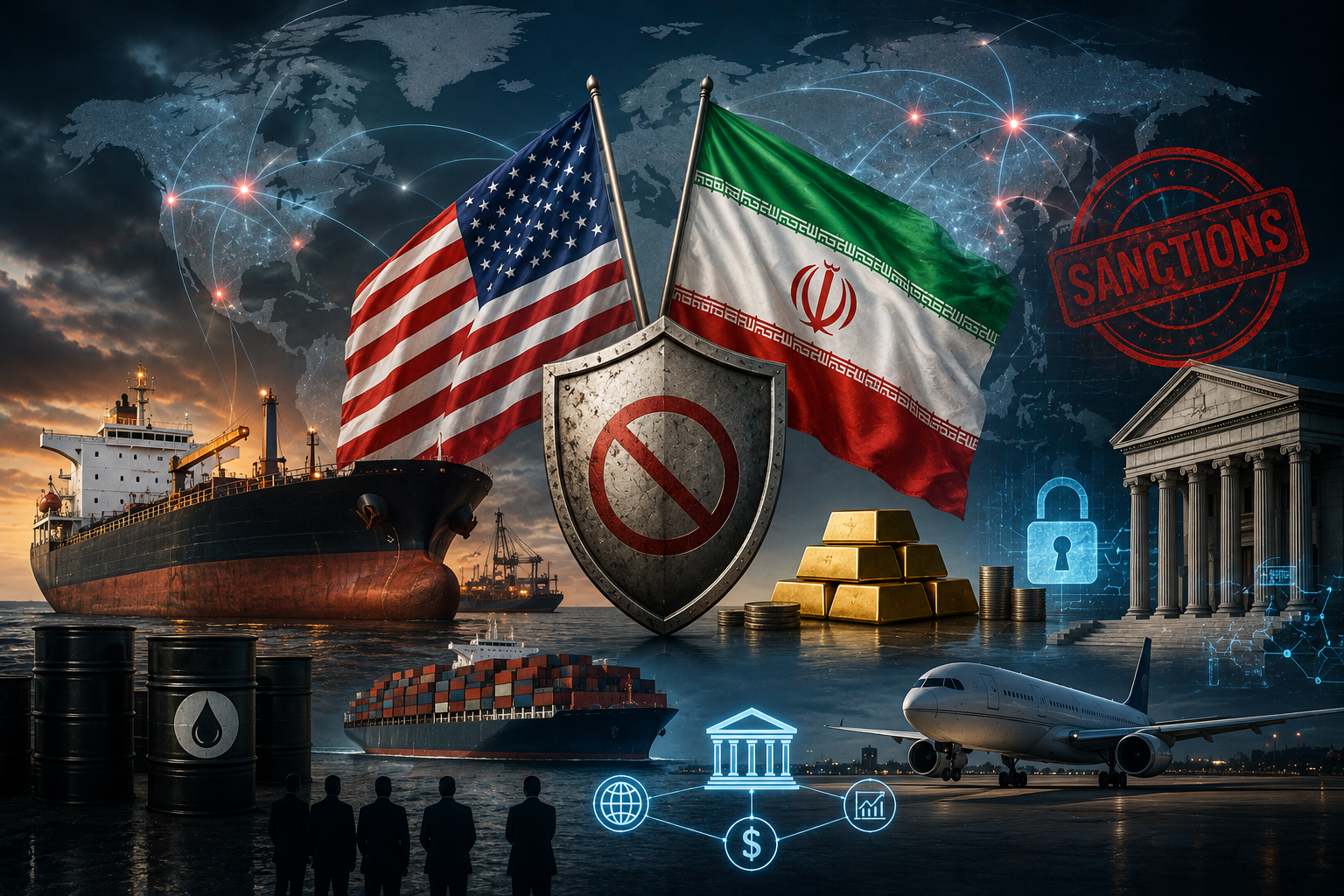
The US has launched a broader economic pressure campaign against Iran, targeting oil revenues, shipping, technology, digital assets, gold and aviation while warning foreign companies and financial institutions of possible secondary sanctions.
The United States has stepped up economic pressure on Iran with a new campaign dubbed “Operation Economic Outcast”, aimed at cutting Tehran off from the international networks that help it generate revenue, move money and obtain goods and technology.
The initiative, announced by US Treasury Secretary Scott Bessent, expands the focus beyond direct sanctions on Iranian entities. Washington is also putting pressure on foreign governments, banks, shipping companies, traders and other businesses that continue to maintain commercial links with Iran.
The campaign comes as the US seeks to further restrict Iran’s access to foreign currency and international financial infrastructure, particularly the networks connected with its oil trade.
What is Operation Economic Outcast?
Operation Economic Outcast represents an expansion of Washington’s strategy of using financial and trade restrictions to isolate Iran from the global economy.
The US has already sanctioned dozens of individuals, companies and vessels under the latest campaign. The targets include networks that Washington alleges are connected with Iran’s oil revenues, nuclear and missile programmes and cyber activities.
A major feature of the strategy is the increased use of secondary sanctions. These measures can expose companies and financial institutions outside the US to penalties if they continue to conduct certain transactions with sanctioned Iranian entities.
This significantly increases the potential cost of doing business with Tehran, even for companies that have no direct US operations.
Five sectors face increased scrutiny
Washington has identified several sectors where it intends to intensify pressure on Iran and entities that facilitate its international trade.
The key areas include:
-
Digital assets
-
Technology
-
Gold
-
Aviation
-
Shipping
Iran's oil sector remains a central focus because crude exports provide an important source of foreign exchange for the country.
The US is seeking to disrupt the broader ecosystem around Iranian trade, including brokers, tanker operators, ship managers, financial intermediaries and companies that help move or settle payments.
Why Iran's oil trade is at the centre of the campaign
Oil revenues are particularly important to Iran because they provide foreign currency that can be used to finance imports and other economic activity.
Over recent years, Iranian oil has continued to reach international markets despite US sanctions. This has led Washington to focus increasingly on the networks that facilitate these shipments.
Sanctions have previously targeted oil brokers, tanker operators, ship managers, vessels and financial intermediaries across multiple jurisdictions.
The latest campaign seeks to raise the risks associated with those activities by making companies and banks outside Iran more vulnerable to US penalties.
Shipping networks become a critical battleground
Shipping is one of the most important components of Iran's international trade network.
Tankers, ship-management companies, brokers and other maritime service providers can play a role in transporting Iranian petroleum and other goods.
The US has previously imposed sanctions on vessels and companies accused of helping Iran transport petroleum products. The strategy has also extended to intermediaries operating in countries such as China, India and the UAE.
Under the latest initiative, Washington is seeking to make international companies think twice before providing services to Iranian-linked vessels or cargoes.
For shipping companies, insurers, traders and financial institutions, the possibility of losing access to the US market or dollar-based financial system can represent a significant commercial risk.
The dollar threat could have a wider impact
One of the strongest tools available to Washington is the importance of the US dollar in global trade and banking.
Bessent has warned that entities facilitating money laundering or sanctions evasion for Iran could face restrictions that affect their access to the US financial system.
Banks around the world rely on correspondent banking relationships and dollar-clearing infrastructure to settle international transactions. Losing access to these networks can make cross-border business substantially more difficult.
As a result, the threat of secondary sanctions can have an impact well beyond companies directly involved with Iran.
Trump warns countries and companies dealing with Tehran
US President Donald Trump has also warned countries and businesses that continue providing economic support to Iran.
The warning covers a broad range of activities, including oil smuggling, cash transfers, exchange houses, ship registries, swap arrangements and the use of front companies.
Washington's message is that companies and governments providing what it considers an economic “lifeline” to Iran could themselves face significant consequences.
This approach effectively shifts part of the enforcement burden from Iranian entities to their international business partners.
How the campaign builds on the earlier 'maximum pressure' strategy
The latest operation follows the restoration of the US “maximum pressure” campaign against Iran in February 2025.
The policy was designed to increase economic pressure on Tehran, strengthen enforcement of existing sanctions and work towards reducing Iranian oil exports.
Since then, the US Treasury has repeatedly targeted Iranian oil networks, shipping companies, vessels and financial intermediaries.
In February 2025, Washington sanctioned networks accused of facilitating Iranian crude shipments to China, with measures covering individuals and companies in several jurisdictions.
Later that month, more than 30 people and vessels involved in Iranian petroleum shipments were targeted.
Further sanctions followed in 2026, including measures against oil-shipping networks and entities associated with Iran's shadow banking and financial infrastructure.
Technology and digital assets add a new dimension
The inclusion of technology and digital assets highlights how Iran's sanctions-evasion network has evolved beyond traditional banking and physical trade.
Digital assets can potentially be used to transfer value across borders, while technology and specialised equipment can support industrial, military or strategic programmes.
By targeting these channels, Washington is attempting to prevent Iran from replacing restricted traditional financial and commercial routes with alternative networks.
The approach also increases compliance requirements for international technology companies, cryptocurrency businesses and financial institutions dealing with customers or transactions linked to Iran.
Gold and aviation also face pressure
Gold can provide another mechanism for moving or storing value outside conventional financial channels.
The US focus on gold therefore reflects its broader attempt to restrict alternative mechanisms that could help Iranian-linked networks access foreign currency or settle transactions.
Aviation is another area of concern because airlines, aircraft services and related commercial networks can facilitate international movement and trade.
The expanded scope demonstrates that the campaign is not limited to Iran's oil exports or conventional banking system.
Why secondary sanctions matter for global businesses
Secondary sanctions can have consequences for companies that are not based in Iran.
A business may have to choose between maintaining a commercial relationship with an Iranian customer and protecting its access to the US financial system and market.
This creates a powerful deterrent.
For international banks, shipping companies, insurers, commodity traders and logistics providers, compliance decisions can therefore become a strategic business issue rather than simply a legal requirement.
Companies may also become more cautious about transactions involving jurisdictions, vessels or intermediaries that could potentially be connected to Iranian trade.
China could be critical to the US strategy
The effectiveness of the campaign will partly depend on how successfully Washington can restrict Iran's access to major trading partners.
China is particularly important because it has remained a significant destination for Iranian oil.
If Iranian crude continues to find buyers and international intermediaries remain willing to facilitate shipments and payments, completely cutting off Tehran's external revenue streams could prove difficult.
Washington's willingness to impose sanctions on foreign companies and financial institutions will therefore be an important factor in determining how far the campaign can go.
Potential implications for global oil markets
Any significant disruption to Iranian oil exports could have consequences beyond Iran.
Iran is a major oil producer, and restrictions on its ability to export crude can affect global supply expectations. The impact on prices would depend on the scale of any disruption, the availability of alternative supplies and broader demand conditions.
For countries dependent on imported crude, heightened restrictions on Iranian oil could also affect sourcing decisions and procurement costs.
The issue becomes particularly important during periods when global oil markets are already sensitive to geopolitical developments.
Risks for India and other trading partners
The expansion of secondary sanctions could create additional compliance challenges for companies in countries that maintain trade and commercial relationships with Iran.
Businesses involved in shipping, commodities, banking, logistics and international payments may need to conduct additional due diligence on counterparties and vessels.
For India, the issue is particularly relevant because Indian companies have previously featured in US sanctions actions involving Iranian petroleum networks.
At the same time, India has longstanding economic and strategic interests in the wider region, making developments around Iran important for energy security, trade routes and regional connectivity.
A broader economic confrontation
Operation Economic Outcast marks a shift toward a more comprehensive approach to economic pressure.
Rather than focusing exclusively on Iranian entities, Washington is attempting to disrupt the entire ecosystem that allows Iranian money, oil, goods and technology to move through international markets.
That means the campaign could affect banks, shipping firms, traders, technology providers, airlines and financial intermediaries across multiple jurisdictions.
The success of the strategy will ultimately depend on enforcement, cooperation from major trading partners and the ability of Iran to find alternative channels for its exports and financial transactions.