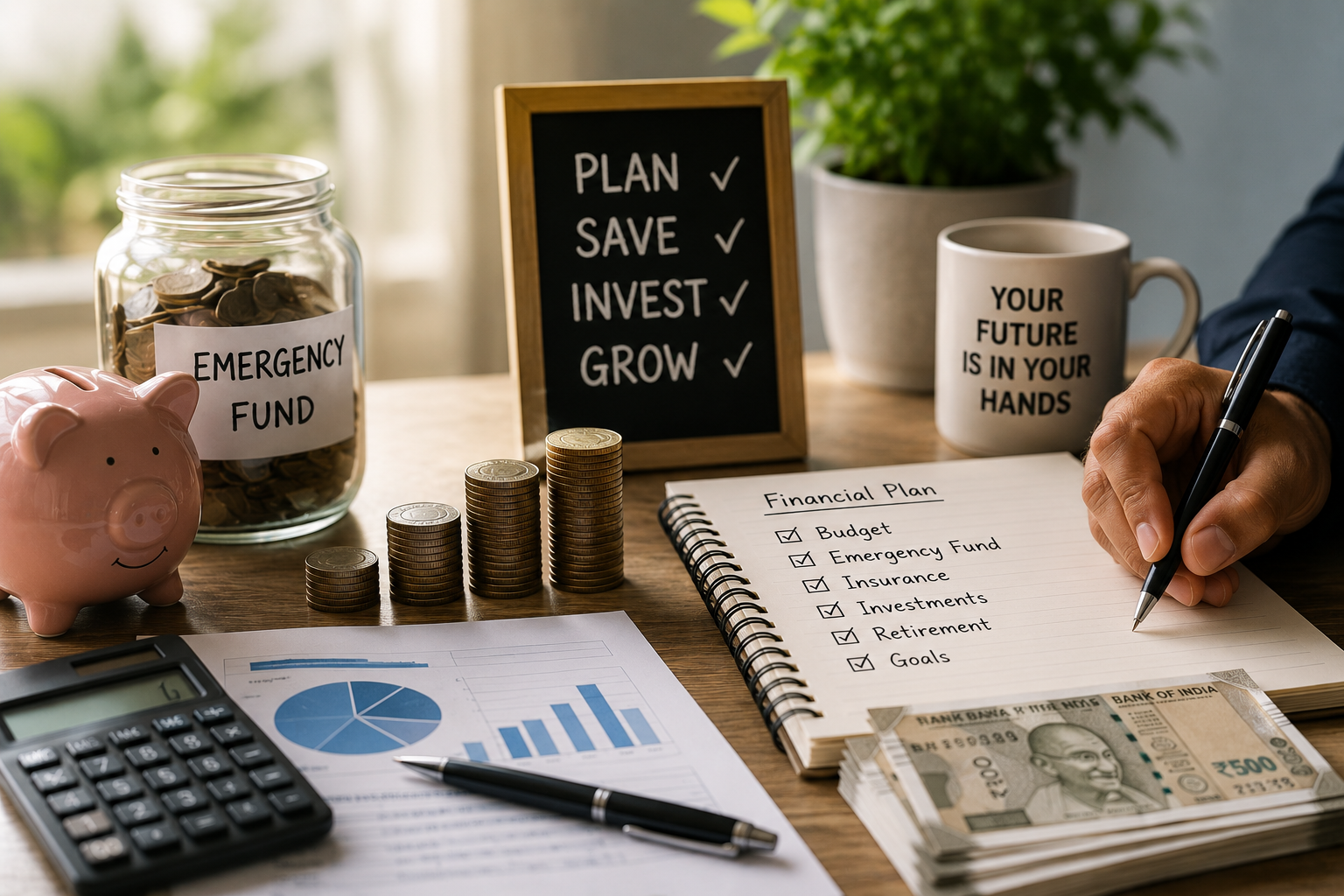
Financial Experts Recommend Balancing Saving, Investing and Spending Through Automation, Goal-Based Budgeting and Disciplined Financial Habits Instead of Extreme Cost-Cutting
For many young professionals, financial planning often carries the image of constant sacrifice—cutting back on travel, skipping weekend outings or giving up small luxuries to save more money. However, personal finance experts believe this perception is outdated. The most effective financial plans are not built on restrictions but on creating a sustainable system that allows people to enjoy their present while securing their future.
With rising incomes often accompanied by rising expenses, many households find themselves trapped in the cycle of living from one salary to the next despite earning more than before. Social media-driven lifestyles, easy access to consumer credit and increasing digital spending have made it easier than ever to overspend without realising it.
A well-designed financial plan addresses these challenges by aligning spending habits with personal priorities. Rather than eliminating enjoyment, it creates a balance between meeting today's needs and building tomorrow's financial security.
Why Every Individual Needs a Personal Money Plan
Financial planning is no longer only about retirement or tax savings. It has become an essential life skill that helps individuals manage uncertainty while achieving personal goals.
A structured money plan helps in:
-
Building emergency savings.
-
Managing monthly expenses.
-
Creating long-term wealth.
-
Reducing financial stress.
-
Achieving lifestyle goals without excessive debt.
-
Preparing for unexpected emergencies.
Most importantly, it provides clarity on where money is being spent and whether those expenses align with long-term objectives.
Know Your Cash Flow Before You Start Investing
One of the biggest financial mistakes people make is investing before understanding their own spending patterns.
Before choosing mutual funds, stocks or insurance products, individuals should first analyse their monthly cash flow.
A simple monthly review should answer three questions:
-
How much money comes in?
-
Where does it go?
-
How much remains for future goals?
Without this visibility, even higher incomes often fail to translate into meaningful wealth creation.
The 50-30-20 Budget Rule Remains a Strong Starting Point
Financial planners continue to recommend the 50-30-20 rule as one of the simplest frameworks for managing monthly income.
Suggested Budget Allocation
| Category | Share of Income |
|---|---|
| Essential Needs | 50% |
| Lifestyle & Wants | 30% |
| Savings & Investments | 20% |
Essential Expenses
These include unavoidable monthly obligations such as:
-
House rent or home loan EMI
-
Electricity and utility bills
-
Groceries
-
School fees
-
Transportation
-
Insurance premiums
-
Internet and mobile expenses
Lifestyle Expenses
This category covers discretionary spending including:
-
Restaurants
-
Shopping
-
Movies
-
Travel
-
Gym memberships
-
OTT subscriptions
-
Hobbies
Savings and Investments
The remaining portion should be allocated towards:
-
Emergency fund
-
SIPs
-
Retirement planning
-
Wealth creation
-
Loan repayment
The percentages may vary depending on personal circumstances, but maintaining discipline remains essential.
Financial Security Comes Before Wealth Creation
Experts caution that investing aggressively without building financial protection can create unnecessary risks.
A financially sound roadmap generally follows this sequence.
Eliminate Expensive Debt
Credit cards and high-interest personal loans should be repaid first.
Interest rates above 15–20% can quickly outweigh potential investment returns.
Build an Emergency Fund
Maintain liquid savings equal to three to six months of essential expenses.
Suitable options include:
-
Savings accounts
-
Liquid mutual funds
-
Short-term fixed deposits
Emergency savings prevent long-term investments from being withdrawn during unexpected situations.
Purchase Adequate Insurance
Health insurance and term life insurance provide financial protection against unforeseen events.
Without insurance, a single medical emergency can significantly disrupt years of financial planning.
Begin Long-Term Investing
Only after establishing financial stability should investors focus on long-term wealth creation through diversified investment portfolios.
Automation Is the Secret to Consistent Saving
Behavioural finance studies consistently show that people save more effectively when the decision is automated.
Financial planners recommend the "Pay Yourself First" strategy.
Under this approach:
-
Salary is credited.
-
Savings and investments are transferred automatically.
-
Remaining money is used for monthly expenses.
This removes emotional decision-making and reduces the temptation to overspend.
Automation transforms saving into a regular financial habit rather than a monthly choice.
The Three-Account Money Management System
Many financial advisors recommend separating finances into three different accounts.
Salary Account
Used for:
-
Salary credit
-
EMI payments
-
Utility bills
-
Insurance premiums
Lifestyle Account
Transfer monthly discretionary spending into this account.
It covers:
-
Shopping
-
Dining
-
Entertainment
-
Travel
-
Leisure
Once the allocated budget is exhausted, discretionary spending naturally stops.
This method effectively controls lifestyle inflation.
Investment Account
Dedicated exclusively to:
-
SIP investments
-
Mutual funds
-
Recurring deposits
-
Retirement savings
Keeping investment money separate reduces unnecessary withdrawals.
Invest According to Your Financial Goals
Every financial goal has a different investment horizon.
Short-Term Goals (1–3 Years)
Suitable investments:
-
Recurring Deposits
-
Liquid Funds
-
Arbitrage Funds
-
Short-Term Debt Funds
Ideal for:
-
Vacations
-
Vehicle purchases
-
Wedding expenses
Medium-Term Goals (5–10 Years)
A balanced portfolio may include:
-
Hybrid Funds
-
Equity Mutual Funds
-
Debt Funds
Suitable for:
-
Home down payment
-
Children's education
-
Business expansion
Long-Term Goals (20 Years or More)
Long-term wealth creation may include:
-
Equity Index Funds
-
Public Provident Fund (PPF)
-
National Pension System (NPS)
-
Diversified Equity Mutual Funds
Long investment horizons provide greater opportunities to benefit from compounding.
Review Your Financial Plan Every Quarter
A financial plan should evolve as income, expenses and responsibilities change.
Experts recommend reviewing finances every three months.
During each review:
-
Assess monthly expenses.
-
Increase savings after salary hikes.
-
Review investment performance.
-
Check insurance coverage.
-
Measure progress toward financial goals.
Quarterly reviews help identify unnecessary spending before it becomes habitual.
Don't Let Lifestyle Inflation Destroy Wealth
One of the biggest obstacles to long-term financial success is lifestyle inflation.
As income rises, spending often rises even faster.
Examples include:
-
Upgrading to a larger home.
-
Buying more expensive vehicles.
-
Increasing dining expenses.
-
Purchasing luxury gadgets.
Experts recommend following the "Save More Tomorrow" principle.
Whenever salary increases:
-
Invest at least 50% of the increment.
-
Increase SIP contributions.
-
Expand emergency savings.
-
Avoid upgrading lifestyle immediately.
This strategy accelerates wealth creation while maintaining financial flexibility.
Common Financial Mistakes to Avoid
Several behavioural mistakes frequently prevent individuals from achieving financial independence.
Waiting to Earn More Before Saving
Even small monthly investments can generate significant long-term wealth through compounding.
Ignoring Small Monthly Expenses
Unused subscriptions, impulse purchases and food delivery costs gradually reduce savings.
Conduct an annual subscription audit.
Saving Too Aggressively
Overly restrictive budgets often fail because they eliminate all discretionary spending.
A sustainable financial plan should include room for enjoyment.
Ignoring Emergency Savings
Investing every available rupee without maintaining liquidity increases financial vulnerability.
Simple Habits That Strengthen Financial Discipline
Experts recommend adopting several practical habits.
The 24-Hour Rule
Wait one day before making non-essential purchases above ₹2,000.
This reduces impulse buying.
Automatic Investments
Schedule SIPs and recurring deposits immediately after salary credit.
Maintain Emergency Cash
Keep approximately ₹20,000 in an easily accessible account for unexpected expenses.
Review Nominees
Ensure every investment, insurance policy and bank account has updated nominee details.
Calculate Net Worth Annually
Track total assets minus total liabilities each year.
Consistent growth in net worth indicates financial progress.
How Long Does It Take to Build a Successful Money Plan?
According to financial planners, most people require around three to four months for a new financial system to become a routine habit.
The first month typically involves understanding spending patterns.
The second month focuses on adjusting budgets.
By the third or fourth month:
-
Savings become automatic.
-
Spending habits stabilise.
-
Financial discipline improves.
-
Stress related to money gradually declines.
If budgeting continues to feel difficult after six months, experts recommend adjusting spending categories rather than abandoning the plan entirely.
The Bottom Line
A successful money plan is not one that forces people to sacrifice every pleasure—it is one that creates financial freedom while allowing them to enjoy life responsibly. Sustainable wealth is built through disciplined habits, consistent investing and thoughtful spending rather than extreme budgeting or short-term sacrifices.
By automating savings, maintaining an emergency fund, managing debt wisely and investing according to clearly defined goals, individuals can steadily build long-term financial security without compromising their lifestyle. In today's rapidly changing economic environment, financial planning is no longer about choosing between saving and spending—it is about creating a system where both can coexist, enabling people to achieve financial independence while continuing to enjoy the life they work hard to build.