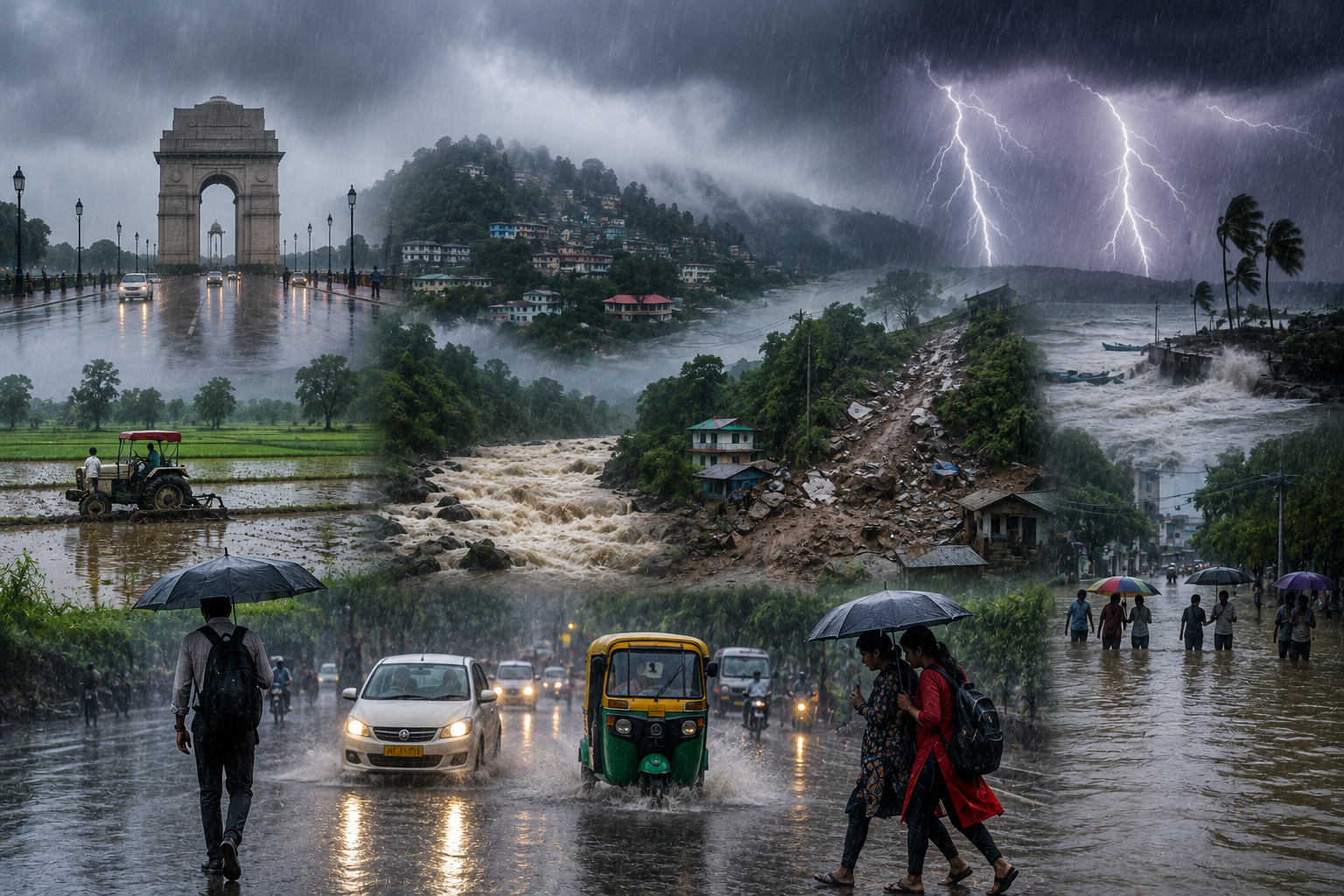
Heavy Rain Expected in Several States as Monsoon Activity Remains Strong
The India Meteorological Department (IMD) has forecast widespread rainfall across several parts of India over the coming days, with heavy rain likely in pockets of north and central India, eastern states and the Northeast. The weather system is expected to keep monsoon activity elevated through September 1, with thunderstorms, lightning and gusty winds also possible in several regions.
The forecast comes amid an uneven monsoon pattern across the country, with some regions receiving substantial rainfall while several states continue to report rainfall deficits. The intensity and distribution of showers over the next few days will therefore remain important for agriculture, water resources, transportation and infrastructure activity.
Uttar Pradesh, Madhya Pradesh and Chhattisgarh in Focus
Uttar Pradesh is likely to witness widespread rainfall across western parts, while eastern Uttar Pradesh may also receive widespread showers. Some locations could experience heavy rainfall accompanied by thunderstorms and lightning.
Central India is expected to remain another active zone. Madhya Pradesh and Chhattisgarh are likely to receive heavy rainfall during the forecast period, with thunderstorms and lightning expected over parts of the region.
Heavy showers in these areas could provide additional soil moisture for crops, although intense rainfall over short periods may result in waterlogging and localized disruption.
Western Himalayan Region May See Heavy Showers
The IMD has forecast widespread rainfall across Uttarakhand, Himachal Pradesh, Jammu & Kashmir and Ladakh.
Thunderstorms and lightning are also likely over parts of the western Himalayan region. Persistent or intense rainfall in hilly areas can increase the risk of landslides, flash floods and temporary road closures.
Travel and transport services in vulnerable mountainous locations could therefore face disruptions if rainfall intensifies.
Eastern India to Remain Rain-Active
Rainfall activity is expected to remain widespread across Gangetic West Bengal, Jharkhand, Odisha and Sub-Himalayan West Bengal and Sikkim.
Bihar is also likely to receive spells of rain, although rainfall distribution could become more scattered at times.
Several areas across eastern India may experience thunderstorms, lightning and gusty winds. Localised heavy rainfall could affect road connectivity, drainage systems and low-lying areas.
Northeast Likely to Receive Widespread Rain
The Northeast is expected to remain one of the most active rainfall zones through the end of the forecast period.
Arunachal Pradesh is likely to receive widespread rainfall through September 1. Assam and Meghalaya are also expected to see more widespread showers during the latter part of August.
Other northeastern states are likely to experience widespread rainfall as well. Prolonged showers could keep rivers and streams elevated and increase the possibility of flooding and landslides in vulnerable locations.
Gujarat and Maharashtra May See Scattered Showers
On the western side of the country, Konkan and Goa are expected to continue receiving widespread rainfall.
In contrast, Gujarat, Madhya Maharashtra, Marathwada and Saurashtra and Kutch are likely to see isolated to scattered showers. Parts of Maharashtra could also witness thunderstorms and lightning.
The relatively scattered nature of the forecast means rainfall distribution could vary considerably between districts, with some locations receiving meaningful showers while nearby areas remain comparatively dry.
Delhi Weather: Cloudy Skies and Light Rain
Delhi is expected to remain generally cloudy, with very light to light rain possible at many places during Thursday morning and forenoon.
The maximum temperature is forecast to remain around 33-35 degrees Celsius.
Cloud cover and intermittent showers could moderate daytime temperatures, although high humidity may continue during periods without rainfall.
Agriculture Could Benefit From Better Rainfall Distribution
The continuation of monsoon activity could provide support to agricultural regions that have experienced inadequate rainfall. Improved soil moisture can benefit standing crops and reduce dependence on irrigation in rain-fed farming areas.
However, rainfall intensity remains equally important. Heavy precipitation concentrated over a short period can result in waterlogging, crop damage and disruption to agricultural operations.
The next few days will therefore be important for assessing whether additional rainfall helps reduce regional deficits or creates excess-rainfall concerns in already wet areas.
Infrastructure and Transport Could Face Localised Disruptions
Heavy rainfall can have mixed implications for infrastructure and economic activity.
Construction projects, road works, mining operations and logistics could experience temporary interruptions in areas receiving intense showers. Waterlogging may slow traffic movement, while heavy rain in hilly regions could affect road and highway connectivity.
At the same time, improved rainfall and reservoir inflows can support water availability and benefit irrigation-dependent regions.
Monsoon Distribution Remains Uneven
Despite the widespread rainfall forecast, India's overall monsoon performance continues to be characterised by considerable regional variation.
Some states have received stronger rainfall, while others remain below their seasonal averages. This uneven distribution is important because the economic impact of the monsoon depends not only on the total rainfall received but also on where, when and how consistently the rain falls.
The coming week could therefore be significant in determining whether rainfall deficits narrow further across vulnerable regions.
Rainfall and Inflation Outlook
Monsoon conditions also remain important for food inflation. Adequate rainfall can support the production of several agricultural commodities and improve crop prospects.
However, excessive rainfall can damage crops, disrupt supply chains and temporarily push up prices of perishable commodities.
Markets will consequently remain attentive to rainfall patterns, reservoir levels, crop conditions and government updates on agricultural production as the monsoon season progresses.
Market Outlook
The extended rainfall forecast could create mixed implications across sectors. Better rainfall distribution may support rural incomes, agricultural activity and consumption-linked businesses, while strong reservoir inflows could benefit irrigation and power generation.
On the other hand, prolonged heavy rain could temporarily weigh on construction, mining, road projects, logistics and other outdoor economic activities in affected regions.
For equity markets, the focus is likely to remain on the actual distribution of rainfall and its economic impact, rather than the headline forecast alone. Investors may closely track agricultural output, food prices, rural demand, infrastructure execution and regional weather disruptions as monsoon activity continues through the end of August.