Five Companies Selected to Build Next-Generation Reactors as Washington Accelerates Nuclear Power Push
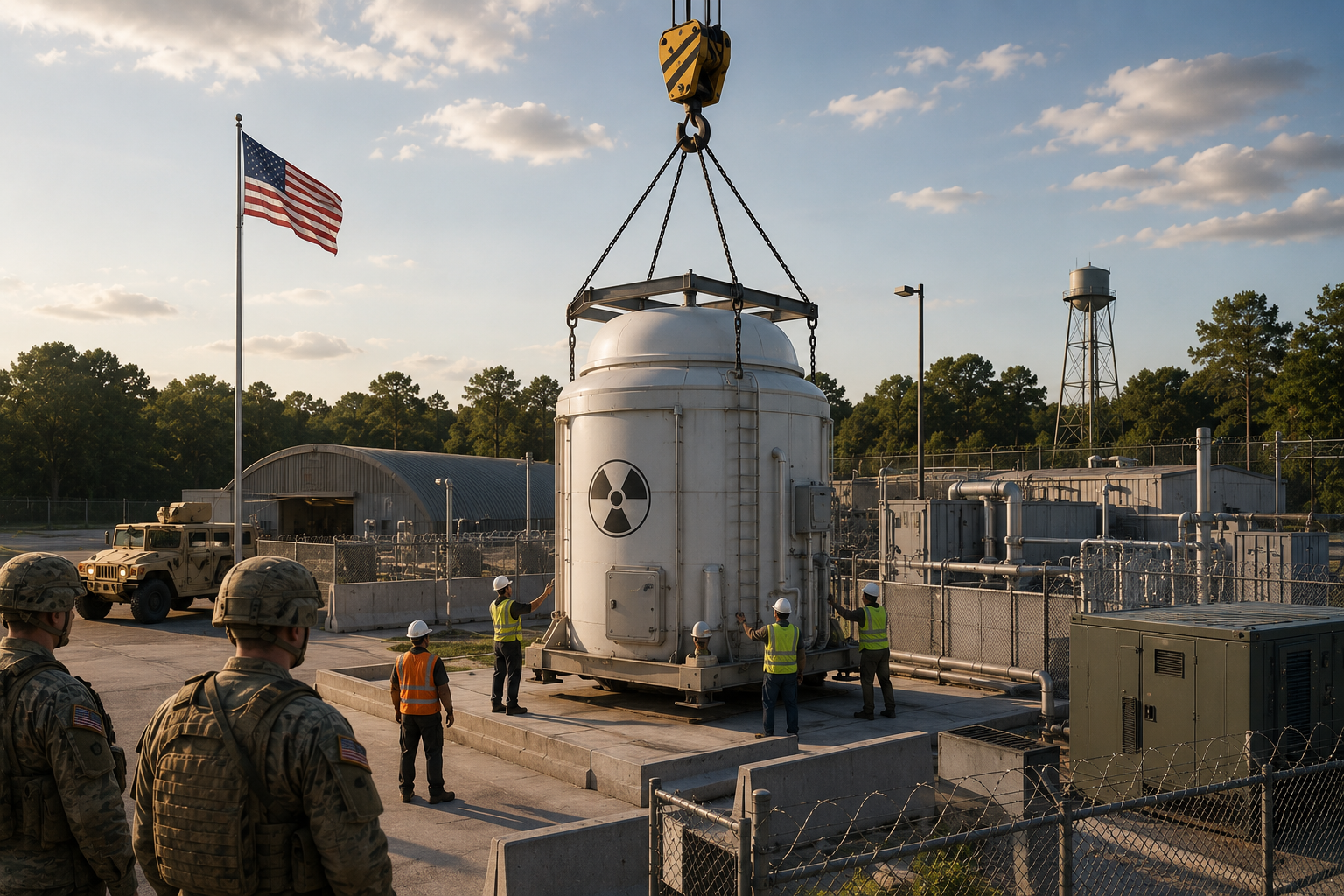
The US Army is moving ahead with an ambitious plan to deploy nuclear microreactors at five military bases across the country, committing up to $2.2 billion over five years to accelerate the development of next-generation nuclear power.
The programme is designed to provide military installations with a reliable and resilient electricity source that can operate independently of the commercial power grid during emergencies, infrastructure failures or potential conflicts.
The Army expects the initiative to result in the construction and operation of more than 20 nuclear microreactors, marking one of the most significant government-backed efforts to move advanced nuclear technology from development into real-world deployment.
Five Companies Selected for the Nuclear Programme
The Army has selected five companies to develop, construct, own and operate the planned microreactors.
The projects will be distributed across five military installations:
-
Antares Nuclear at Fort Bragg, North Carolina
-
BWXT at Fort Campbell, Kentucky
-
General Atomics Electromagnetic Systems at Fort Hood, Texas
-
Radiant Industries at Fort Benning, Georgia
-
Westinghouse Government Services at Fort Drum, New York
Each company will be eligible for funding as it meets specified milestones related to its project.
The Army's decision to work with multiple developers is intended to reduce the risk that delays or technical problems at one project could derail the wider programme.
Why Military Bases Need Independent Power
Military installations depend heavily on electricity for critical infrastructure, communications, security systems, computing facilities and other essential operations.
A failure of the commercial grid could therefore have serious consequences, particularly during a national emergency or military conflict.
The Army currently relies significantly on diesel generators to provide backup electricity. However, maintaining diesel supplies requires fuel transportation and storage, which could become difficult if supply routes are disrupted.
Nuclear microreactors offer an alternative because they can provide continuous electricity for long periods without requiring frequent fuel deliveries.
Army officials believe this could significantly improve the energy resilience of military facilities.
Microreactors Could Deliver Up to 20 MW
The planned reactors will differ in size and design depending on the company involved.
According to the Army, individual reactors could generate between 1 megawatt and 20 megawatts of electricity.
The installations will continue to remain connected to the commercial electricity grid. The microreactors are therefore not intended to completely replace grid electricity.
Instead, the technology is expected to provide an additional source of dependable power that can support critical infrastructure when conventional electricity supplies are unavailable or unreliable.
Some developers are planning to deploy multiple reactors together. Antares Nuclear and Radiant Industries, for example, are expected to use three-reactor configurations for their projects.
Reactors Could Operate for Years Without Refuelling
A major advantage of microreactor technology is the potential for long operating periods without conventional refuelling.
This could be particularly valuable for military installations where maintaining continuous energy availability is strategically important.
Unlike diesel generators, which require regular fuel supplies, nuclear reactors can potentially operate for years before requiring significant fuel-related intervention.
That characteristic could reduce logistical dependence on fuel deliveries and provide military bases with a more durable backup power system.
Janus Programme at the Centre of the Initiative
The projects are being developed under the Army's Janus Programme, which seeks to accelerate the deployment of advanced nuclear technology.
The programme is intended to bridge the gap between experimental reactor concepts and commercially deployable systems.
Rather than limiting development to laboratory demonstrations, the Army wants developers to demonstrate that advanced reactors can be manufactured, deployed, operated and maintained in practical environments.
The military's involvement could therefore provide developers with valuable operating experience that may later support civilian applications.
Washington Is Increasing Its Focus on Nuclear Energy
The Army's programme comes amid a broader push by the US administration to accelerate nuclear power development.
The government is seeking to expand nuclear generation to meet rising electricity demand from data centres, artificial intelligence infrastructure and other energy-intensive industries.
Advanced reactors are receiving increasing attention because they could potentially be deployed in smaller units and in locations where conventional large-scale nuclear plants may not be practical.
The military programme could therefore become an important testing ground for technologies that eventually find applications outside defence.
Nuclear Power Could Address Rising Data Centre Demand
The rapid expansion of artificial intelligence is creating a new challenge for the US electricity system.
Large data centres can consume enormous amounts of electricity and require highly reliable power supplies. Any prolonged interruption can result in substantial operational and financial losses.
This has increased interest in nuclear energy because reactors can provide continuous baseload electricity without depending on weather conditions.
Microreactors could potentially serve specialised energy-intensive facilities in the future, although their commercial economics and regulatory requirements will determine how quickly that market develops.
Army Sets 2028 Operating Target
The timeline for the programme is ambitious.
The Army has been tasked with ensuring that an advanced reactor begins operating at a domestic military installation by September 30, 2028.
Achieving that objective will require rapid progress across reactor design, manufacturing, site preparation, licensing, construction and safety testing.
The deadline is particularly significant because advanced nuclear technologies have historically faced lengthy development and regulatory processes.
The first projects will therefore be closely watched as indicators of whether microreactor technology can move from development to deployment at the expected pace.
Safety Remains a Major Consideration
Despite the potential benefits, nuclear microreactors also face concerns around safety, cost and radioactive waste.
Army officials have maintained that the proposed reactor designs will incorporate safety mechanisms that allow the systems to shut down safely in the event of a failure.
The Army is also working with the US Department of Energy on radioactive waste management. Officials have indicated that long-term radioactive waste storage will not be maintained at the military installations.
Safety performance will nevertheless remain one of the most important factors determining public and government acceptance of the programme.
Different Regulatory Route for Military Reactors
Another notable feature of the initiative is its regulatory framework.
The reactors will be licensed by the US Army, rather than directly by the US Nuclear Regulatory Commission, which regulates commercial nuclear reactors.
Army officials have said they intend to align their regulatory procedures with NRC standards wherever possible.
The approach is intended to ensure that reactor designs developed for military applications do not require major changes if companies later seek commercial approval.
Billions in Private Capital Could Follow
The Army's financial commitment could potentially attract additional private investment into advanced nuclear technology.
The selected companies are expected to contribute capital alongside government funding, while successful deployment could help demonstrate the commercial viability of their reactor designs.
If the first projects meet their performance targets, developers could gain opportunities in markets beyond the military.
Potential future applications could include remote industrial facilities, isolated communities, mining operations, emergency power infrastructure and high-demand data centres.
US Nuclear Supply Chain Could Benefit
The programme could also stimulate investment across the wider nuclear supply chain.
Advanced reactor development requires specialised equipment and expertise spanning nuclear engineering, manufacturing, electrical systems, materials, control technologies and nuclear fuel.
A sustained expansion in reactor deployment could therefore create additional demand for suppliers and engineering companies.
The impact could extend beyond the five selected developers if the programme encourages the construction of a larger domestic manufacturing ecosystem.
Military Energy Strategy Is Changing
The shift toward microreactors reflects a broader change in how military planners view energy security.
Electricity is increasingly considered a strategic asset rather than simply an operational requirement. Modern military bases depend on digital communications, advanced weapons systems, surveillance, computing and data infrastructure, all of which require reliable electricity.
An independent source of continuous power could therefore provide an additional layer of resilience.
The technology could become particularly important as military operations become increasingly dependent on digital and autonomous systems.
What Happens Next
The immediate focus will be on project development, engineering milestones and regulatory preparation.
The companies will need to demonstrate that their respective reactor designs can meet safety and performance requirements while remaining economically and technically feasible.
The first successful deployment could have an outsized impact on the advanced nuclear industry because it would provide evidence that microreactors can operate outside laboratory environments.
A successful programme could subsequently encourage other government agencies, utilities and private companies to explore similar technologies.
Market Outlook
The announcement could provide a long-term growth catalyst for the US advanced nuclear, defence technology, engineering and specialised manufacturing sectors.
The immediate financial impact on individual companies will depend on contract milestones, funding releases and project execution. However, successful deployment could open a significantly larger addressable market for microreactors across military installations, remote industrial facilities, data centres and other high-reliability power applications.
Investors are likely to monitor government contracts, reactor approvals, construction timelines, private-sector investment and commercialisation opportunities closely. Companies that successfully demonstrate safe and economically viable microreactor technology could emerge as important beneficiaries of the broader global shift toward reliable, low-carbon and strategically independent power generation.