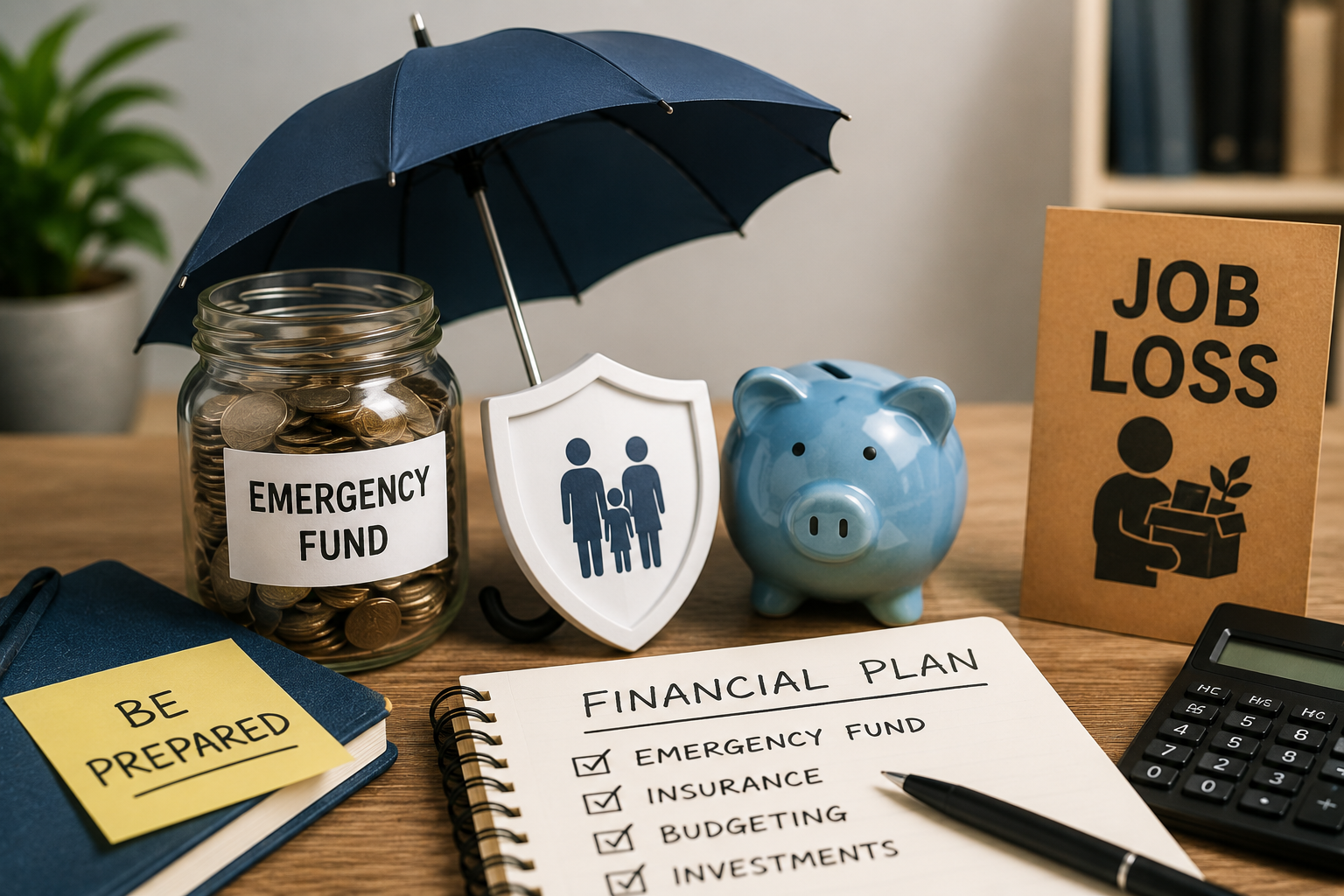
From Home Loan EMIs to Daily Essentials, Experts Say a Strong Emergency Fund, Smart Budgeting and Adequate Insurance Are the Keys to Financial Stability During Uncertain Times
In today's rapidly changing job market, employment security can no longer be taken for granted. Corporate restructuring, economic slowdowns, automation, mergers, contract expirations and industry disruptions have made job losses an increasingly common reality across sectors. While losing a job can be emotionally challenging, the financial impact can be even more severe if households are unprepared.
Financial planners emphasise that the best way to handle unemployment is to prepare long before it happens. A carefully planned emergency fund, disciplined spending habits and adequate insurance coverage can help families meet essential expenses without disturbing long-term investments or accumulating expensive debt.
Rather than reacting after income stops, experts recommend building a financial cushion that provides enough time to search for the right employment opportunity instead of accepting the first available job out of financial necessity.
Why Every Working Professional Needs an Emergency Plan
For most salaried individuals, monthly income supports every aspect of household finances—from home loan EMIs and rent to school fees, groceries, insurance premiums and utility bills.
When salary suddenly stops, these financial commitments continue uninterrupted.
Without adequate emergency savings, individuals often resort to:
-
Credit card borrowing
-
Personal loans
-
Premature withdrawal of retirement savings
-
Selling investments during market downturns
-
Delaying insurance premium payments
These decisions may provide temporary relief but often weaken long-term financial security.
A dedicated emergency fund helps bridge the income gap while preserving long-term wealth-building investments.
Step One: Calculate Your Financial Survival Number
Before deciding how much to save, it is essential to determine your minimum monthly financial requirement.
Experts refer to this as the "Survival Number"—the amount required each month to cover only essential expenses.
These typically include:
-
Home loan EMI or house rent
-
Groceries and household supplies
-
Electricity, water and internet bills
-
Health and life insurance premiums
-
Transportation costs
-
Children's education expenses
-
Minimum debt repayments
-
Medical expenses
Lifestyle expenses such as vacations, entertainment, online shopping, dining out and luxury subscriptions should not be included.
For instance, if your total monthly expenditure is ₹70,000 but only ₹45,000 is required for essential living expenses, then ₹45,000 becomes your monthly survival number.
This figure forms the basis of your emergency fund planning.
How Much Emergency Fund Should You Maintain?
The size of the emergency corpus depends on family responsibilities, debt obligations and income stability.
Recommended Emergency Savings
| Category | Suggested Emergency Fund |
|---|---|
| Single salaried employee | 6 months of expenses |
| Married with dependents | 9 months of expenses |
| Freelancer / Self-employed | 12 months of expenses |
Professionals working in volatile industries or those with variable income should maintain a larger reserve due to greater employment uncertainty.
The objective is to ensure that fixed financial commitments continue uninterrupted while searching for new opportunities.
Where Should You Keep Your Emergency Fund?
Liquidity is the most important feature of an emergency fund.
The money should be easily accessible while remaining relatively safe.
High-Interest Savings Account
Keep approximately one month's expenses in a dedicated savings account separate from your salary account.
This amount should be immediately available for:
-
Household expenses
-
Medical emergencies
-
Utility bills
-
Loan repayments
Maintaining a separate account reduces the temptation to spend emergency savings.
Fixed Deposits
Short-term fixed deposits remain a preferred option for a portion of emergency savings.
Advantages include:
-
Capital protection
-
Stable returns
-
Easy premature withdrawal
-
Low risk
Many banks now allow instant FD closure through mobile banking applications.
Liquid Mutual Funds
Liquid mutual funds offer higher liquidity while potentially generating better returns than traditional savings accounts.
Most liquid funds process redemption requests within one business day, making them suitable for emergency financial planning.
Building an Emergency Fund Doesn't Have to Be Difficult
Many individuals postpone emergency savings because the target appears too large.
Financial planners recommend breaking the process into manageable monthly contributions.
A practical approach includes:
-
Automatically saving 10% of monthly salary
-
Investing annual bonuses into the emergency corpus
-
Using tax refunds to strengthen reserves
-
Increasing contributions after every salary increment
Automation removes the need for monthly financial discipline and gradually builds a substantial safety net.
Financial Planning Should Evolve with Life Stages
Emergency planning requirements change significantly over time.
Early Career Professionals
Young professionals usually have fewer financial obligations but often lack emergency savings.
Priority should be:
-
Eliminating high-interest debt
-
Building a three-month emergency reserve initially
-
Expanding it to six months
-
Avoiding unnecessary lifestyle inflation
Greater personal flexibility allows younger professionals to reduce expenses quickly if employment is interrupted.
Mid-Career Professionals
Individuals with families face much greater financial responsibilities.
Their emergency planning should include:
-
Nine months of essential expenses
-
Home loan EMIs
-
Children's education costs
-
Family healthcare expenses
-
Independent health insurance
A family-wide contingency budget should also identify discretionary expenses that can be immediately reduced during income disruption.
Freelancers and Business Owners
Self-employed professionals face irregular cash flows and should therefore maintain the largest emergency reserves.
Experts recommend:
-
Saving at least 30% of every payment received
-
Maintaining separate business and personal accounts
-
Building a 12-month emergency fund
Such planning helps smooth income fluctuations while reducing financial stress during slower business periods.
Insurance Plays a Critical Role
Employer-provided health insurance often creates a false sense of financial security.
Once employment ends, corporate health coverage typically ceases immediately.
Maintaining personal health insurance ensures uninterrupted protection against unexpected medical expenses.
Individuals should also review:
-
Term insurance
-
Personal accident cover
-
Critical illness insurance
-
Family floater policies
Insurance acts as the second line of financial defence after emergency savings.
Prepare a Financial Action Plan Before You Need It
Financial experts recommend creating a written emergency strategy.
Month One
-
Calculate monthly essential expenses.
-
Eliminate unnecessary spending.
-
Determine emergency fund target.
Month Two
-
Open a dedicated emergency savings account.
-
Set up automatic monthly transfers.
Month Three
-
Review health insurance.
-
Update nominees.
-
Organise financial documents.
Every Salary Increment
Instead of increasing lifestyle expenses, allocate part of the salary increase towards expanding the emergency corpus.
Mistakes That Can Make a Job Loss Worse
Several financial decisions can worsen an already difficult situation.
Common mistakes include:
-
Using credit cards for regular living expenses.
-
Breaking retirement investments too early.
-
Ignoring insurance renewals.
-
Continuing luxury subscriptions.
-
Delaying EMI payments without informing lenders.
-
Depending on personal loans for routine expenses.
Experts recommend immediately shifting to a "survival budget" focused exclusively on essential household spending.
When Should You Use Your Emergency Fund?
An emergency fund should only be used for genuine financial emergencies.
Appropriate situations include:
-
Loss of employment
-
Medical emergencies
-
Essential home repairs
-
Temporary income disruption
-
Critical family expenses
It should never be used for vacations, gadgets, luxury purchases or speculative investments.
Once employment resumes, rebuilding the emergency corpus should become the highest financial priority.
Review Your Financial Cushion Regularly
An emergency fund should not remain static.
Every significant life event should trigger a reassessment, including:
-
Marriage
-
Birth of a child
-
Purchase of a home
-
New loans
-
Higher education expenses
-
Salary increases
If monthly expenses rise by ₹15,000, a six-month emergency reserve should increase by ₹90,000 to maintain the same level of financial protection.
Financial Discipline Is the Best Job Insurance
No emergency fund can prevent a job loss, but it can prevent a temporary setback from becoming a long-term financial crisis.
Households that maintain adequate liquidity, avoid excessive debt and regularly review their financial plans are far better equipped to navigate uncertain employment conditions.
Building an emergency fund should therefore be viewed not as an optional savings goal but as an essential component of personal financial planning.
Outlook
With economic cycles becoming increasingly unpredictable and workplace disruptions more frequent, financial resilience has become just as important as career growth. A disciplined emergency savings strategy, supported by appropriate insurance coverage and prudent budgeting, enables individuals to manage periods of unemployment with confidence while protecting long-term financial goals. For every working professional, preparing today could make all the difference when facing tomorrow's uncertainties.