New RBI Framework Simplifies Complaint Resolution; Understanding Eligibility, Process and Documentation Rules Becomes Crucial for Customers
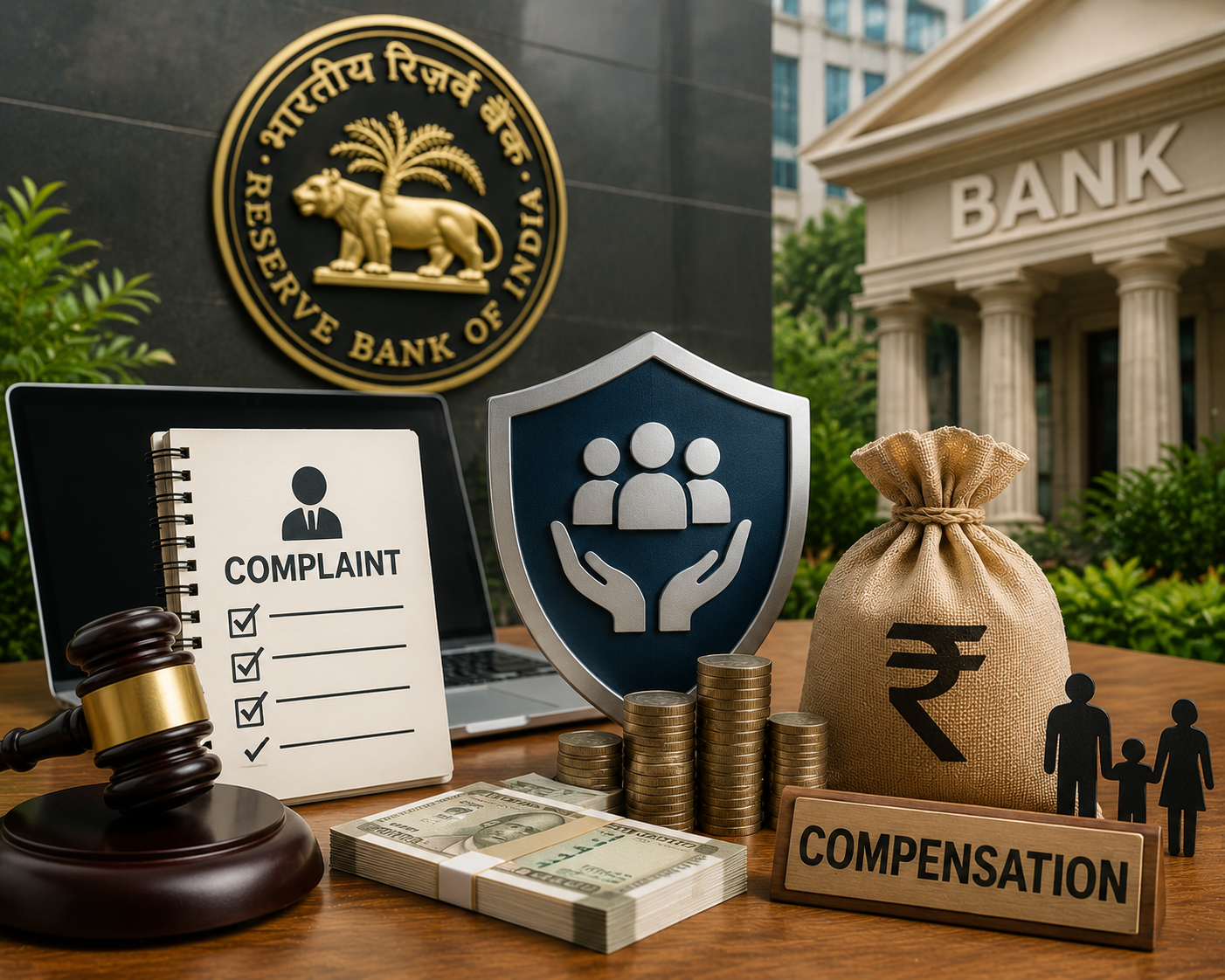
Banking customers now have a stronger mechanism to seek resolution against service-related issues with banks and financial institutions under the Reserve Bank – Integrated Ombudsman Scheme (RB-IOS), 2026.
The revised framework, which became effective from July 1, 2026, provides customers with a free and independent platform to escalate unresolved complaints related to banking and financial services.
From unauthorised transactions and delayed settlements to account-related issues and poor customer service, the RBI Ombudsman system aims to provide faster and more transparent grievance resolution.
One of the most discussed features of the scheme is the provision allowing compensation of up to:
₹33 lakh
However, experts highlight that customers should understand the rules carefully, as compensation is not automatic and depends on the strength of the complaint and evidence provided.
What Is the RBI Integrated Ombudsman Scheme 2026?
The RBI Integrated Ombudsman Scheme is a unified grievance redressal framework designed to help customers resolve disputes with RBI-regulated entities.
The scheme replaces multiple complaint mechanisms with a single integrated system, making the process simpler for customers.
The objective is to ensure:
-
Faster complaint handling
-
Better accountability among financial institutions
-
Improved customer protection
-
Transparent dispute resolution
Entities Covered Under RBI Ombudsman Scheme
The scheme applies to several regulated financial institutions, including:
Banks
Customers of commercial banks, cooperative banks and other eligible banking entities can approach the Ombudsman for unresolved issues.
Non-Banking Financial Companies (NBFCs)
Eligible NBFC customers can raise complaints related to service deficiencies.
Digital Payment and Financial Entities
The framework also covers:
-
Prepaid payment instrument issuers
-
Credit information companies
-
Other RBI-regulated entities
This is particularly important as digital financial services continue to expand rapidly.
When Can Customers File a Complaint With RBI Ombudsman?
Customers must follow a specific process before approaching the RBI.
Step 1: First Contact the Institution
The customer must initially submit a complaint to the concerned bank or financial institution.
Examples include:
-
Wrong charges
-
Failed transactions
-
Delayed refunds
-
Account-related problems
-
Loan servicing issues
Step 2: Wait for the Institution’s Response
Customers can approach the RBI Ombudsman if:
-
The complaint is rejected
-
The response is unsatisfactory
-
The institution does not resolve the issue within the prescribed period
Understanding the ₹33 Lakh Compensation Provision
The compensation limit under the scheme has attracted significant public attention.
However, experts clarify that:
₹33 lakh is the maximum permissible limit, not a guaranteed payout.
The compensation is divided into two categories.
1. Compensation for Financial Loss — Up to ₹30 Lakh
The RBI Ombudsman may award compensation up to ₹30 lakh for:
-
Direct financial losses
-
Consequential losses caused by service failure
The customer must prove that the financial damage occurred due to the institution’s deficiency.
2. Compensation for Harassment and Expenses — Up to ₹3 Lakh
An additional amount may be awarded for:
-
Time spent pursuing the complaint
-
Expenses incurred
-
Mental harassment
-
Emotional distress
The final amount depends on the facts of each case.
Compensation Depends on Evidence, Not Emotional Appeal
Experts believe many customers misunderstand the compensation process.
A complaint becomes stronger when the customer can clearly demonstrate:
-
The service failure
-
The financial impact
-
The timeline of events
-
The institution’s response delay
The Ombudsman evaluates the actual impact rather than simply considering the amount claimed.
Why Documentation Is the Most Important Factor
Financial experts advise customers to maintain detailed records throughout the complaint process.
Important documents include:
✔ Complaint acknowledgement numbers
✔ Emails exchanged with the institution
✔ Transaction statements
✔ Screenshots of online communication
✔ Bank responses
✔ Payment records
✔ Proof of financial loss
A well-documented complaint increases the chances of a favourable outcome.
Example: How a Customer Can Receive Compensation
Suppose a customer’s bank account is wrongly blocked due to a technical error during KYC verification.
The issue results in:
-
Salary credit delay
-
EMI failure
-
Penalty charges
-
Negative credit score impact
If the customer has proof such as:
-
Bank communication
-
Complaint records
-
Penalty receipts
-
Credit report impact
the Ombudsman can evaluate the actual loss and determine appropriate compensation.
The compensation is based on measurable damage rather than the maximum limit.
Common Mistakes Customers Should Avoid
Experts highlight several mistakes that weaken customer complaints.
1. Submitting Incomplete Information
Many complaints fail because customers do not provide:
-
Account details
-
Transaction dates
-
Reference numbers
-
Complete explanations
A detailed complaint helps authorities understand the issue quickly.
2. Not Mentioning Specific Relief Required
Customers should clearly state what they want:
-
Refund
-
Correction of account issue
-
Compensation
-
Removal of charges
-
Service improvement
3. Skipping Internal Complaint Process
Customers cannot directly approach RBI without first giving the financial institution an opportunity to resolve the issue.
Following the correct escalation process is essential.
Growing Importance of RBI Ombudsman in Digital Finance Era
India’s financial ecosystem has transformed significantly with rapid adoption of:
-
UPI payments
-
Mobile banking
-
Digital lending
-
Online investments
With higher transaction volumes, customer disputes have also increased.
The updated Ombudsman framework aims to strengthen trust in India’s digital financial system.
Banks and Fintech Companies Need Stronger Internal Systems
Industry experts believe the best grievance system is one where issues are resolved before reaching regulators.
Financial institutions are expected to improve:
-
Customer support technology
-
Complaint tracking systems
-
Fraud resolution mechanisms
-
Communication processes
A faster internal resolution system benefits both customers and financial companies.
Impact on Digital Payment Ecosystem
As digital transactions grow, customer expectations are also changing.
Customers increasingly demand:
-
Instant resolution
-
Transparent communication
-
Quick refunds
-
Better protection against fraud
The RBI framework reinforces the importance of customer experience beyond just successful transactions.
Checklist Before Approaching RBI Ombudsman
Customers should keep the following ready:
Complaint Information
-
Copy of complaint submitted to the institution
-
Complaint reference number
-
Dates of communication
Financial Details
-
Account number
-
Loan or card details
-
Transaction records
-
Payment information
Supporting Evidence
-
Emails
-
Screenshots
-
Statements
-
Documents showing loss
Expected Resolution
Clearly mention:
-
Problem faced
-
Loss suffered
-
Action expected
How the New Framework Benefits Customers
The RBI Ombudsman Scheme 2026 provides several advantages:
Free Complaint Resolution
Customers do not need to pay fees to approach the Ombudsman.
Independent Review
Complaints are reviewed by an external regulatory mechanism.
Greater Accountability
Banks and financial institutions face stronger responsibility for service quality.
Smart Investment Personal Finance Insight
The RBI Integrated Ombudsman Scheme 2026 strengthens consumer protection at a time when India’s banking and digital finance ecosystem is expanding rapidly.
While the ₹33 lakh compensation provision provides significant protection, customers should remember that successful claims depend on proper documentation, clear evidence and following the correct complaint process.
Smart Investment Insight: Every financial consumer should maintain records of transactions, complaints and communication with banks. In today’s digital financial environment, documentation is the strongest tool for protecting your money and your rights.