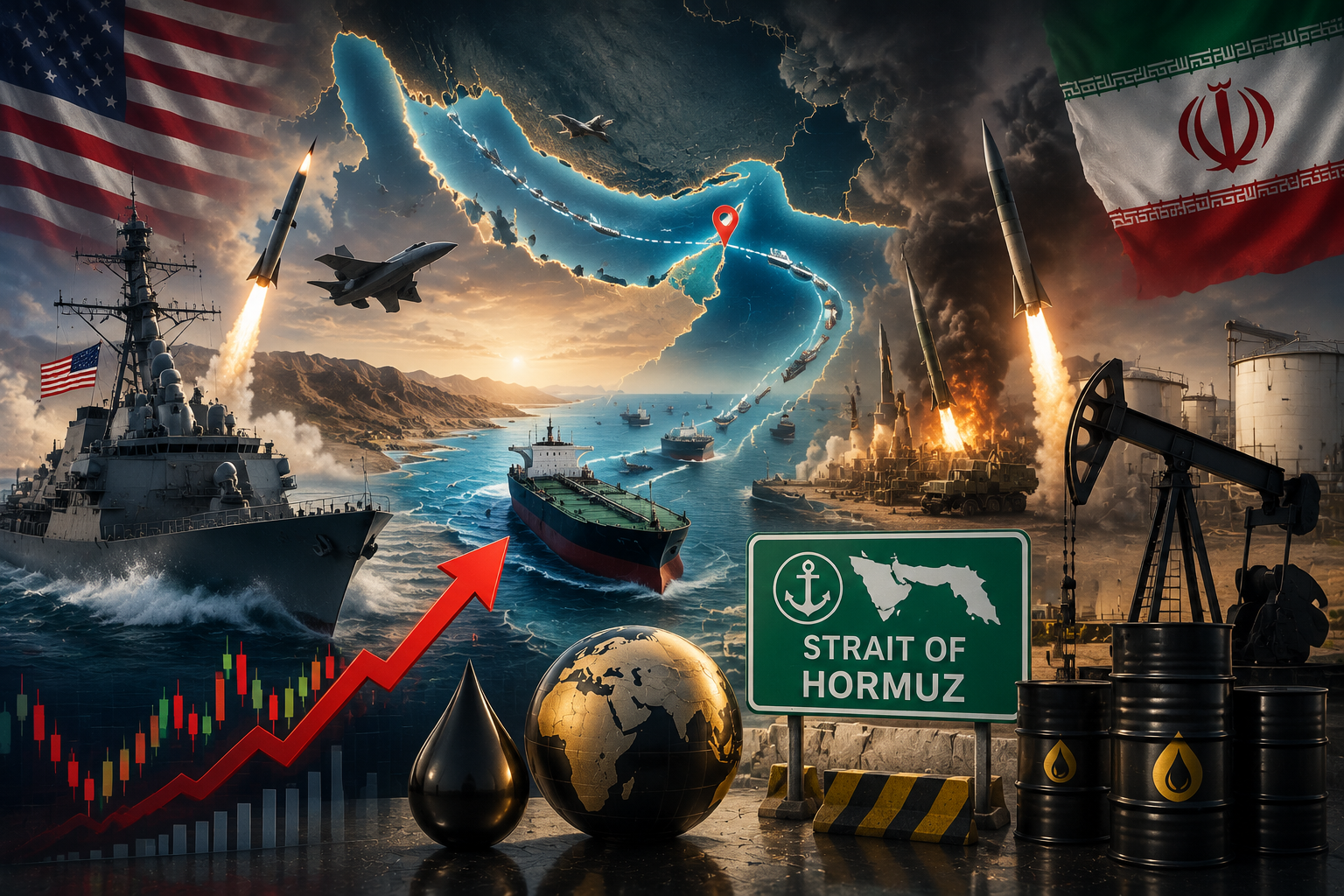
Military Strikes, Shipping Disruptions and Strait of Hormuz Uncertainty Put Energy Markets on Alert; Brent Crude Nears $87
Geopolitical tensions in the Middle East have intensified after the United States reimposed a naval blockade on Iran following renewed attacks on ships passing through the strategic Strait of Hormuz.
The latest confrontation between Washington and Tehran has triggered fresh missile exchanges, increased military activity and renewed concerns over global energy security.
The Strait of Hormuz, one of the world’s most important energy corridors, handles nearly one-fifth of global oil and natural gas shipments, making any disruption a major concern for financial markets and economies worldwide.
Investors are closely monitoring developments as the crisis threatens to impact crude oil prices, inflation expectations, interest rates and global equity markets.
US Conducts New Wave of Strikes Against Iran
The US military confirmed that it completed its latest round of strikes targeting Iranian military infrastructure.
According to the US Central Command, the operation lasted nearly seven hours and focused on:
-
Missile and drone launch facilities
-
Coastal defence systems
-
Naval infrastructure
-
Strategic military assets
The strikes were carried out ahead of the decision to restore the naval blockade on Iranian ports.
Iran has not provided immediate details regarding casualties or damage caused by the attacks.
Strait of Hormuz Crisis: Why Global Markets Are Watching Closely
The Strait of Hormuz is considered one of the most critical maritime chokepoints in the world.
During normal operations, the waterway facilitates the movement of:
-
Crude oil shipments
-
Liquefied natural gas (LNG)
-
Energy-related commodities
A prolonged disruption could create significant challenges for:
-
Global energy supply chains
-
Inflation control
-
Transportation costs
-
Industrial production
For investors, developments around Hormuz have become a major market-moving factor.
US Restores Naval Blockade After Iran’s Shipping Attacks
The United States reinstated restrictions on Iranian ports after accusing Tehran of attacking ships attempting to pass through the Strait of Hormuz.
The blockade had previously been introduced in April but was suspended in June following an interim agreement between the two sides.
The temporary arrangement created a 60-day negotiation window focused on issues such as:
-
Iran’s nuclear programme
-
Regional security
-
Maritime access
However, negotiations slowed as military tensions increased.
Trump Abandons 20% Hormuz Shipping Fee Proposal
Earlier, US President Donald Trump announced plans to impose a 20% fee on ships passing through the Strait of Hormuz.
However, the proposal was later withdrawn after Gulf allies requested an alternative approach.
Trump said regional leaders preferred investment-based arrangements instead of charging shipping fees.
The decision avoided a major shift from traditional US policy supporting unrestricted maritime movement through the waterway.
Iran Retaliates With Missile and Drone Attacks
Following renewed US military action, Iran reportedly launched missile and drone attacks against neighbouring Gulf countries hosting American forces.
US Central Command stated that Iran launched:
-
Dozens of missiles
-
Multiple drones
toward regional targets.
Missile warning systems were activated in:
-
Bahrain
-
Kuwait
The attacks have increased concerns about further escalation and the stability of the fragile ceasefire.
US Expands Military Presence Across Middle East
The United States has significantly increased its military deployment in the region.
According to US Central Command:
-
Around 19 US warships are operating in the Arabian Sea
-
The deployment includes:
-
Two aircraft carriers
-
An amphibious assault ship
-
More than 1,000 Marines
-
Additionally, hundreds of military aircraft are currently operating across the Middle East.
The expanded deployment reflects Washington’s effort to protect strategic waterways and maintain regional influence.
Crude Oil Markets React as Supply Concerns Increase
Energy markets reacted sharply to the renewed tensions.
Brent Crude Price Movement
-
Briefly crossed $87 per barrel
-
Remained significantly below previous crisis highs near $120 per barrel
Oil prices have gained strongly in recent sessions due to fears of supply disruptions.
Market participants are watching:
-
Strait of Hormuz traffic
-
Regional military activity
-
OPEC response
-
Global inventory levels
Why Higher Oil Prices Matter for Investors
A sustained increase in crude oil prices could have significant economic consequences.
1. Inflation Pressure Could Rise
Higher energy prices directly impact:
-
Transportation costs
-
Manufacturing expenses
-
Consumer prices
This could slow progress made by central banks in controlling inflation.
2. Interest Rate Expectations May Change
If inflation rises again due to expensive oil, central banks may delay interest rate cuts.
This could affect:
-
Equity valuations
-
Bond markets
-
Currency movements
3. Corporate Profitability Could Face Pressure
Oil-sensitive industries may experience higher costs, including:
-
Aviation
-
Logistics
-
Chemicals
-
Manufacturing
Companies with strong pricing power may handle the impact better.
Iran Defends Position, Accuses US of Aggression
Iran rejected US accusations and criticised the military actions.
Iran’s ambassador to the United Nations, Amir Saeid Iravani, stated that the US was responsible for escalating tensions.
Tehran maintains that it has rights over managing traffic through the Strait of Hormuz, while Washington has challenged that position.
Trump Warns of More Strikes if Talks Fail
President Trump warned that additional military action could follow if Iran does not return to negotiations.
Potential future targets mentioned include:
-
Power plants
-
Bridges
-
Strategic infrastructure
The comments increased fears that the conflict could expand beyond maritime tensions.
Diplomatic Efforts Continue Amid Rising Military Pressure
Despite increasing confrontation, diplomatic efforts are continuing to prevent a wider conflict.
Regional officials said Pakistan-led mediation efforts are underway to bring both sides back into discussions.
The main objectives include:
-
Restoring the ceasefire
-
Keeping Hormuz open for shipping
-
Restarting diplomatic negotiations
Impact on Global Markets: Key Areas to Monitor
Energy Sector
Potential beneficiaries of higher oil prices include:
-
Oil producers
-
Energy exploration companies
-
Oilfield service providers
However, energy-importing economies may face pressure.
Equity Markets
Global investors may become more cautious due to:
-
Higher inflation risk
-
Commodity volatility
-
Geopolitical uncertainty
Defensive sectors could outperform during periods of uncertainty.
Currency and Bond Markets
Markets will closely watch:
-
US dollar movement
-
Treasury yields
-
Emerging market currencies
Higher geopolitical risk often increases demand for safe-haven assets.
Smart Investment Global Market Outlook
The renewed US-Iran confrontation has become a major risk factor for global financial markets. While crude oil prices remain below previous crisis levels, any disruption in the Strait of Hormuz could quickly change the global economic outlook.
The coming days will be critical as markets assess whether diplomatic efforts succeed or whether military escalation continues.
Key Factors Investors Should Track
📌 Strait of Hormuz shipping activity
📌 Brent crude price movement
📌 US-Iran diplomatic developments
📌 Inflation expectations
📌 Central bank policy outlook