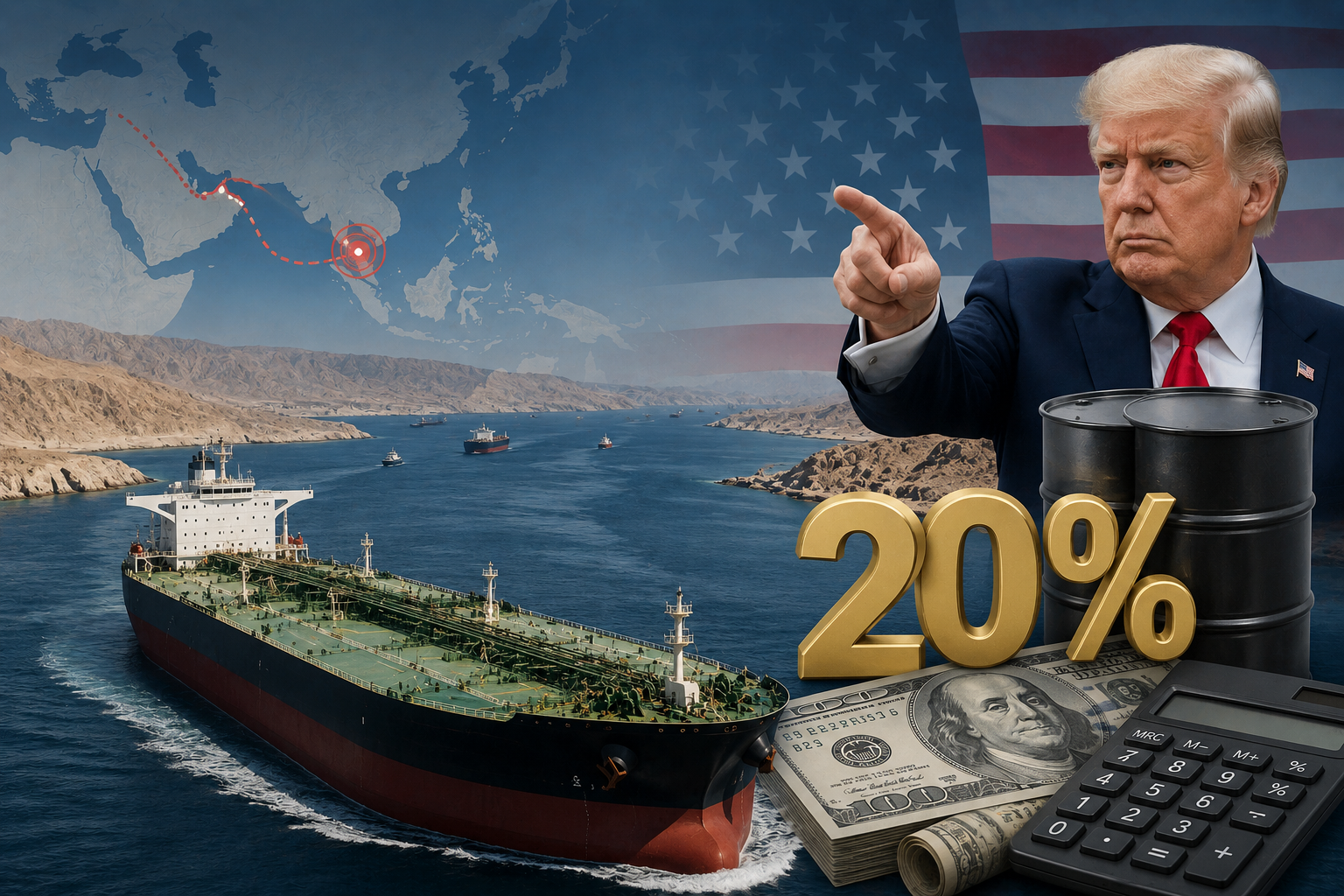
Potential $30 Million Charge Per Supertanker Sparks Concern Across Energy Markets, Shipping Industry and Oil-Importing Nations
Global energy and shipping markets were jolted after US President Donald Trump proposed a 20% reimbursement fee on cargo transiting the Strait of Hormuz, a move that could dramatically increase transportation costs for crude oil and liquefied natural gas (LNG) shipments.
Based on current crude oil prices of around $80 per barrel, the proposed charge could add nearly $30 million to the cost of a fully loaded Very Large Crude Carrier (VLCC) transporting approximately 2 million barrels of oil. If implemented, the proposal would represent one of the most significant cost increases ever suggested for one of the world's busiest maritime trade routes.
The announcement has generated uncertainty across the global shipping industry, with shipowners, oil traders, refiners and governments seeking greater clarity on how such a mechanism would be implemented and whether it would receive international support.
Why the Strait of Hormuz Matters
The Strait of Hormuz is widely regarded as the world's most important energy chokepoint.
Located between Iran and Oman, the narrow waterway connects the Persian Gulf with the Arabian Sea and serves as the primary export route for crude oil and LNG produced by Gulf nations.
Every day, nearly 20% of the world's crude oil supply and a significant share of global LNG exports pass through this strategic corridor.
Major energy exporters using the route include:
-
Saudi Arabia
-
United Arab Emirates
-
Kuwait
-
Iraq
-
Qatar
-
Iran
Any disruption or additional cost associated with this route has an immediate impact on global energy prices and international trade.
What Is the Proposed Transit Fee?
Under the proposal, commercial cargo moving through the Strait of Hormuz would be subject to a reimbursement equivalent to 20% of the cargo's value.
For an oil supertanker carrying around 2 million barrels of crude, valued at current international prices, the additional charge could approach $30 million per voyage.
The proposal comes alongside renewed US efforts to strengthen maritime security in the region following escalating geopolitical tensions.
However, details regarding implementation, legal authority, collection mechanisms and exemptions have not yet been clarified.
Shipping Industry Reacts with Caution
The proposal has surprised shipping companies, tanker operators and maritime service providers.
Several industry participants have indicated they received no prior indication of such a proposal and remain uncertain about its practical implications.
Among the questions being raised are:
-
Who would collect the fee?
-
Would it apply to all vessels?
-
Would allied nations be exempt?
-
Would the cost be paid by exporters, importers or shipping companies?
-
How would enforcement take place?
Without regulatory clarity, market participants remain cautious about incorporating the proposal into commercial decisions.
Potential Impact on Oil Transportation Costs
If implemented, the proposed fee could significantly increase the cost of transporting crude oil across international markets.
Higher shipping expenses would likely be passed through the supply chain, increasing costs for:
-
Oil refiners
-
Fuel distributors
-
Industrial manufacturers
-
Airlines
-
Petrochemical companies
-
Logistics operators
Ultimately, consumers could also face higher fuel prices if transportation costs are reflected in retail energy markets.
Global Crude Prices Could Become More Volatile
Energy markets are particularly sensitive to developments in the Strait of Hormuz.
Apart from physical supply disruptions, even higher transportation costs can increase the overall delivered price of crude oil.
Potential market consequences include:
-
Rising Brent crude prices
-
Increased volatility in oil futures
-
Higher refining margins
-
Increased freight costs
-
Stronger geopolitical risk premium
-
Greater demand for alternative supply routes
Market participants are expected to closely monitor diplomatic developments before adjusting long-term pricing assumptions.
Implications for India
India remains one of the world's largest crude oil importers and relies heavily on shipments passing through the Strait of Hormuz.
A significant increase in transit costs could affect:
-
Crude oil import bills
-
Domestic petrol and diesel prices
-
LPG and LNG imports
-
Inflation
-
Fiscal deficit
-
Current account balance
-
Rupee stability
Higher crude prices would also raise input costs across several sectors, including aviation, paints, chemicals, fertilisers, cement and transportation.
Energy Companies May Face Margin Pressure
Oil marketing companies and downstream refiners may experience increased pressure if freight costs rise substantially.
Companies importing crude could face:
-
Higher landed costs
-
Increased inventory expenses
-
Pressure on refining margins
-
Working capital requirements
-
Supply chain disruptions
While integrated energy companies may partially offset these impacts through upstream operations, standalone refiners could face greater earnings volatility.
Shipping Sector Braces for Higher Expenses
For tanker operators, the proposed fee adds another layer of uncertainty to an already challenging operating environment.
The shipping industry is already dealing with:
-
Rising marine insurance premiums
-
Security-related expenses
-
Route diversions
-
Crew safety concerns
-
Elevated fuel costs
-
Geopolitical risks
Additional transit charges could further increase voyage costs and reduce profitability for shipping companies.
Alternative Supply Routes Gain Importance
If transportation through the Strait of Hormuz becomes significantly more expensive, energy exporters may increasingly rely on alternative export infrastructure wherever available.
These include:
-
Cross-country oil pipelines
-
Red Sea export terminals
-
Arabian Sea pipelines
-
Additional storage facilities
-
Strategic petroleum reserves
However, alternative routes currently lack sufficient capacity to completely replace Hormuz, ensuring the strait will remain strategically indispensable.
Market Participants Await Policy Clarity
Despite widespread discussion, many critical questions remain unanswered.
Industry participants are awaiting clarity regarding:
-
Legal framework
-
International acceptance
-
Timeline for implementation
-
Collection mechanism
-
Scope of applicability
-
Exemptions for allies
-
Impact on existing shipping contracts
Until formal policy details emerge, markets are likely to remain cautious rather than pricing in the proposal immediately.
Investment Perspective
The proposal highlights the increasing influence of geopolitics on global commodity markets. Investors should closely monitor developments in crude oil, shipping and energy infrastructure as any policy affecting the Strait of Hormuz has the potential to alter trade flows and cost structures across the energy sector.
Companies involved in shipping, oil refining, aviation and logistics may experience heightened volatility, while energy producers, defence firms and marine security providers could remain in focus if geopolitical tensions persist.
Outlook
The proposed 20% transit reimbursement for cargo passing through the Strait of Hormuz has introduced a new element of uncertainty into global energy markets. Although the proposal's implementation remains unclear, the potential financial implications are substantial, with individual oil supertankers facing additional costs of nearly $30 million per voyage at current crude prices.
For energy-importing nations such as India, any sustained increase in shipping costs could translate into higher fuel prices, increased inflationary pressures and greater volatility across financial markets. As governments, shipping companies and commodity traders await further details, developments surrounding the Strait of Hormuz are expected to remain a key driver of global oil prices and investor sentiment in the months ahead.