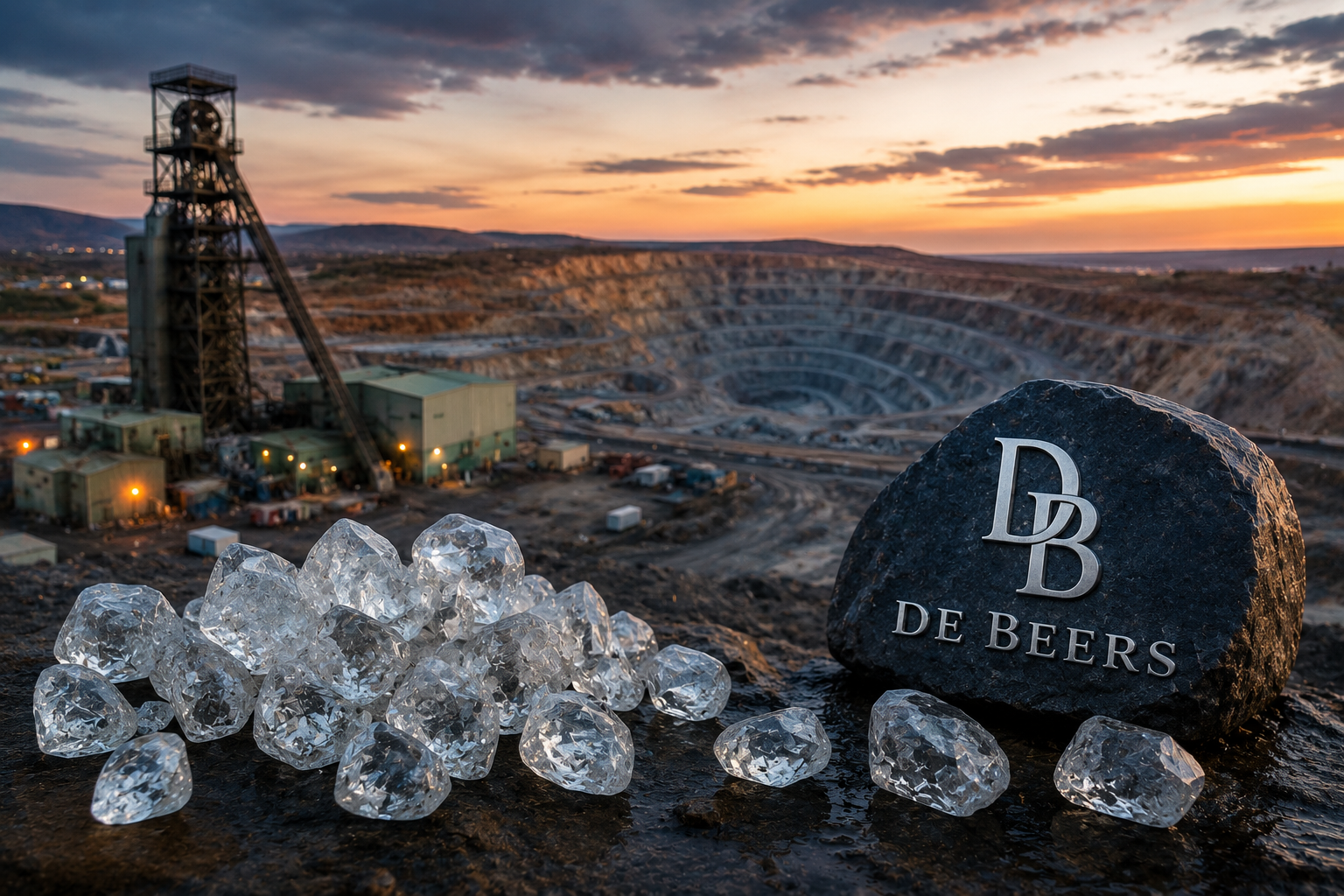
Weak Luxury Demand, Falling Natural Diamond Prices and Rising Popularity of Lab-Grown Stones Force Mining Giant to Restructure Operations
The global diamond industry is undergoing one of its most challenging periods in recent history, prompting De Beers, the world's most iconic diamond producer, to temporarily suspend production at its flagship Venetia mine in South Africa for two years.
The decision comes amid prolonged weakness in natural diamond demand, declining prices, growing competition from lab-grown diamonds and continued economic uncertainty across major consumer markets. The temporary shutdown forms part of De Beers' broader cost optimisation strategy as it seeks to preserve profitability and rebalance supply with market demand.
The move also highlights the structural transformation underway in the global gemstone industry, where changing consumer preferences and evolving luxury buying patterns are reshaping long-established business models.
Venetia Mine to Pause Operations
The Venetia mine is one of South Africa's largest and most valuable diamond-producing assets and has played a central role in De Beers' global production network for decades.
Under the latest restructuring plan, mining activities at the operation will be suspended for approximately two years.
Despite the temporary closure, De Beers has indicated that its overall production guidance will remain broadly unchanged as output will be redistributed across other mining operations within its international portfolio.
The company believes this approach will improve operational efficiency while allowing it to better align production with current market conditions.
Natural Diamond Industry Under Unprecedented Pressure
The decision reflects the severe challenges currently confronting the global natural diamond sector.
Following a brief surge in demand after the pandemic, the industry has witnessed a prolonged slowdown driven by multiple economic and structural factors.
Major Challenges Facing the Industry
-
Weak global luxury spending
-
Slowing economic growth
-
Declining demand from China
-
High global interest rates
-
Inflation reducing discretionary spending
-
Growing acceptance of lab-grown diamonds
-
Oversupply of rough diamonds
-
Geopolitical uncertainty affecting consumer confidence
Together, these developments have significantly reduced demand for natural diamonds, placing sustained pressure on prices and mining company profitability.
China's Economic Slowdown Weighs on Luxury Consumption
China has historically been one of the largest consumers of luxury jewellery, including natural diamonds.
However, weaker economic growth, subdued consumer confidence and continued stress in the country's property market have led to slower spending on premium discretionary products.
Luxury retailers across Asia have reported softer sales of high-end jewellery, watches and gemstones, reducing demand for rough diamonds supplied by global miners.
Given China's importance to the luxury industry, the recovery of consumer spending in the country will remain a key determinant of future market conditions.
Lab-Grown Diamonds Continue to Transform the Market
Perhaps the most significant long-term challenge for traditional diamond miners is the rapid rise of laboratory-grown diamonds.
Technological advancements have enabled manufacturers to produce diamonds that possess the same physical, chemical and optical characteristics as natural stones at significantly lower production costs.
Consumers are increasingly choosing lab-grown diamonds because they offer:
-
More affordable pricing
-
Greater availability
-
Environmental appeal
-
Ethical sourcing perceptions
-
Improved value for money
Younger consumers, in particular, are becoming more receptive to synthetic alternatives, accelerating the shift in demand across global jewellery markets.
Oversupply Adds Further Pressure on Prices
Despite efforts by major mining companies to reduce production, the market continues to struggle with excess supply.
Additional rough diamond production from emerging mining regions has further weakened pricing power.
Countries such as Angola continue expanding mining activity, increasing the availability of rough diamonds in international markets.
Combined with weaker consumer demand, elevated inventories have made it increasingly difficult for producers to stabilise prices.
De Beers Focuses on Cost Optimisation
The temporary suspension of Venetia is part of a broader strategy aimed at protecting profitability during a difficult market cycle.
The company has undertaken several measures, including:
-
Reducing production volumes
-
Optimising mining operations
-
Controlling inventories
-
Lowering operating costs
-
Improving capital allocation
-
Aligning supply with demand
Management believes disciplined production management will help preserve long-term value while supporting a healthier market balance.
Corporate Restructuring Adds Another Layer of Uncertainty
The operational changes also coincide with significant corporate restructuring at the parent company level.
Anglo American, which owns De Beers, is actively pursuing plans to divest the iconic diamond business following years of subdued financial performance and increasing investor pressure to streamline operations.
The proposed sale has attracted considerable attention within the mining industry, with potential buyers expected to evaluate De Beers' long-term growth prospects amid changing market dynamics.
The outcome of the ownership transition could influence future investment strategies, production plans and capital allocation across the business.
South Africa's Mining Sector May Feel the Impact
Although De Beers expects overall production to remain stable through alternative mining operations, the temporary closure of Venetia could affect the regional economy.
Potential areas of impact include:
-
Local employment
-
Mining contractors
-
Equipment suppliers
-
Transportation services
-
Regional businesses
-
Government royalty collections
The company is expected to work closely with employees, contractors and local communities to minimise disruption during the suspension period.
Global Jewellery Industry Adapts to Changing Consumer Preferences
The jewellery industry is also undergoing significant transformation.
Retailers are increasingly expanding their product portfolios by offering both natural and lab-grown diamonds to cater to changing customer preferences.
While premium luxury buyers continue to value the rarity of natural diamonds, price-sensitive consumers are showing growing interest in synthetic alternatives.
This dual-market strategy is expected to become increasingly common as retailers adapt to evolving consumer behaviour.
Investment Perspective
The challenges facing De Beers underscore the broader structural shifts occurring across the global mining and luxury goods industries.
For investors, several themes deserve close attention:
Key Trends to Watch
-
Recovery in Chinese luxury spending
-
Global jewellery demand
-
Adoption of lab-grown diamonds
-
Diamond price movements
-
Production discipline among miners
-
Progress in Anglo American's divestment plans
-
Capital expenditure by major mining companies
Mining companies with diversified commodity exposure and strong balance sheets may be better positioned to navigate prolonged weakness in the diamond market compared with businesses heavily dependent on natural gemstone production.
Outlook
The temporary suspension of the Venetia mine marks another significant milestone in the ongoing transformation of the global diamond industry. Once characterised by supply constraints and strong pricing power, the sector is now adjusting to a world of shifting consumer preferences, technological disruption and heightened economic uncertainty.
For De Beers, the decision reflects a strategic effort to protect profitability while preserving long-term competitiveness. Although demand for natural diamonds is expected to remain under pressure in the near term, disciplined supply management, operational efficiency and eventual recovery in global luxury spending could help restore balance to the market over the coming years. Until then, the industry is likely to remain focused on cost control, strategic restructuring and adapting to an increasingly competitive landscape.