Fresh Strike on Commercial Shipping Raises Global Energy Security Concerns; India Faces Growing Risks from Escalating West Asia Tensions
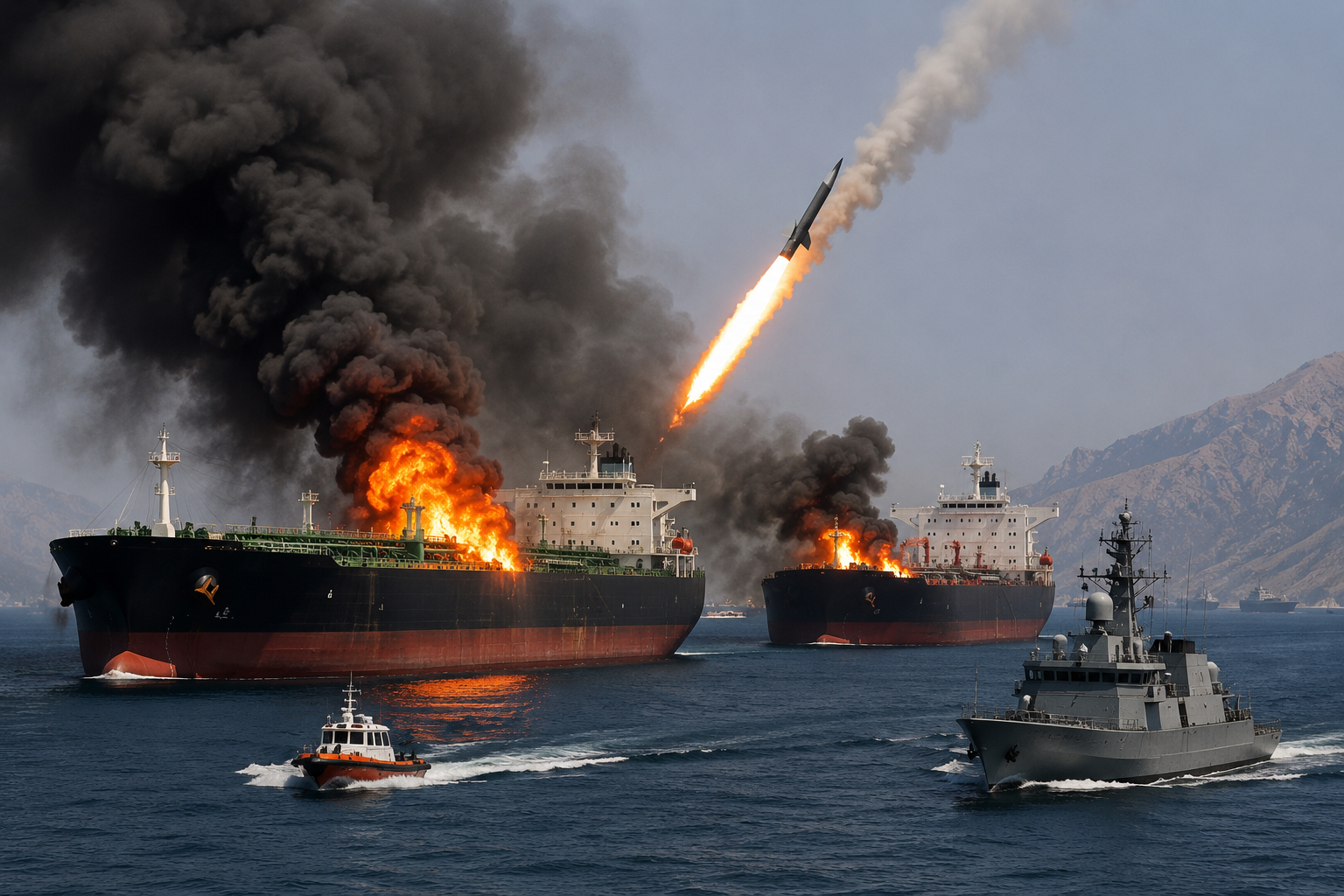
The security situation in the Strait of Hormuz has deteriorated sharply after two UAE-linked commercial oil tankers were struck by missiles during transit through one of the world's most strategically important maritime corridors. The attack claimed the life of an Indian crew member and injured several others, including six Indian nationals, highlighting the growing human and economic cost of the escalating conflict in West Asia.
The incident marks one of the most serious attacks on commercial shipping in recent weeks and has intensified concerns over the safety of global energy supplies, maritime trade and international shipping routes. As military tensions continue to rise across the region, governments and shipping companies are closely monitoring developments that could have far-reaching implications for the global economy.
Commercial Shipping Comes Under Fire
According to official statements from the United Arab Emirates, two oil tankers were hit while navigating through the southern shipping channel of the Strait of Hormuz within Omani territorial waters.
The missile strike triggered onboard fires and caused significant structural damage to both vessels before emergency response teams managed to bring the situation under control.
The attack demonstrates the increasing vulnerability of commercial cargo vessels operating in one of the world's busiest energy transportation corridors.
Indian Crew Among Those Affected
The tragedy has once again highlighted the risks faced by Indian seafarers employed across the global shipping industry.
One Indian sailor lost his life during the attack, while six other Indian nationals sustained injuries alongside two foreign crew members.
Several of the injured are reported to be in serious condition and are undergoing medical treatment.
India remains one of the world's largest suppliers of merchant navy professionals, with thousands of Indian seafarers serving aboard international cargo ships, tankers and container vessels operating across high-risk maritime regions.
UAE Condemns the Attack
The UAE government strongly condemned the missile strike, describing it as a serious breach of international law and an unacceptable attack on civilian maritime infrastructure.
Authorities stated that the country reserves the right to take all necessary measures to safeguard its national interests, commercial shipping and territorial security.
The attack is expected to further strengthen security coordination between Gulf nations and their international allies as maritime threats continue to rise.
Why the Strait of Hormuz Matters to the World
The Strait of Hormuz remains one of the most strategically important waterways on the planet.
Located between the Persian Gulf and the Gulf of Oman, the narrow passage serves as the primary export route for crude oil and liquefied natural gas (LNG) produced by several Middle Eastern countries.
Every day, millions of barrels of crude oil pass through this corridor, supplying energy to major importing nations including India, China, Japan, South Korea and several European economies.
Any disruption to shipping in the Strait has immediate consequences for global energy markets and international trade.
Global Oil Markets on Alert
Energy traders are closely monitoring developments following the latest attack.
Even without a complete disruption to shipping, increased military activity raises concerns over:
-
Higher insurance premiums for vessels
-
Delays in cargo movement
-
Increased transportation costs
-
Reduced shipping availability
-
Rising geopolitical risk premiums in crude oil prices
If tensions continue to escalate, benchmark crude prices could remain volatile, affecting energy-importing economies around the world.
India Faces Significant Energy Exposure
India is among the world's largest importers of crude oil, with a substantial portion of its energy imports passing through the Strait of Hormuz.
Any prolonged disruption in this maritime corridor could significantly impact:
-
Crude oil imports
-
LNG supplies
-
Domestic fuel prices
-
Inflation
-
Current account deficit
-
Exchange rate stability
-
Industrial production costs
Sectors such as aviation, chemicals, paints, logistics, fertilisers and oil marketing companies are particularly sensitive to sustained increases in global crude prices.
Shipping Industry Braces for Higher Costs
The latest attack is expected to increase operational risks for global shipping companies.
Industry participants may face:
-
Rising marine insurance premiums
-
Higher freight rates
-
Longer shipping routes
-
Increased naval security requirements
-
Delayed cargo deliveries
-
Higher operating expenses
Several shipping operators are already reviewing voyage plans and strengthening onboard security protocols for vessels operating in the Gulf region.
Human Cost of the Conflict Continues to Rise
Beyond the geopolitical implications, the incident underscores the growing humanitarian impact of the regional conflict.
Merchant seafarers often operate in conflict zones despite having no involvement in military activities.
The latest tragedy adds to a series of recent incidents in which civilian crew members have become unintended victims of escalating hostilities.
Industry organisations have repeatedly called for greater international efforts to ensure the protection of commercial shipping and civilian maritime workers.
Defence and Shipping Stocks Could Remain in Focus
Investors are likely to closely monitor sectors directly affected by geopolitical developments.
Potential beneficiaries may include:
-
Defence manufacturers
-
Naval equipment suppliers
-
Cybersecurity firms
-
Surveillance technology companies
At the same time, industries dependent on imported crude oil or global shipping may experience increased earnings uncertainty if freight costs and fuel prices continue rising.
Financial Markets May Remain Volatile
Geopolitical tensions often influence multiple asset classes simultaneously.
Market participants will continue tracking:
-
Brent crude oil prices
-
Shipping freight rates
-
Global equity indices
-
Gold prices
-
US dollar movement
-
Bond yields
-
Defence sector developments
Any further attacks on energy infrastructure or commercial shipping could trigger renewed volatility across financial markets.
Government and Industry Response
Governments across the region are expected to strengthen maritime security while international naval forces continue monitoring commercial shipping lanes.
Shipping companies are also reviewing contingency plans, including:
-
Enhanced crew safety measures
-
Alternative routing options
-
Improved communication systems
-
Emergency evacuation protocols
-
Risk assessment procedures
For Indian authorities, ensuring the safety of Indian nationals working aboard international vessels remains a key priority.
Investment Perspective
Although geopolitical events often create short-term market volatility, investors should avoid making decisions solely based on headline developments.
Long-term investors should instead focus on:
-
Portfolio diversification
-
Exposure to defensive sectors
-
Companies with strong balance sheets
-
Businesses benefiting from structural domestic growth
-
Appropriate allocation to safe-haven assets during periods of uncertainty
Monitoring crude oil prices and inflation trends will remain critical for assessing the broader impact on corporate earnings and economic growth.
Outlook
The latest missile strike on commercial tankers in the Strait of Hormuz highlights the fragile security environment surrounding one of the world's most critical energy corridors. Beyond the tragic loss of an Indian seafarer, the incident raises fresh concerns over global energy security, international shipping and financial market stability.
For India, the evolving situation carries significant strategic and economic importance due to its dependence on imported crude oil and the large number of Indian professionals employed in global shipping. As geopolitical tensions continue to unfold, markets are likely to remain highly sensitive to developments in the region, making risk management and diversified investing increasingly important for both businesses and investors.