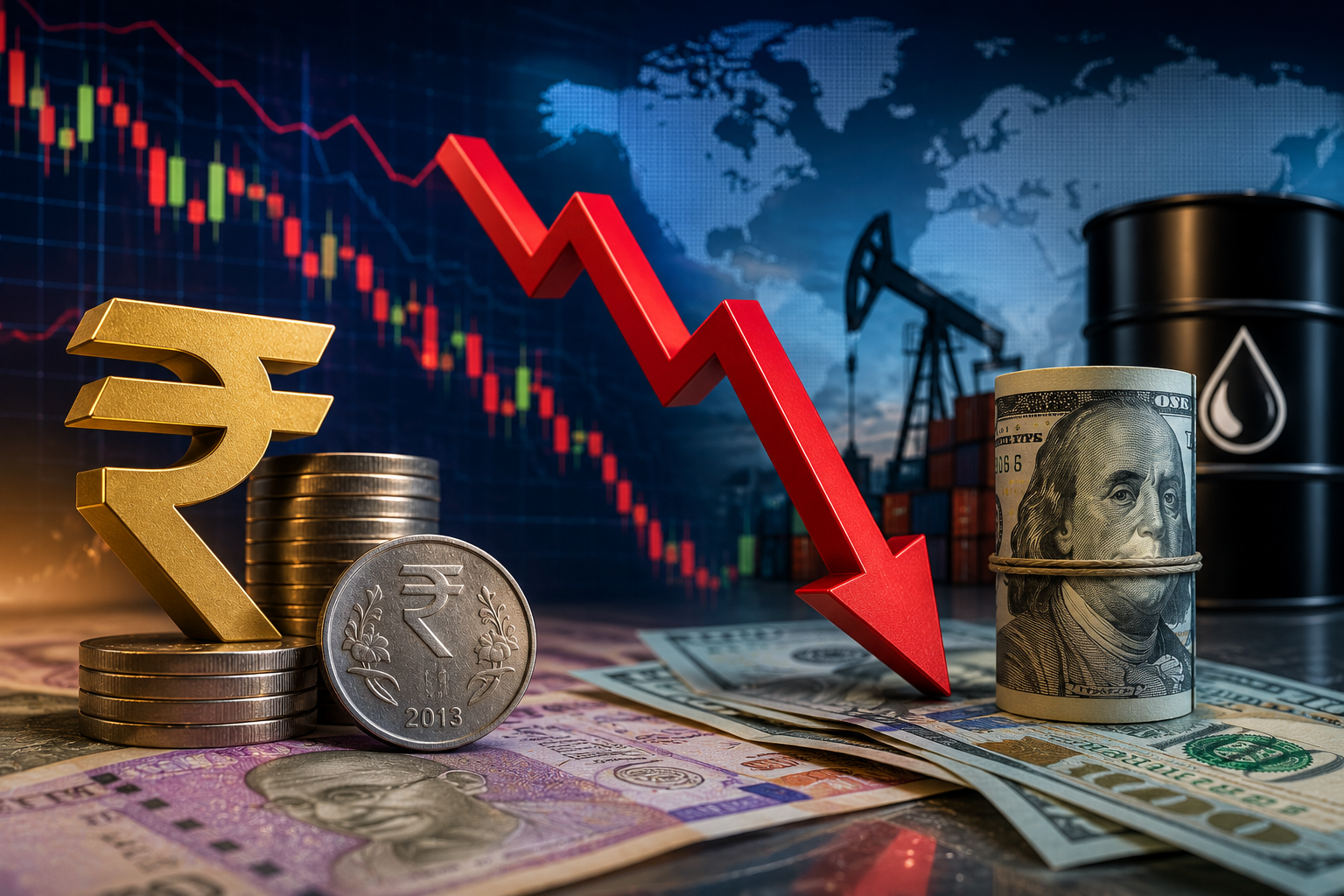
Safe-Haven Demand Strengthens the Dollar as Higher Oil Prices, FII Selling and Global Risk Aversion Weigh on the Indian Currency
The Indian rupee witnessed a sharp decline against the US dollar on Tuesday morning as escalating geopolitical tensions in the Middle East triggered a wave of risk aversion across global financial markets. Investors rushed towards safe-haven assets, boosting demand for the US dollar and putting significant pressure on emerging market currencies, including the rupee.
The domestic currency weakened by 48 paise during early trade to touch 96.16 per US dollar, extending Monday's losses and marking one of its sharpest single-day declines in recent weeks. Rising crude oil prices, continued foreign institutional investor (FII) outflows and concerns over India's widening import bill further contributed to the currency's weakness.
The depreciation comes at a time when global investors are closely monitoring developments surrounding the US-Iran conflict, with fears that any prolonged disruption to oil supplies could have far-reaching implications for inflation, trade balances and global economic growth.
Rupee Opens Weak and Extends Losses
In the interbank foreign exchange market, the rupee opened at 95.95 against the US dollar before slipping further to 96.16, compared with its previous close of 95.68.
The sharp movement reflects growing demand for the US dollar among importers and institutional investors amid heightened uncertainty in global markets.
Currency dealers noted that the rupee remained under selling pressure throughout the early trading session as importers increased dollar purchases to hedge against further depreciation.
The decline also follows a weaker close in the previous trading session, indicating that market sentiment continues to favour the US dollar over emerging market currencies.
Middle East Tensions Fuel Safe-Haven Buying
The primary trigger behind the rupee's decline has been the renewed escalation of geopolitical tensions in West Asia.
Whenever global geopolitical risks increase, investors typically reduce exposure to risk-sensitive assets and move capital towards traditional safe havens such as:
-
US Dollar
-
US Treasury Bonds
-
Gold
-
Swiss Franc
This global "flight to safety" has strengthened the dollar against most Asian currencies despite only marginal movement in the broader Dollar Index.
For emerging economies like India, stronger dollar demand often translates into temporary pressure on local currencies.
Rising Crude Oil Prices Create Additional Pressure
Another major factor contributing to the rupee's weakness is the sharp rise in international crude oil prices.
Brent crude climbed above $84 per barrel, supported by concerns over possible supply disruptions through the Strait of Hormuz, one of the world's most strategically important oil shipping routes.
Nearly one-fifth of global crude oil shipments pass through this narrow waterway, making any disruption a major concern for energy-importing nations.
India imports approximately 85% of its crude oil requirements, making higher global oil prices a significant challenge for the domestic economy.
As oil marketing companies require larger amounts of US dollars to finance imports, demand for the greenback increases, placing additional downward pressure on the rupee.
Impact on India's Trade Balance
A sustained rise in crude oil prices has implications far beyond the currency market.
Higher energy import costs can:
-
Widen the current account deficit
-
Increase the trade deficit
-
Raise fuel import bills
-
Add pressure on government finances
-
Contribute to higher domestic inflation
If oil prices remain elevated for an extended period, they may also increase transportation and manufacturing costs, eventually affecting consumer prices across several sectors of the economy.
Foreign Investors Continue to Pull Out
Foreign Institutional Investors (FIIs) remained net sellers in Indian equities during the previous trading session.
According to exchange data, overseas investors sold equities worth over ₹3,000 crore, reflecting cautious sentiment amid rising global uncertainty.
Whenever FIIs withdraw capital from Indian markets, they convert rupee holdings into US dollars before repatriating funds abroad.
This process increases demand for dollars while reducing demand for the rupee, contributing further to currency depreciation.
Continued foreign capital outflows could keep the rupee under pressure in the near term.
Domestic Equity Markets Also Under Pressure
The weakness in the currency market coincided with declines across Indian equity benchmarks.
Both the Sensex and Nifty 50 traded lower as investors booked profits and reduced exposure to risk assets.
Sectors heavily dependent on imported raw materials remained under pressure, while export-oriented industries attracted selective buying due to the benefits associated with a weaker rupee.
Market participants expect volatility to remain elevated until geopolitical uncertainties begin to ease.
Who Benefits from a Weak Rupee?
Although currency depreciation creates macroeconomic challenges, it also offers opportunities for certain sectors.
Export-Oriented Industries
Companies earning substantial revenue in foreign currencies generally benefit because overseas earnings translate into higher rupee income.
Potential beneficiaries include:
-
Information Technology
-
Pharmaceutical exporters
-
Specialty chemicals
-
Textile exporters
-
Auto component manufacturers
-
Engineering goods exporters
These companies may witness improved operating margins if the weaker currency persists.
Which Sectors Face Challenges?
Several industries may experience higher costs due to currency depreciation.
These include:
-
Oil Marketing Companies
-
Aviation
-
Consumer Electronics
-
Automobile Manufacturers
-
Capital Goods
-
Telecom Equipment Importers
Higher import costs may reduce profitability if companies are unable to pass increased expenses on to consumers.
Industries with significant foreign currency borrowings may also face increased debt servicing costs.
RBI Likely to Closely Monitor Currency Movements
The Reserve Bank of India (RBI) is expected to closely monitor developments in the foreign exchange market.
Although the central bank generally allows market-driven currency movements, it has historically intervened during periods of excessive volatility by selling US dollars from its foreign exchange reserves.
India's sizeable forex reserves provide an important buffer against sudden external shocks and help maintain orderly market conditions.
Any signs of sustained speculative pressure could prompt further intervention by the RBI.
Global Indicators to Watch
Several international developments will determine the rupee's near-term direction.
Investors will closely monitor:
-
Geopolitical developments in West Asia
-
Movement in Brent crude prices
-
US Dollar Index
-
US Federal Reserve interest rate expectations
-
Foreign investment flows
-
Global bond yields
-
Inflation trends across major economies
Any easing in geopolitical tensions or decline in oil prices could provide relief to the rupee.
Conversely, prolonged uncertainty may keep emerging market currencies under pressure.
Outlook for the Indian Rupee
Currency analysts expect volatility to remain elevated over the coming weeks.
The rupee's direction will largely depend on:
-
Crude oil prices
-
Foreign capital flows
-
Global risk sentiment
-
RBI policy response
-
Domestic macroeconomic indicators
While short-term weakness cannot be ruled out, India's strong foreign exchange reserves, resilient economic growth and prudent monetary policy continue to provide confidence in the medium-term stability of the currency.
What This Means for Investors
Currency movements have implications across multiple asset classes.
Equity investors should monitor companies with significant export exposure, as they may benefit from higher rupee earnings.
Conversely, investors should remain cautious towards businesses heavily dependent on imported raw materials or foreign currency debt if the rupee remains weak for an extended period.
Debt markets may also react to higher inflation expectations if crude oil prices continue rising.