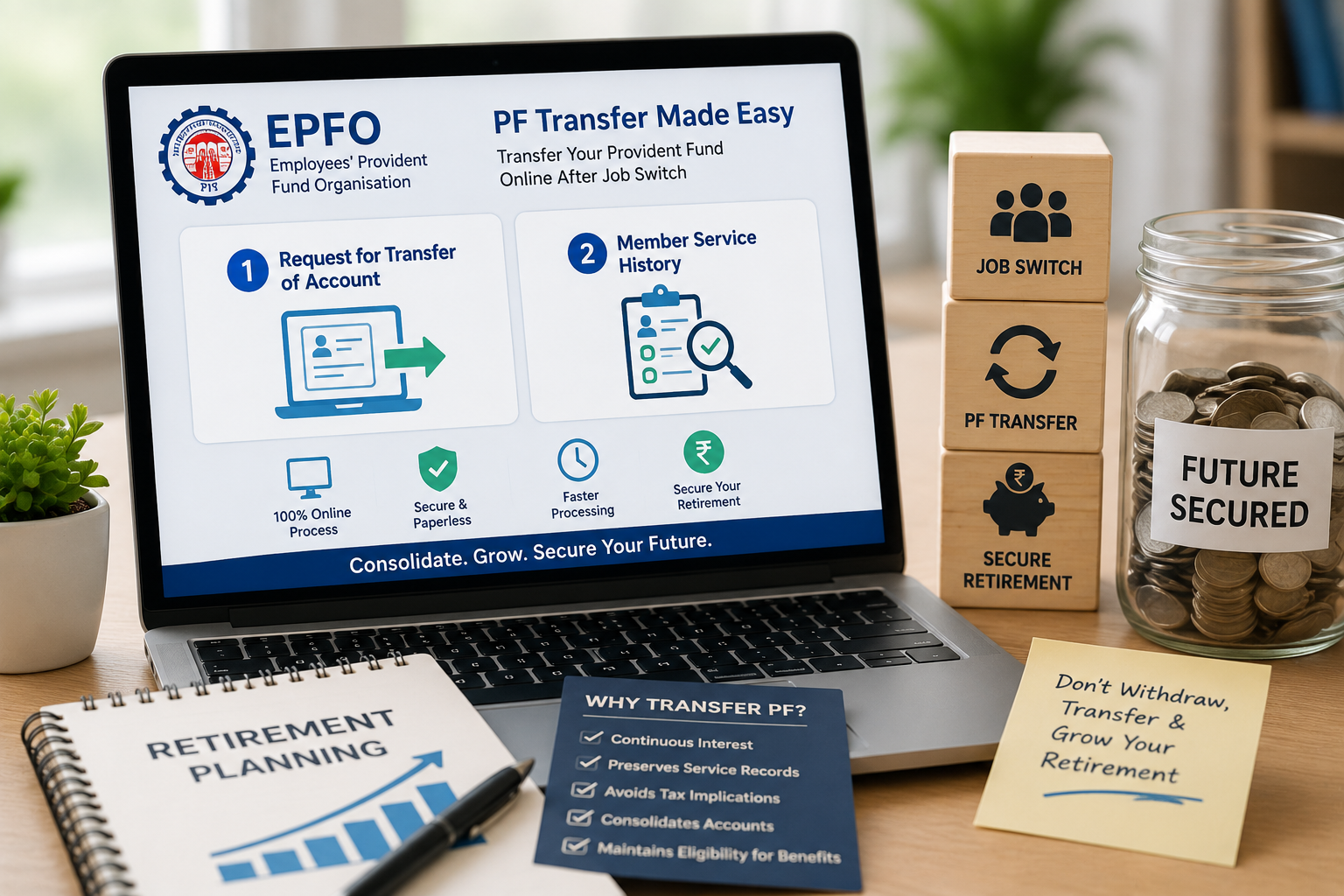
Employees Can Now Transfer Provident Fund Through Two Digital Routes; Move Aims to Reduce Paperwork, Preserve Retirement Benefits and Improve User Experience
In a significant move towards digital governance, the Employees' Provident Fund Organisation (EPFO) has introduced an additional online facility that makes transferring Provident Fund (PF) accounts after changing jobs faster and more convenient. The enhancement allows members to initiate PF transfers through two separate online options on the EPFO Member Portal, eliminating the need for multiple manual procedures and helping employees consolidate their retirement savings more efficiently.
The new feature has been rolled out following EPFO's extensive technology upgrade and database migration aimed at modernising its digital infrastructure. While the upgraded portal has resumed normal operations, the organisation has indicated that some services may continue to experience temporary delays until the new systems are fully stabilised.
For India's millions of salaried employees, the update is particularly important because transferring an existing PF balance instead of withdrawing it helps preserve retirement savings, maintain continuous service records and avoid unnecessary tax implications.
A Major Step Towards Digital Employee Services
EPFO has been undertaking a comprehensive digital transformation programme to improve the overall experience for its members. The latest enhancement reflects the organisation's efforts to make post-employment financial management simpler, paperless and more transparent.
Employees frequently change jobs during their careers, resulting in multiple Provident Fund accounts. Without timely transfers, managing these accounts can become complicated and may affect retirement planning. The new online options are designed to streamline this process by enabling members to consolidate their PF balances through a fully digital workflow.
The initiative is expected to reduce administrative hurdles while encouraging employees to retain their retirement savings within the EPF system.
Two Online Routes Now Available for PF Transfer
After logging into the EPFO Member Portal using their Universal Account Number (UAN), members can now choose between two online methods to transfer their Provident Fund account.
1. Request for Transfer of Account
The first option remains available under the Online Services section of the EPFO portal.
Using this facility, members can:
-
Initiate a PF transfer request.
-
Enter previous employer details.
-
Verify employment information.
-
Authenticate the request using Aadhaar-linked OTP.
-
Submit the application digitally.
This continues to be the standard method used by most employees for transferring their PF balances.
2. Member Service History
EPFO has introduced a second transfer route under the Member Service History section of the portal.
This feature enables members to:
-
View their complete employment history.
-
Access details of previous and current PF accounts.
-
Check whether any transfer request is already pending.
-
Initiate a Form 13 Service Transfer Claim if no previous request exists.
By integrating transfer services within employment history, EPFO has made it easier for users to track and manage multiple PF accounts from a single dashboard.
How the Online PF Transfer Process Works
The digital transfer process has been designed to minimise paperwork while ensuring secure verification.
Step 1: Login
Sign in to the EPFO Member Portal using the UAN and password.
Step 2: Select Transfer Option
Choose either:
-
Online Services → Request for Transfer of Account, or
-
Member Service History → Service Transfer Claim
Step 3: Enter Previous PF Details
Provide the previous employer's Member ID and verify the displayed information.
Step 4: OTP Authentication
Authenticate the request using the One-Time Password (OTP) sent to the Aadhaar-linked mobile number.
Step 5: Confirm Current EPF Account
Verify that the destination PF account linked to the current employer is correct.
Step 6: Submit Request
Once submitted, EPFO processes the request, and upon approval, the PF balance from the previous account is transferred to the active account.
Employees who do not remember their UAN can obtain it through their employer, salary slip or EPFO's online retrieval service.
Why Transferring PF Is Better Than Withdrawing It
Financial planners generally advise employees to transfer their Provident Fund balance instead of withdrawing it after changing jobs.
Continuous Interest on Retirement Savings
Transferred balances continue earning the annual EPF interest rate, allowing savings to grow through compounding over the long term.
Preserves Service Continuity
Maintaining uninterrupted service records is important for retirement benefits and pension eligibility under the Employees' Pension Scheme (EPS).
Avoids Tax Liability
Premature withdrawal of PF may attract Tax Deducted at Source (TDS) and other tax implications under certain conditions. A transfer allows employees to continue their retirement savings without triggering unnecessary tax events.
Consolidates Multiple PF Accounts
Employees who have worked with multiple organisations often accumulate several PF accounts. Consolidation simplifies account management, reduces administrative complexity and makes final settlement much easier.
Maintains Eligibility for EPF Benefits
Keeping the PF account active helps preserve eligibility for various EPFO benefits, including advance withdrawals under eligible conditions, insurance coverage and pension-related advantages.
EPF Continues to Be a Strong Retirement Planning Tool
The Employees' Provident Fund remains one of India's most important retirement savings instruments for organised sector employees.
Every month:
-
Employees contribute a prescribed percentage of their basic salary and dearness allowance.
-
Employers make matching contributions as per EPF rules.
-
The accumulated balance earns government-declared annual interest.
For FY2025-26, the EPF interest rate stands at 8.25%, making it an attractive long-term fixed-income savings option compared to many traditional investment products.
Because interest is compounded annually, consolidating all PF balances into a single account can significantly improve long-term wealth creation.
Technology Upgrade Aims to Improve Future Services
The new transfer facility is part of EPFO's larger technology modernisation programme, which includes backend database consolidation and improvements to digital infrastructure.
The objective is to:
-
Enhance service delivery.
-
Reduce manual intervention.
-
Improve processing efficiency.
-
Enable faster claim settlements.
-
Strengthen data accuracy.
-
Deliver a better online experience for members.
Although most online services have resumed, EPFO has informed users that some transfer requests and claims may still experience temporary delays as the upgraded systems stabilise.
Who Should Use This Facility?
The new online transfer system is especially useful for:
-
Employees who recently joined a new organisation.
-
Individuals with multiple inactive PF accounts.
-
Professionals changing jobs frequently.
-
Employees planning long-term retirement savings.
-
Individuals seeking uninterrupted pension eligibility.
Experts recommend initiating the PF transfer soon after joining a new employer to avoid future complications and maintain a clean service record.
What Employees Should Keep Ready
Before initiating the transfer, members should ensure they have:
-
An activated Universal Account Number (UAN).
-
Aadhaar linked with the UAN.
-
Aadhaar-linked mobile number for OTP authentication.
-
Correct previous employer Member ID.
-
Updated KYC details on the EPFO portal.
Completing these prerequisites can help avoid delays during the transfer process.