Rising Crude Oil, Weak Rupee, Higher US Bond Yields and Geopolitical Uncertainty Weigh on Indian Markets, While IT Stocks Offer Limited Relief
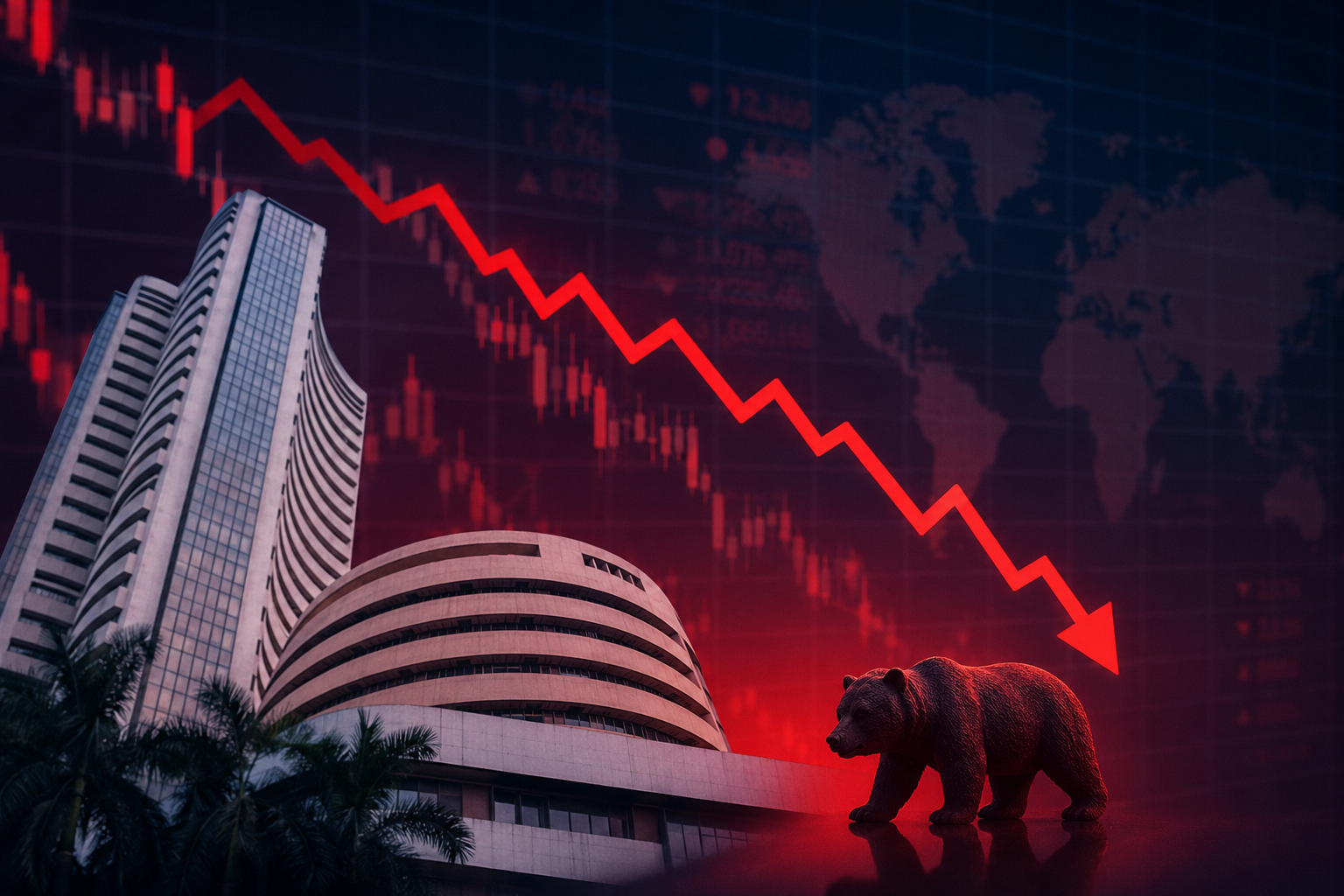
Indian equity markets began the week on a weak note as intensifying geopolitical tensions in West Asia sparked a broad sell-off across global financial markets. The benchmark BSE Sensex tumbled over 700 points intraday, while the Nifty 50 briefly slipped to the 24,000 mark, as investors turned cautious amid rising crude oil prices, a weakening rupee and concerns over global economic stability.
Although the market recovered some of its early losses, sentiment remained fragile with investors closely tracking developments in the Middle East and their potential impact on energy prices and inflation.
Geopolitical Tensions Shake Investor Confidence
The latest market decline follows renewed military action involving the United States and Iran, raising fears that the conflict could further disrupt trade routes in the Strait of Hormuz—one of the world's most important oil shipping channels.
The escalating conflict has prompted investors to reduce exposure to riskier assets and move towards safe-haven investments. For India, which imports nearly 85% of its crude oil requirements, any prolonged disruption in energy supplies could have significant implications for inflation, fiscal stability and corporate profitability.
Market participants are expected to remain highly sensitive to geopolitical headlines over the coming weeks.
Crude Oil Emerges as the Biggest Market Trigger
Energy prices remain the single most important variable influencing investor sentiment.
Brent crude climbed above $78 per barrel, while US WTI crude also recorded gains of more than 3% after renewed concerns over global oil supplies.
Higher crude prices directly affect India's import bill, widen the current account deficit and increase inflationary pressures. Sectors such as aviation, paints, chemicals, logistics, tyres and oil marketing companies are particularly vulnerable to sustained increases in fuel prices.
Analysts believe that Brent crude crossing the $90 per barrel mark could trigger a much deeper correction in Indian equities if geopolitical tensions continue to escalate.
Sectoral Performance Reflects Risk-Off Mood
Selling pressure was broad-based across the market.
The Nifty Auto and Nifty Metal indices emerged as the biggest losers as investors booked profits in economically sensitive sectors. Rising commodity costs and concerns over slowing global demand weighed heavily on metal companies, while automobile manufacturers face potential margin pressure from higher input costs.
The broader market also witnessed weakness, with both mid-cap and small-cap indices trading lower, indicating that risk aversion extended beyond frontline stocks.
In contrast, the Nifty IT index managed to remain in positive territory. Technology companies benefited from the stronger US dollar, as a significant portion of their revenues is generated from overseas markets.
India VIX Signals Higher Market Volatility
The India VIX, often referred to as the market's fear gauge, jumped nearly 8%, indicating expectations of heightened volatility in the coming trading sessions.
A rising VIX generally reflects growing uncertainty among investors and often accompanies larger swings in equity prices. Traders are likely to remain cautious until there is greater clarity on geopolitical developments and crude oil trends.
Rupee Weakens Amid Dollar Strength
The Indian rupee depreciated sharply against the US dollar as higher oil prices increased demand for foreign currency.
A stronger US Dollar Index, coupled with elevated crude prices, added further pressure on the domestic currency. A weaker rupee raises the cost of imports, particularly crude oil, electronic goods and industrial raw materials, while also increasing inflation risks for the broader economy.
Export-oriented sectors such as information technology and pharmaceuticals, however, may benefit from currency depreciation through improved earnings realizations.
Rising US Bond Yields Add Pressure
Global investors also remained cautious due to rising US Treasury yields.
The 10-year US Treasury yield climbed to its highest level in several weeks as concerns persisted over inflation and the possibility of interest rates remaining elevated for longer.
Higher US yields typically reduce foreign investment flows into emerging markets like India, as investors shift capital towards relatively safer fixed-income assets offering improved returns.
Technical Outlook for Nifty
Market technicians believe the 24,000 level remains an important psychological and technical support for the Nifty.
Holding above this zone could encourage bargain buying and pave the way for a recovery towards 24,400, which continues to act as a significant resistance level. A decisive breakout above this level may open the door for further gains towards 24,600–24,800.
On the downside, a sustained breach below 23,800 could trigger additional profit booking and lead to a broader consolidation phase.
What Investors Should Watch Next
Going forward, investors will closely monitor developments in West Asia, movements in crude oil prices, currency fluctuations and global bond yields. Domestic institutional buying has continued to provide some support to Indian markets, but sustained volatility may persist until geopolitical uncertainties begin to ease.
While the long-term fundamentals of the Indian economy remain intact, near-term market direction is likely to be driven by global macroeconomic events rather than domestic factors. Investors may consider maintaining a balanced portfolio, focusing on fundamentally strong companies and avoiding excessive leverage during periods of heightened volatility.