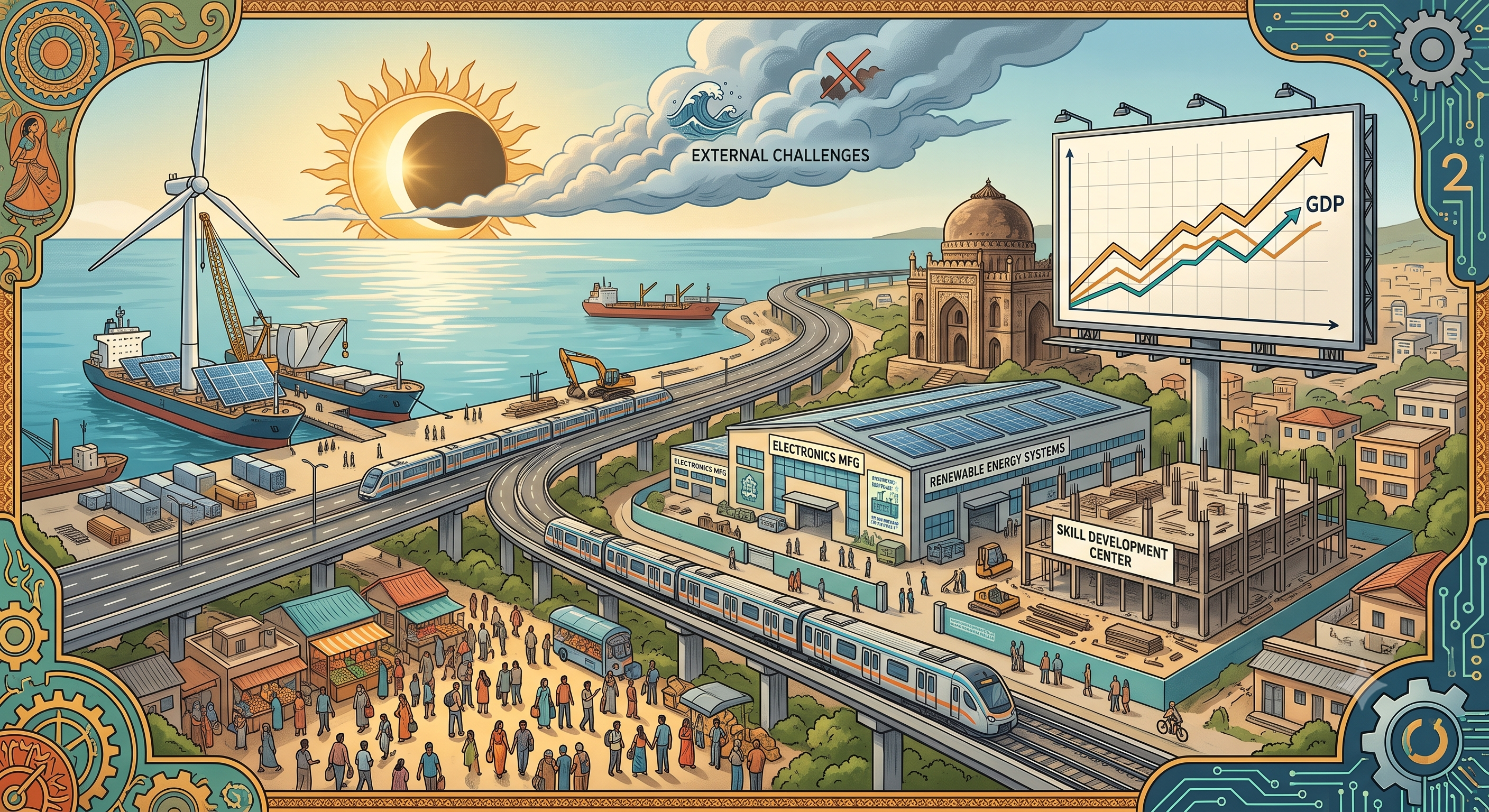
Growth Outlook Cut From 6.9%, But India Remains the Fastest-Growing Major Economy Supported by Domestic Demand and Structural Reforms
The Asian Development Bank (ADB) has revised down India’s economic growth forecast for the financial year 2026-27, citing concerns over rising energy prices, geopolitical uncertainty and global economic challenges.
According to the latest Asian Development Outlook July 2026, India’s GDP growth projection has been reduced to 6.6% for FY27, compared with the earlier estimate of 6.9%.
The revision reflects the impact of renewed tensions in the Middle East, which have increased concerns over crude oil prices and energy supply stability.
Despite the downward adjustment, India continues to remain the fastest-growing major economy globally, with the ADB maintaining a positive long-term outlook supported by strong domestic fundamentals.
Middle East Tensions Drive Growth Downgrade
The primary factor behind the ADB’s revised forecast is the increase in global energy risks following escalating tensions in the Middle East.
The region plays a crucial role in global oil supply chains, and any disruption could push crude prices higher.
For India, which imports a significant portion of its crude oil requirements, higher energy prices could create economic challenges by increasing:
-
Import costs
-
Inflation pressure
-
Transportation expenses
-
Corporate operating costs
The ADB highlighted that elevated energy prices could impact economic activity by reducing consumer purchasing power and increasing input costs for businesses.
India’s Growth Remains Strong Compared With Global Peers
Although the growth forecast has been lowered, India’s expected expansion remains among the highest worldwide.
The ADB expects India to continue benefiting from:
-
Strong domestic consumption
-
Rising investment activity
-
Government infrastructure spending
-
Growth in services sector
-
Manufacturing expansion
The revised growth estimate still reflects a robust economic outlook compared with several advanced and emerging economies facing slower growth conditions.
FY28 Growth Outlook Maintained at 7.3%
While the ADB reduced its FY27 projection, it maintained India’s growth forecast for the following year at 7.3%.
This indicates expectations that temporary external pressures may ease and domestic growth drivers will regain strength.
The recovery outlook is supported by expectations of:
-
Improved investment cycles
-
Better business confidence
-
Stronger industrial activity
-
Continued digital and infrastructure expansion
Domestic Consumption Remains India’s Biggest Strength
India’s large domestic market continues to provide resilience against global challenges.
Private consumption remains a key contributor to economic growth, supported by:
Growing Middle Class
Rising income levels and urbanisation are increasing demand for goods and services.
Digital Economy Expansion
Digital payments, online services and technology adoption continue to create new economic opportunities.
Infrastructure Development
Government spending on highways, railways, ports and urban infrastructure is supporting job creation and economic activity.
Manufacturing and Investment Cycle Offer Additional Support
India’s efforts to strengthen manufacturing capabilities are expected to support long-term growth.
Government initiatives aimed at boosting domestic production, attracting foreign investment and improving supply chain capabilities are helping create a favourable environment for industries.
Key sectors expected to contribute to future growth include:
-
Electronics manufacturing
-
Renewable energy
-
Infrastructure
-
Automotive sector
-
Defence production
Inflation Risks Remain a Key Challenge
Despite strong growth prospects, inflation remains an important concern.
Higher crude oil prices could affect inflation through increased costs of:
-
Fuel
-
Transportation
-
Logistics
-
Raw materials
A prolonged increase in energy prices could influence monetary policy decisions and impact borrowing costs for businesses and consumers.
The Reserve Bank of India is expected to continue monitoring inflation trends closely while balancing growth objectives.
Impact on Indian Stock Markets and Investors
The ADB’s growth revision comes at a time when investors are already monitoring global risks, crude oil movements and corporate earnings.
For equity markets, the key factors to watch include:
-
Global oil prices
-
Foreign investor flows
-
Inflation trends
-
Interest rate outlook
-
Corporate earnings growth
While short-term volatility may continue due to geopolitical developments, India’s structural growth story remains attractive for long-term investors.
Risks That Could Impact India’s Growth Path
Apart from energy prices, other factors that could influence economic performance include:
Global Economic Slowdown
Weak growth in major economies could impact exports and external demand.
Geopolitical Uncertainty
Extended conflicts could disrupt commodity markets and global trade.
Commodity Price Volatility
Higher prices for oil and other raw materials could affect businesses.
Weather-Related Risks
Monsoon performance remains important for agriculture and rural consumption.
India’s Economic Outlook: Resilient Despite External Challenges
Economists believe India’s strong domestic fundamentals provide a cushion against global uncertainties.
The combination of a growing consumer market, policy reforms, infrastructure investment and expanding digital economy continues to support the country’s long-term growth prospects.
While near-term challenges remain, the economy is expected to maintain one of the strongest growth rates among major global economies.
Conclusion: Short-Term Pressure, Long-Term Growth Opportunity
The ADB’s reduction of India’s FY27 growth forecast highlights the impact of global energy risks and geopolitical uncertainty.
However, the revised 6.6% growth projection still positions India as the fastest-growing major economy worldwide.
With strong domestic demand, infrastructure development and structural reforms supporting economic activity, India’s long-term growth outlook remains positive.
For investors, the focus will remain on managing short-term volatility while tracking opportunities created by India’s continued economic expansion.