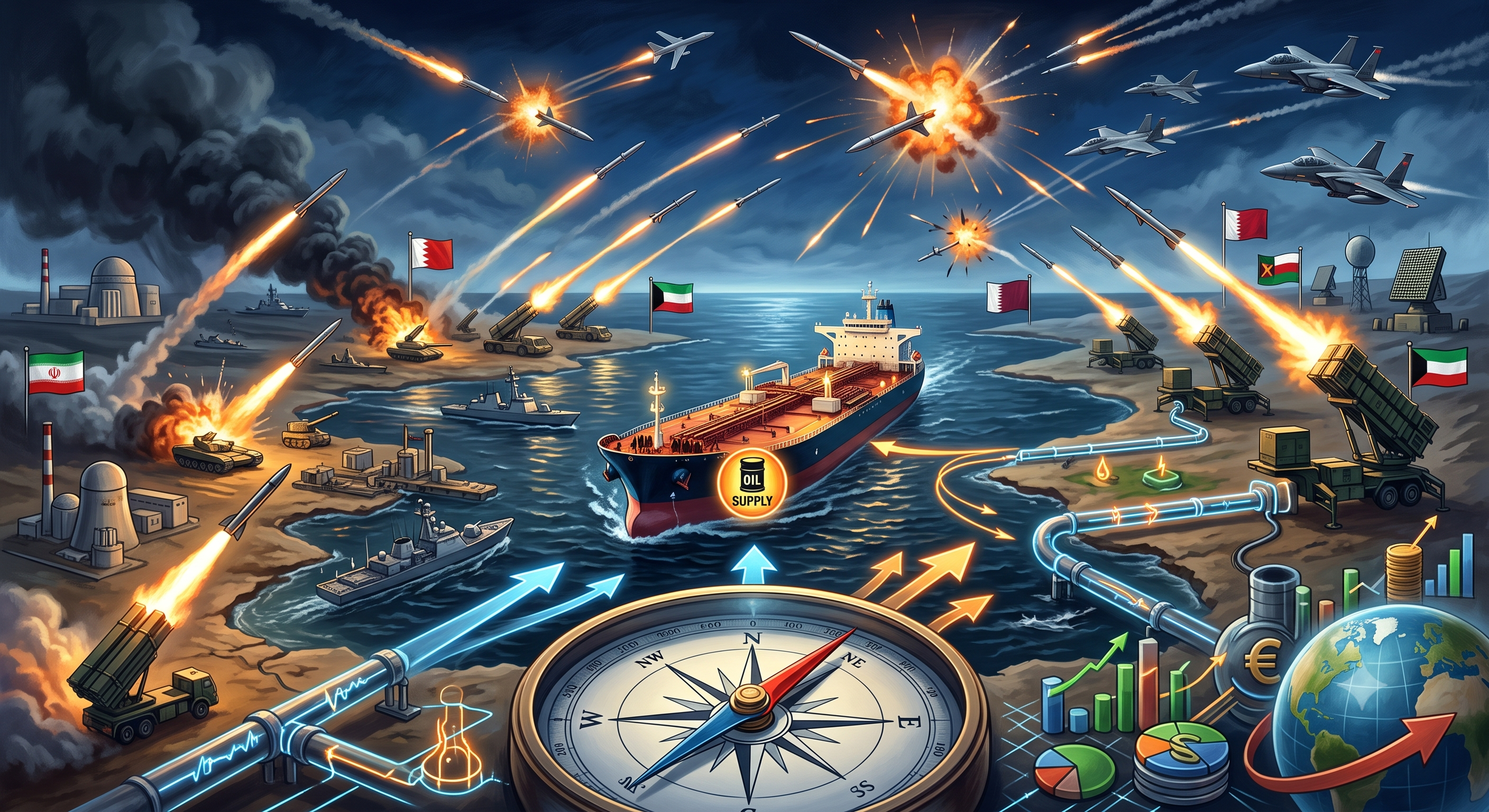
Bahrain, Qatar and Kuwait Activate Defence Systems After Iranian Retaliation; Markets Watch Oil Supply Risks and Middle East Stability
Tensions in the Middle East escalated further after Iran launched retaliatory attacks following renewed US strikes on Iranian military targets, triggering missile alerts across key Gulf nations including Bahrain, Qatar and Kuwait.
The latest developments have intensified concerns over a possible revival of broader regional conflict, with investors closely monitoring the impact on crude oil prices, global trade routes and financial markets.
While authorities reported no immediate major damage in the affected Gulf countries, the activation of defence systems highlighted growing security risks in a region critical to global energy supplies.
Gulf Nations Activate Missile Warning Systems
Bahrain, Qatar and Kuwait activated emergency missile alert systems early Thursday after Iranian forces launched attacks in response to fresh US military action.
Kuwait’s military said it was engaged in intercepting incoming missiles and drones, while authorities continued assessing the impact of the attacks.
The incidents came after a new round of US airstrikes targeted Iranian military facilities, escalating tensions that had already threatened a fragile ceasefire agreement.
The developments have increased concerns that diplomatic efforts to end the conflict could collapse, potentially triggering a wider regional confrontation.
US Strikes Target Iranian Military Capabilities
The United States launched fresh attacks on Iranian military positions after accusing Tehran of threatening commercial shipping routes in the Strait of Hormuz.
US military officials said the strikes were aimed at reducing Iran’s ability to disrupt maritime traffic through the strategic waterway.
The Strait of Hormuz remains one of the world’s most important energy routes, with a significant share of global oil and natural gas shipments passing through the region.
Any prolonged disruption could create major risks for energy markets and global inflation.
Iran Responds With Missile and Drone Attacks
Iranian state media reported explosions in multiple locations, including areas near the Bushehr nuclear facility and southern port cities such as Chabahar, Konarak, Bandar Abbas and Sirik.
Iran also launched attacks targeting US-linked military installations in Gulf countries.
Kuwait reported intercepting ballistic missiles and drones, while officials said debris from intercepted attacks caused damage to some electricity infrastructure.
The latest exchange has raised fears that the conflict could move beyond limited military strikes and develop into a wider regional crisis.
Trump Warns of Further Escalation
US President Donald Trump warned Iran that further attacks on shipping routes could lead to stronger military action.
Trump said that additional attacks against vessels in the region would result in a more severe response, while also indicating that any future military action could happen quickly.
The US administration has repeatedly highlighted the importance of maintaining freedom of navigation through the Strait of Hormuz.
However, diplomatic uncertainty remains as both sides continue exchanging warnings.
Strait of Hormuz Becomes Key Flashpoint
The Strait of Hormuz has emerged as the central point of concern in the ongoing crisis.
The waterway connects the Persian Gulf with global shipping routes and plays a crucial role in international energy supply chains.
A prolonged closure or disruption of shipping activity could:
-
Push crude oil prices sharply higher
-
Increase transportation and energy costs
-
Add inflationary pressure globally
-
Impact oil-importing economies, including India
Energy markets reacted strongly to earlier escalation fears, with crude prices rising as investors assessed potential supply risks.
Oil Markets and Global Economy in Focus
The Middle East crisis has created uncertainty for investors worldwide.
A sustained rise in crude prices could impact emerging markets by increasing import costs and putting pressure on currencies.
For India, higher crude prices remain a key economic concern due to its dependence on imported energy.
Market participants are watching:
-
Brent crude price movement
-
Shipping activity through the Strait of Hormuz
-
Response from major oil-producing nations
-
Further developments between Iran and the US
Diplomatic Efforts Face Fresh Challenges
The latest military developments have complicated ongoing negotiations aimed at achieving a long-term agreement.
Iranian officials have maintained that they will continue defending their interests, while US officials have insisted on protecting international shipping routes.
The conflict has created divisions within Iran’s leadership, with some groups favouring continued confrontation while others seek economic relief through reduced sanctions and diplomatic engagement.
Impact on Global Investors
Financial markets are likely to remain sensitive to further developments in the region.
Investors typically move towards safe-haven assets during geopolitical crises, including:
-
Gold
-
US dollar
-
Government bonds
Meanwhile, sectors linked to energy, defence and commodities may see increased investor attention.
However, prolonged uncertainty could weigh on global equities, particularly emerging markets that are vulnerable to higher oil prices.
India’s Economic Outlook Amid Middle East Tensions
India remains closely connected to developments in West Asia due to trade relationships, energy imports and the presence of a large Indian community in Gulf countries.
Any disruption in oil supplies could impact:
-
Inflation outlook
-
Current account balance
-
Fuel prices
-
Corporate operating costs
However, analysts believe the impact will depend on the duration and intensity of the conflict.
Conclusion: Markets Await Next Move as Middle East Risks Rise
The latest missile exchanges between Iran and the US have increased uncertainty around the future of the Middle East conflict.
While Gulf nations have so far managed to contain immediate damage, the possibility of further escalation remains a major concern for global investors.
For financial markets, the key factors to monitor will be crude oil prices, shipping activity through the Strait of Hormuz, diplomatic developments and responses from major global powers.
A prolonged conflict could create significant economic challenges, while successful diplomatic efforts may help stabilise energy markets and restore investor confidence.