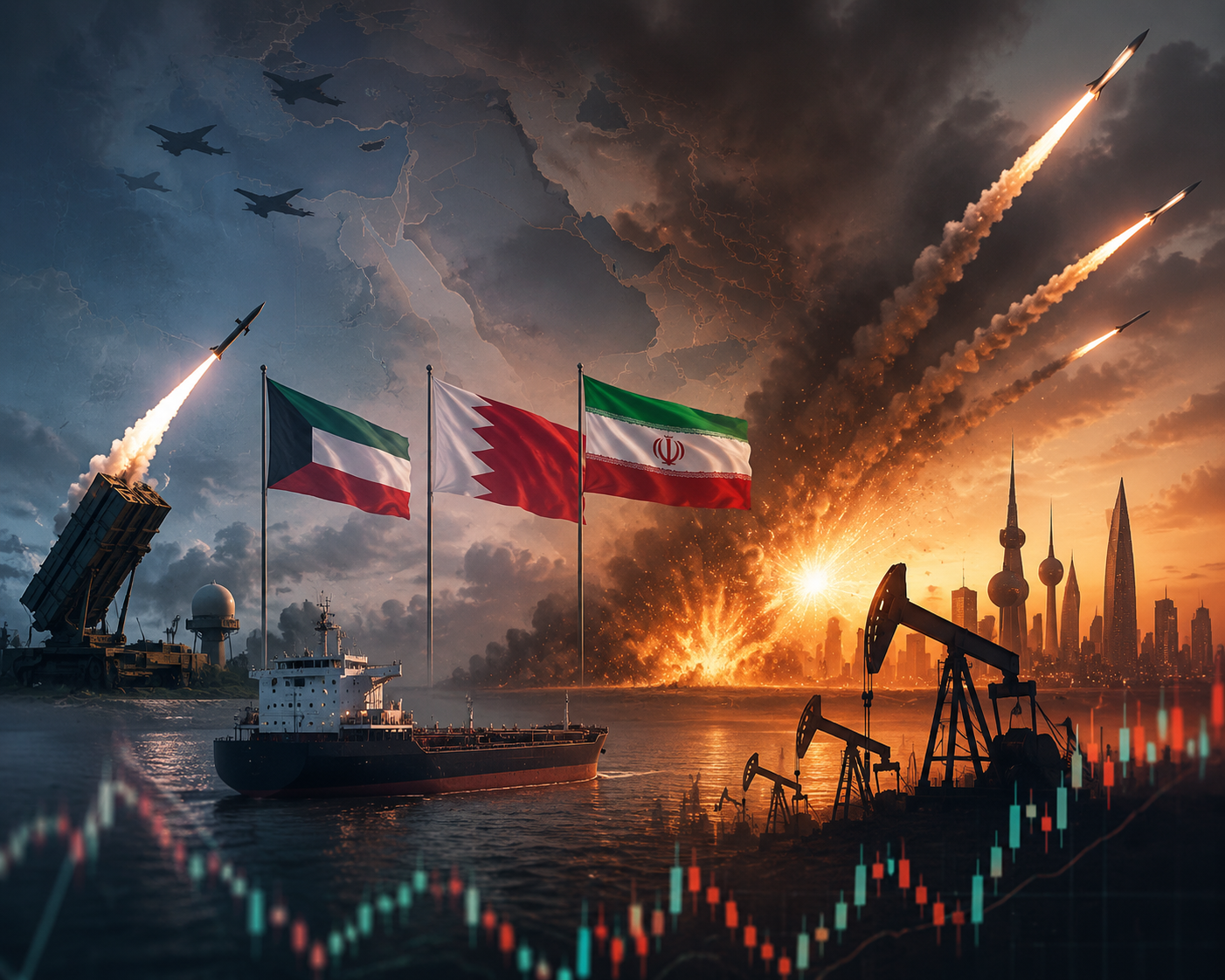
Missile Alerts Triggered Across Gulf Nations as US-Iran Conflict Raises Concerns Over Energy Security and Global Markets
Geopolitical tensions in the Middle East intensified after Iran launched attacks targeting Bahrain and Kuwait following US airstrikes against Iranian targets. The latest developments have increased concerns of a broader regional conflict, putting global energy markets and investor sentiment under pressure.
Kuwait’s military confirmed that its air defence systems were activated after detecting incoming missile threats, while Bahrain also reported incoming fire and issued emergency alerts.
Although authorities have not immediately reported major damage or casualties, the escalation has raised fears about the stability of a region that plays a crucial role in global oil supply.
Gulf Nations Put Defence Systems on High Alert
Kuwait announced that its air defence units were engaged to intercept incoming missiles following the US military strikes on Iran.
Soon after, Bahrain activated missile warning systems and advised residents to immediately seek shelter.
The developments came after Iran claimed that it had launched retaliatory attacks against targets linked to US actions against Tehran.
Both Bahrain and Kuwait are strategically important Gulf nations and have close security ties with the United States, making them potential flashpoints during periods of heightened regional conflict.
Iran’s Retaliation Raises Risk of Wider Regional Conflict
The latest attacks mark a significant escalation in the ongoing confrontation between Iran and the United States.
Following the American strikes on Iranian territory, Tehran warned of retaliation, raising concerns that the conflict could spread beyond national borders and involve neighbouring countries.
Bahrain and Kuwait have previously faced security threats during periods of regional instability, particularly due to their geographical proximity to Iran and their strategic importance in the Gulf.
Analysts are closely watching whether further attacks could involve additional Gulf countries or critical energy infrastructure.
Oil Markets Remain on Edge Amid Gulf Uncertainty
The Gulf region is central to global energy markets, with millions of barrels of crude oil passing through key shipping routes every day.
Any escalation affecting oil production facilities, pipelines or shipping channels could have significant consequences for global crude prices.
Market participants are monitoring:
-
Potential disruptions to oil supplies
-
Security situation around major energy infrastructure
-
Shipping activity in key maritime routes
-
Responses from major oil-producing nations
A prolonged conflict could trigger higher crude prices, increasing inflation risks for economies dependent on energy imports.
Investors Turn Towards Safe-Haven Assets
Rising geopolitical uncertainty often leads investors to seek protection through traditional safe-haven assets.
Financial markets are expected to closely track developments as traders assess the potential economic impact.
Possible market reactions include:
-
Increased demand for gold and other defensive assets
-
Higher volatility in global equity markets
-
Pressure on currencies of oil-importing countries
-
Increased uncertainty for emerging markets
Energy and defence-related sectors could see increased investor attention if tensions continue.
US-Iran Conflict Creates Global Economic Concerns
The latest escalation comes at a time when global economies are already dealing with inflation pressures, interest rate uncertainty and geopolitical risks.
A prolonged confrontation between Iran and the US could affect:
-
Global crude oil prices
-
Transportation and logistics costs
-
Inflation expectations
-
Central bank policy decisions
Investors and policymakers worldwide are closely monitoring whether diplomatic efforts can prevent further military escalation.
Strategic Importance of Bahrain and Kuwait
Bahrain and Kuwait hold major geopolitical importance in the Gulf region.
Bahrain hosts key maritime security operations and maintains strong defence cooperation with the United States. Kuwait, meanwhile, is a major energy producer and has historically played an important role in regional security matters.
Any instability in these countries could have broader implications for Middle Eastern security and international energy markets.
What Investors Should Watch Next
The next phase of the conflict will depend on several factors, including:
-
Whether Iran carries out further retaliatory actions
-
Response from the United States and its allies
-
Security conditions around Gulf energy infrastructure
-
Diplomatic efforts to reduce tensions
For investors, the focus will remain on crude oil movements, global market volatility and possible economic spillovers.
Conclusion
Iran’s attacks on Bahrain and Kuwait following US strikes on Tehran have pushed Middle East tensions to a critical stage. While immediate damage appears limited, the risk of further escalation remains a key concern for global markets.
With the Gulf region playing a central role in energy supply, investors worldwide will continue monitoring developments closely as geopolitical uncertainty shapes oil prices, currencies and financial markets.