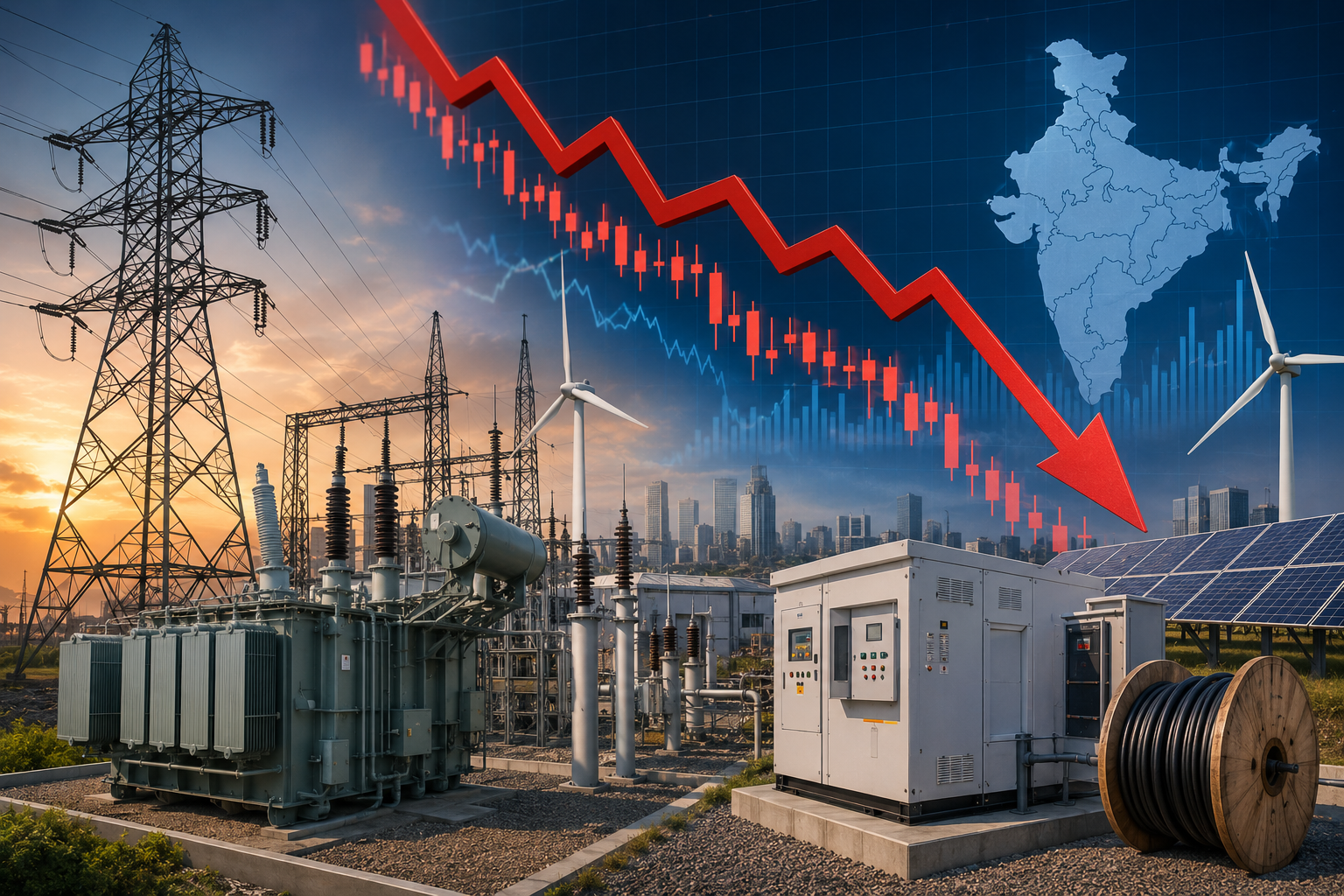
Hitachi Energy, GE Vernova, CG Power, Thermax and Other Electrical Equipment Stocks Fall Amid Concerns Over Intensifying Competition
Shares of India's leading power equipment manufacturers witnessed a sharp correction after reports indicated that the Central Government has allowed four Chinese power equipment companies with manufacturing facilities in India to participate in government tenders for critical power transmission projects. The move sparked concerns among investors that increased competition could pressure order inflows, pricing power, and profitability for domestic equipment manufacturers.
Stocks including Hitachi Energy India, GE Vernova T&D India, CG Power & Industrial Solutions, Siemens Energy India, TD Power Systems, Transformers & Rectifiers (India), Apar Industries, Thermax, and Bharat Heavy Electricals Ltd. (BHEL) witnessed heavy selling during Friday's trading session.
While the market reacted negatively to the development, industry experts believe India's long-term power infrastructure story remains firmly intact, supported by massive investments in renewable energy, transmission networks, and electrification.
What Triggered the Sell-Off?
Investor sentiment weakened after reports suggested that the Ministry of Finance has granted permission to four Chinese-origin power equipment manufacturers operating production facilities in India to participate in government procurement for strategic power transmission projects.
The companies reportedly include:
-
TBEA Energy
-
Nanjing Electric India
-
New Northeast Electric India
-
Taikai Electric (India)
The decision is aimed at increasing supplier participation as India rapidly expands its power transmission network to meet rising electricity demand and renewable energy integration.
However, investors interpreted the move as a potential increase in competitive intensity for domestic manufacturers.
Why Are Investors Concerned?
The transmission and distribution (T&D) equipment industry largely depends on competitive bidding for government and utility projects.
When more companies participate in tenders, several challenges emerge:
-
Increased pricing competition
-
Lower bid margins
-
Higher pressure on profitability
-
Greater competition for large orders
-
Longer order conversion cycles
As a result, investors fear that future earnings growth for listed power equipment companies could moderate if pricing becomes more aggressive.
Power Sector Demand Remains Exceptionally Strong
Despite the short-term market reaction, India's power infrastructure sector continues to enjoy one of its strongest growth cycles in decades.
The country is making record investments in:
-
Renewable energy
-
National transmission corridors
-
Smart grids
-
Industrial electrification
-
Railway electrification
-
Urban metro systems
-
Data centres
-
Manufacturing infrastructure
These structural investments are expected to sustain robust demand for electrical equipment over the coming decade.
India's Renewable Energy Expansion Creates Massive Opportunities
India's clean energy transition remains one of the largest drivers of future demand for electrical equipment.
The country continues to add significant capacity in:
Solar Energy
Large utility-scale solar parks require extensive transmission infrastructure.
Wind Energy
Wind farms require substations, transformers, and high-voltage transmission systems.
Battery Storage
Grid-scale battery projects increase demand for advanced electrical equipment.
Green Hydrogen
Upcoming hydrogen projects will require reliable power transmission and industrial electrification.
As renewable generation expands, transmission infrastructure must grow simultaneously to maintain grid stability.
Transmission Network Modernisation Accelerates
India is undertaking one of the largest grid expansion programmes globally.
Major investments are being directed toward:
Green Energy Corridors
Dedicated transmission lines connecting renewable energy projects with demand centres.
Smart Grid Technologies
Digital monitoring systems improve efficiency and reduce transmission losses.
High-Voltage Transmission
Expansion of ultra-high voltage networks to transport electricity over longer distances.
Substation Upgrades
Modern substations improve reliability and facilitate renewable energy integration.
These projects provide substantial long-term business opportunities for equipment manufacturers.
Electrification Across Multiple Industries Supports Growth
Demand for electrical equipment extends well beyond the power sector.
Several industries continue investing heavily in electrification:
Railways
Indian Railways continues expanding electrified routes across the country.
Metro Rail
Urban transport projects require sophisticated electrical systems.
Manufacturing
New factories need advanced electrical distribution infrastructure.
Data Centres
Growing AI and cloud computing infrastructure significantly increase electricity consumption.
Semiconductor Manufacturing
Upcoming semiconductor facilities require highly reliable power supply systems.
These sectors together create diversified demand for power equipment manufacturers.
Domestic Companies Continue to Build Strong Order Books
Leading Indian equipment manufacturers continue reporting healthy business pipelines.
Many companies are benefiting from:
-
Record infrastructure spending
-
Strong government capital expenditure
-
Private sector investments
-
Renewable energy projects
-
Industrial automation demand
-
Energy efficiency initiatives
Several manufacturers have also expanded production capacity to meet increasing demand across domestic and export markets.
Competition Could Improve Industry Efficiency
While increased competition initially raises concerns, it may also encourage manufacturers to improve efficiency and innovation.
Companies are expected to focus on:
-
Advanced technology
-
Cost optimisation
-
Faster execution
-
Product innovation
-
Digital grid solutions
-
Higher manufacturing efficiency
Such improvements could strengthen India's overall power equipment ecosystem over the long term.
Valuation Correction May Create Selective Opportunities
It is important to note that many power equipment companies had delivered extraordinary returns over the past two years.
Several stocks were trading at premium valuations due to:
-
Strong order inflows
-
Record earnings
-
Infrastructure optimism
-
Renewable energy investments
The recent correction may therefore represent a valuation reset rather than a fundamental deterioration in business prospects.
Long-term investors often view such corrections as opportunities to accumulate fundamentally strong businesses at more reasonable valuations.
Key Factors Investors Should Monitor
Going forward, investors should closely track:
-
Government procurement policies
-
New transmission project awards
-
Order inflows
-
Operating margins
-
Renewable energy investments
-
Capital expenditure by utilities
-
Raw material costs
-
Execution of existing order books
These variables will determine earnings growth across the sector.
Long-Term Outlook Remains Positive
Despite near-term concerns, India's electrical equipment industry remains one of the biggest beneficiaries of the country's infrastructure-led growth strategy.
The sector is expected to gain from:
-
Energy transition
-
Electrification of transportation
-
Renewable energy expansion
-
Smart city development
-
AI-driven electricity demand
-
Manufacturing growth
-
Urban infrastructure
-
Digital economy expansion
These structural themes provide strong long-term visibility for companies operating across transmission, distribution, and industrial electrification.