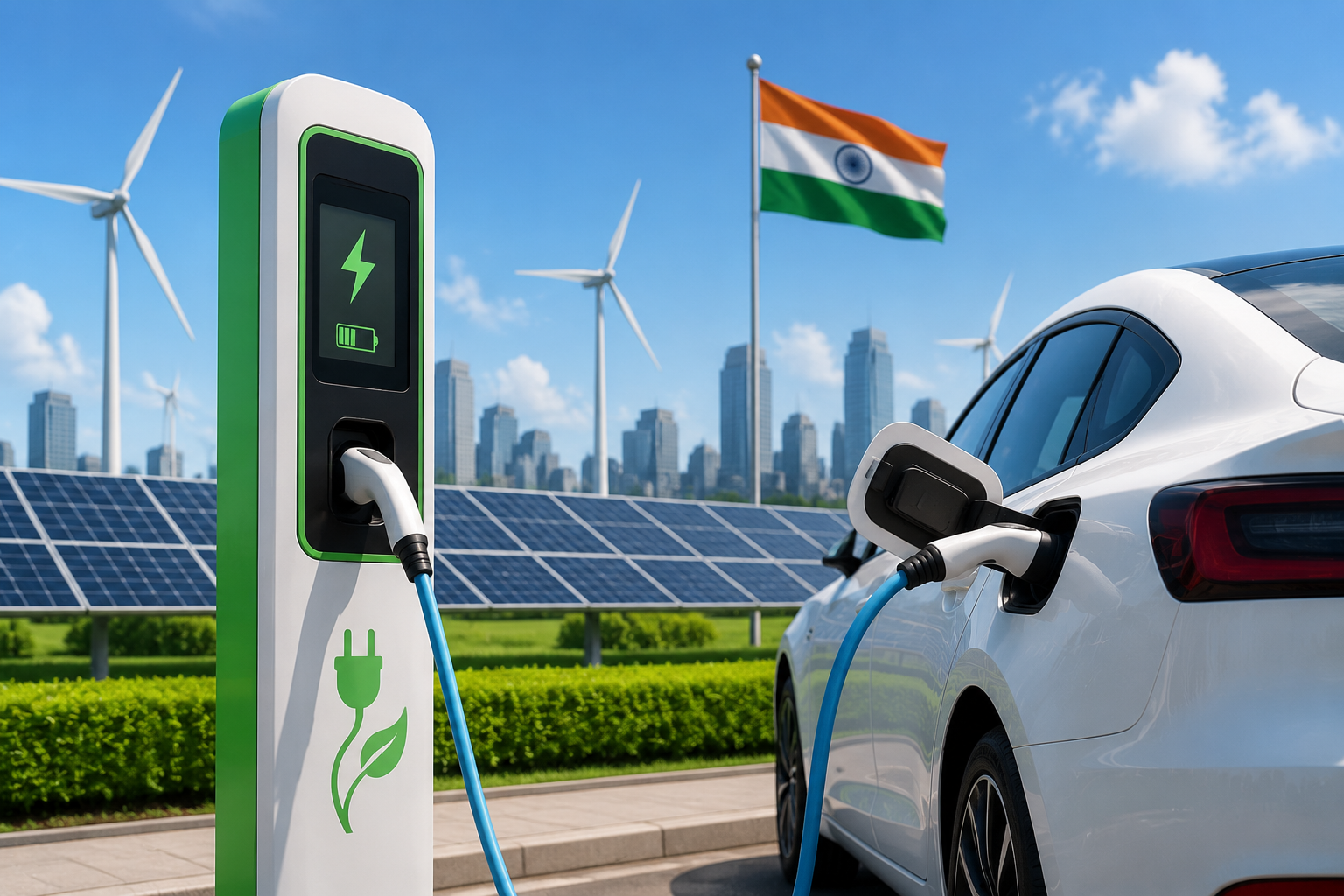
Tarun Kapoor urges faster electric mobility adoption, stronger localisation of EV components, and reduced dependence on crude oil imports and Chinese supply chains to strengthen India's long-term economic and energy security.
India must accelerate its transition to electric mobility to reduce dependence on imported crude oil and build a more resilient economy, according to Tarun Kapoor, Advisor to the Prime Minister. Speaking at an industry conference on "Building India an Electric Mobility Hub for Viksit Bharat", Kapoor said the recent geopolitical tensions in West Asia have highlighted the strategic importance of achieving energy security through rapid adoption of electric vehicles (EVs).
He stressed that electric mobility should now be viewed not merely as an environmental initiative but as a national economic priority. India's heavy reliance on imported crude oil exposes the economy to global geopolitical risks, fuel price volatility, inflationary pressures, and fluctuations in the value of the rupee. Accelerating EV adoption, coupled with greater domestic manufacturing of critical components, can help reduce these vulnerabilities while supporting long-term economic growth.
Kapoor also called on the automotive industry to significantly scale up investments, stating that India must aim for a much larger EV ecosystem over the next five years.
Energy Security Becomes a National Priority
The recent developments in West Asia once again demonstrated how global geopolitical events can quickly influence international energy markets.
India imports nearly 85% of its crude oil requirements, making the country highly sensitive to disruptions in global oil supply and sharp fluctuations in crude prices.
According to Kapoor, reducing dependence on imported petroleum has become one of India's most important strategic objectives.
A stronger electric mobility ecosystem can reduce exposure to external shocks while making India's economy more resilient during periods of geopolitical uncertainty.
He noted that every percentage reduction in crude oil imports translates into significant savings for the country's economy.
Lower Oil Imports Can Strengthen the Rupee
One of the major economic benefits of increased EV adoption is the potential reduction in India's oil import bill.
Lower crude imports can improve the country's current account balance, reduce foreign exchange outflows, and provide long-term support to the Indian Rupee.
Reduced dependence on imported fuels can also help moderate inflation, lower transportation costs, and improve overall macroeconomic stability.
Kapoor observed that even a 5% reduction in petroleum consumption could generate meaningful economic gains for the country.
Such savings could be redirected towards infrastructure, manufacturing, and technology investments that support long-term development.
Two-Wheelers Hold the Key to EV Growth
India has already made significant progress in electric mobility, particularly in the two-wheeler and three-wheeler segments.
According to Kapoor, these categories have witnessed encouraging adoption due to lower operating costs, supportive government policies, expanding charging infrastructure, and increasing consumer awareness.
However, passenger cars continue to lag behind.
He highlighted that nearly 60% of India's petrol consumption comes from two-wheelers, making this segment the most critical for reducing fuel dependence.
Rapid electrification of motorcycles and scooters could therefore have the greatest impact on India's energy consumption.
Recent policy initiatives, including Delhi's updated EV policy, are expected to further accelerate adoption in the coming years.
Localisation Must Accompany Electrification
While promoting electric vehicles, Kapoor also emphasised the importance of strengthening domestic manufacturing capabilities.
India currently depends on imports for several critical EV components, including battery cells, rare earth materials, electronic components, and specialised minerals.
He stressed that reducing dependence on imports—particularly from China—for strategic components has become increasingly important.
Developing domestic supply chains for batteries, semiconductors, electronics, and critical minerals will enhance India's industrial competitiveness while reducing geopolitical risks.
Although complete import substitution may not be practical, greater localisation remains a key national objective.
Government and Industry Must Work Together
Kapoor assured industry leaders that the government remains committed to supporting India's electric mobility ambitions.
He encouraged automobile manufacturers, battery producers, component suppliers, and infrastructure developers to significantly increase investments in the EV ecosystem.
According to him, production capacity, manufacturing capabilities, and charging infrastructure must expand several times beyond current levels if India is to achieve its long-term mobility goals.
Close collaboration between policymakers and private industry will be essential for building a globally competitive electric vehicle ecosystem.
EV Industry Emerging as a Major Growth Driver
India's electric mobility sector is rapidly evolving into one of the country's most promising manufacturing opportunities.
Growth in EV adoption is expected to stimulate investments across several industries, including:
-
Battery manufacturing
-
Charging infrastructure
-
Renewable energy
-
Automotive electronics
-
Power management systems
-
Critical mineral processing
-
Software and connected mobility solutions
The expansion of these industries could generate substantial employment opportunities while strengthening India's manufacturing capabilities under the Make in India initiative.
The sector also has significant export potential as global demand for electric vehicles continues to rise.
Challenges Remain on the Road Ahead
Despite rapid progress, several hurdles still need to be addressed before EVs achieve widespread adoption.
Industry experts continue to highlight challenges such as:
-
High battery costs
-
Limited charging infrastructure in smaller cities
-
Dependence on imported battery materials
-
Consumer awareness
-
Financing options
-
Technology localisation
Addressing these issues will require coordinated efforts from governments, automakers, financial institutions, and technology providers.
Continued policy support and infrastructure investment are expected to remain crucial for sustaining growth.
Outlook
The recent geopolitical tensions in West Asia have strengthened the case for accelerating India's transition towards electric mobility. By reducing dependence on imported crude oil and expanding domestic manufacturing of EVs and critical components, India can improve energy security, strengthen its economy, and reduce exposure to external shocks.
With strong policy backing, growing industry investments, and rising consumer acceptance, India's electric vehicle ecosystem is expected to witness rapid expansion over the next five years. As localisation improves and production scales up, the country has the opportunity to emerge as one of the world's leading electric mobility hubs while advancing its broader vision of a self-reliant and sustainable economy.