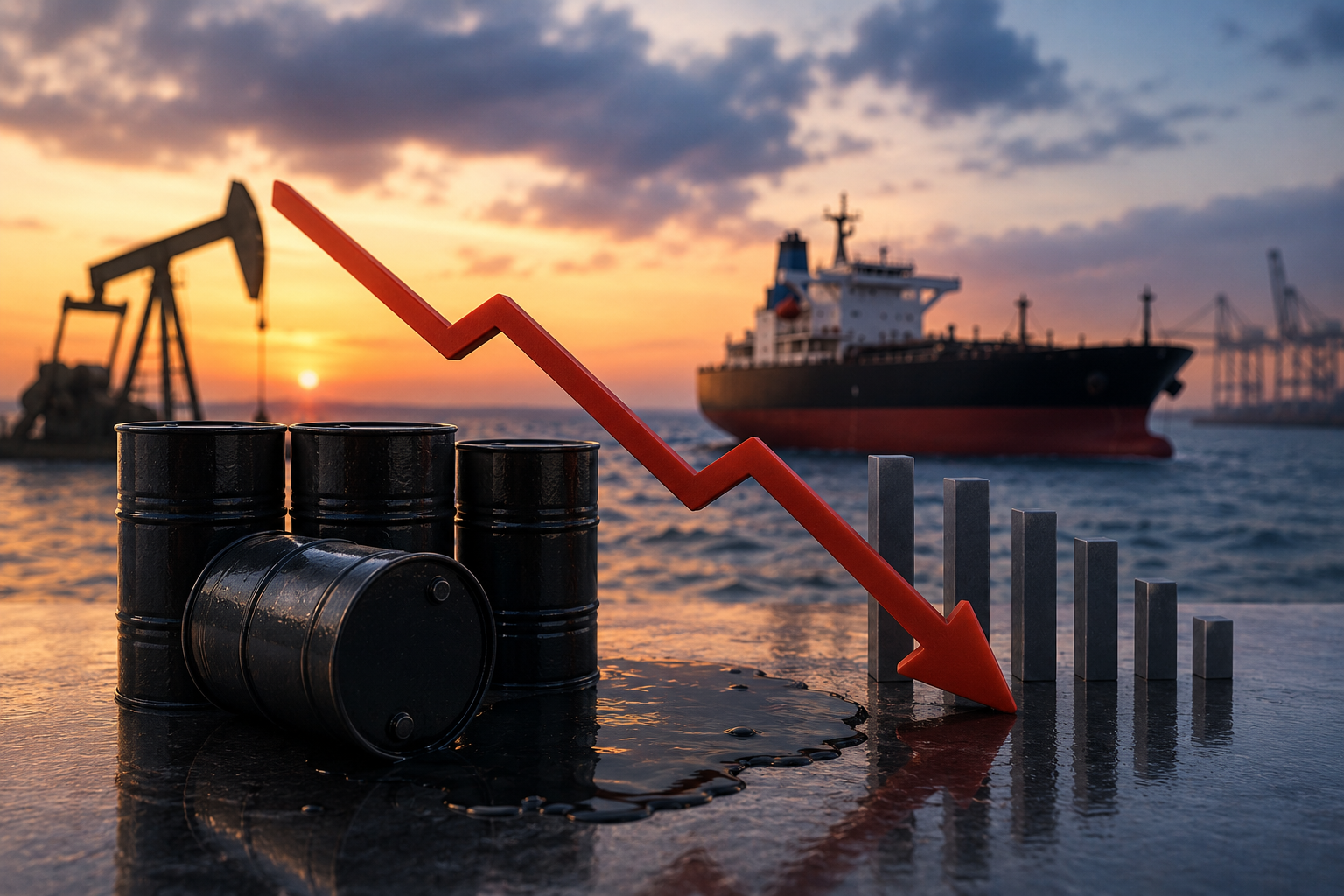
Brent Falls Below $71, OPEC+ Output Increase and Strait of Hormuz Recovery Weigh on Crude Market
Global crude oil prices extended their decline on Thursday after positive developments in indirect negotiations between the United States and Iran reduced fears of prolonged supply disruptions in the Middle East. Improved shipping activity through the strategically important Strait of Hormuz and expectations of another production hike by OPEC+ further pressured oil prices, pushing both Brent and West Texas Intermediate (WTI) crude to multi-month lows.
Brent crude futures slipped more than 1% to $70.84 per barrel, while US WTI crude fell 1.2% to $67.75 per barrel during early Asian trading. The latest decline follows losses in the previous session, leaving benchmark crude prices at their lowest levels in nearly four months.
Diplomatic Progress Calms Energy Markets
Investor sentiment improved after Qatar announced that indirect talks between the United States and Iran in Doha had made encouraging progress. The discussions reportedly focused on maritime security in the Strait of Hormuz, one of the world's busiest oil transit routes, and financial issues, including the possible release of Iranian funds.
The diplomatic engagement has eased immediate concerns that geopolitical tensions could significantly disrupt global crude supplies. While negotiations remain ongoing, markets have responded positively to signs that both sides are willing to continue dialogue rather than escalate military conflict.
Strait of Hormuz Remains the Market's Biggest Focus
The Strait of Hormuz remains one of the most strategically important waterways for global energy markets, transporting nearly 20% of the world's crude oil exports.
Recent military tensions had raised fears of shipping disruptions after attacks on commercial vessels affected maritime traffic in the region. However, tanker movement has gradually recovered, with shipping volumes reportedly approaching pre-conflict levels.
Despite the improvement, geopolitical risks remain elevated. Iranian officials have reiterated plans to exercise greater control over maritime traffic and have indicated that new shipping regulations and transit charges could be introduced later this year. These developments continue to keep energy markets cautious.
OPEC+ Expected to Increase Production Again
Another major factor driving oil prices lower is growing market confidence that the OPEC+ alliance will approve another production increase during its upcoming meeting.
Industry sources expect the producer group to raise output targets by approximately 188,000 barrels per day from August, maintaining the gradual supply expansion that began earlier this year.
Higher production from major oil-producing nations could increase global supply at a time when demand growth remains relatively moderate, reinforcing expectations of an adequately supplied market through the second half of 2026.
Supply Outlook Overshadows Inventory Draw
Supporting crude prices to some extent, the latest data from the US Energy Information Administration (EIA) showed that US crude inventories declined by 3.8 million barrels during the previous week, reducing stockpiles to 408.4 million barrels—their lowest level since September 2018.
Lower inventories generally indicate healthy demand or tighter domestic supply. However, the decline was smaller than analysts' expectations of a 4.5 million-barrel draw, limiting the bullish impact on oil prices.
Market participants believe that expectations of increasing global production are currently outweighing supportive inventory data.
Global Demand Remains Under Watch
Beyond geopolitical developments, investors continue to monitor the outlook for global energy demand.
Economic activity in major consuming regions, including the United States, China, and Europe, will play a crucial role in determining crude price direction over the coming months. Slower industrial activity or weaker-than-expected fuel consumption could further pressure oil prices, while stronger economic growth may provide support.
Seasonal travel demand and industrial production trends will also influence consumption levels during the second half of the year.
What Lower Oil Prices Mean for India
India, one of the world's largest crude oil importers, stands to benefit if international oil prices remain under pressure.
Lower crude prices could:
-
Reduce the country's overall import bill.
-
Ease inflationary pressures by lowering transportation and manufacturing costs.
-
Improve the current account balance.
-
Support corporate profitability in fuel-intensive sectors such as aviation, logistics, paints, chemicals, and cement.
-
Provide greater flexibility for policymakers if inflation remains contained.
However, any renewed geopolitical escalation in the Gulf region could quickly reverse these benefits and increase volatility in energy markets.
Sectors Likely to Benefit
If crude prices remain below recent highs, several sectors of the Indian economy could benefit, including:
-
Aviation: Lower aviation turbine fuel (ATF) costs can improve airline profitability.
-
Logistics and Transportation: Reduced diesel prices may lower operating expenses.
-
Paints and Chemicals: Falling crude derivatives can reduce raw material costs.
-
Consumer Goods: Lower transportation expenses can improve margins.
-
Tyre Manufacturers: Softer petrochemical prices may support profitability.
Conversely, upstream oil exploration companies could face pressure if crude prices remain subdued for an extended period.
Key Factors Investors Should Monitor
Going forward, crude oil prices will largely depend on several global developments:
-
Progress in US-Iran diplomatic negotiations.
-
Security conditions in the Strait of Hormuz.
-
OPEC+ production decisions.
-
US crude inventory trends.
-
Global economic growth and fuel demand.
-
China's manufacturing and industrial recovery.
-
Currency movements and interest rate expectations.
Outlook
The crude oil market has shifted its focus from immediate geopolitical risks toward improving supply conditions. Progress in US-Iran negotiations, the recovery of tanker traffic through the Strait of Hormuz, and expectations of additional OPEC+ production have significantly reduced concerns about supply shortages.
While these factors may keep oil prices under pressure in the near term, geopolitical tensions in the Middle East remain a key wildcard. Any disruption to shipping routes or breakdown in diplomatic talks could quickly reignite volatility. For now, however, markets appear to be pricing in a more balanced global oil supply outlook, offering relief to major oil-importing economies such as India.