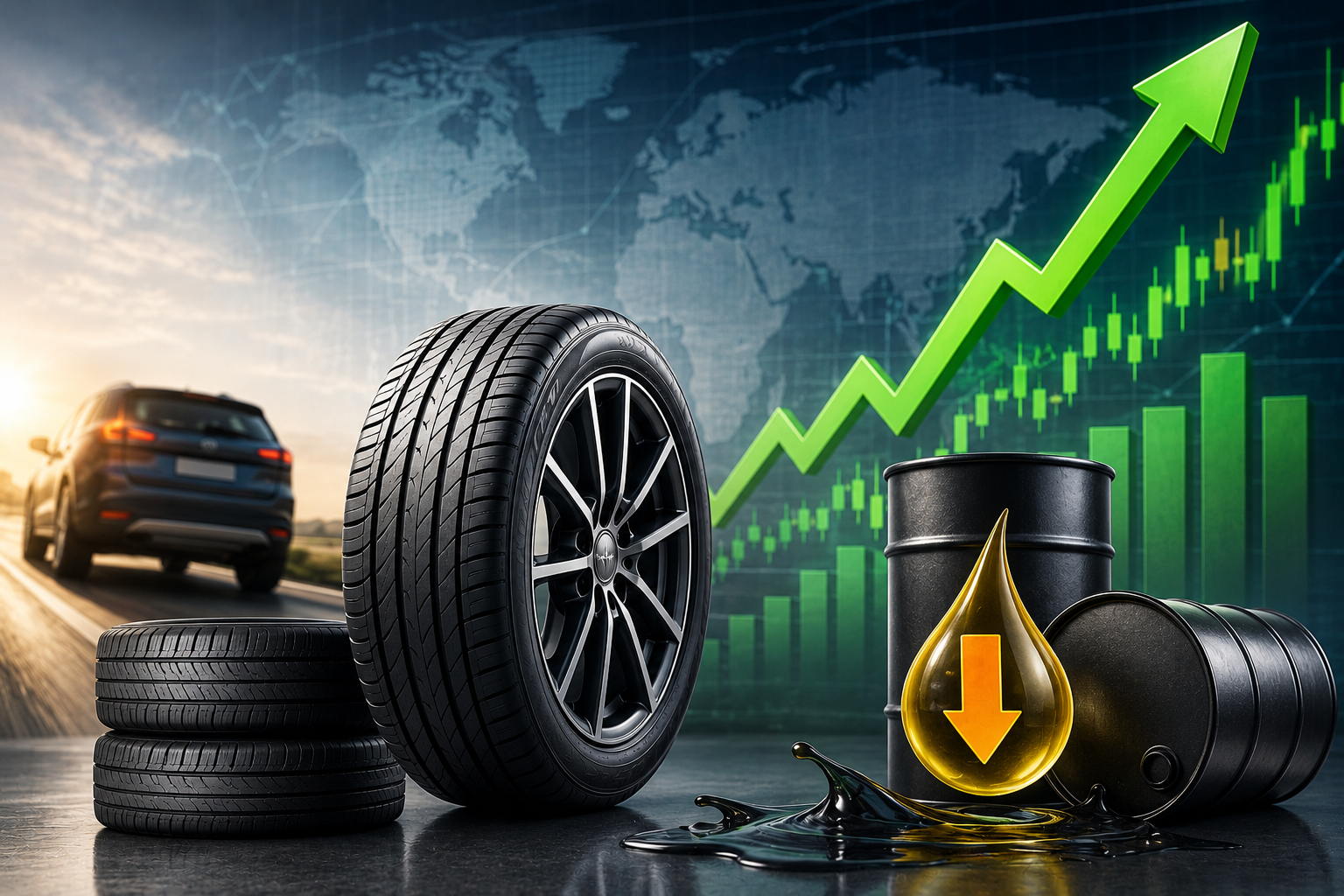
Softer global oil prices, easing geopolitical tensions, and expectations of lower raw material costs drive strong buying across tyre stocks, with analysts forecasting improved profitability in the coming quarters.
Tyre stocks witnessed broad-based buying on Thursday as declining crude oil prices boosted investor sentiment towards the sector. Shares of Goodyear India, CEAT, JK Tyre, Apollo Tyres, MRF, TVS Srichakra, Balkrishna Industries and several other tyre manufacturers rallied after global benchmark crude prices fell to their lowest levels in more than four months.
Goodyear India emerged as the top performer, gaining more than 7% during intraday trade, while CEAT advanced around 4%. Tolins Tyres also posted impressive gains of nearly 6%, whereas JK Tyre and TVS Srichakra rose over 3%. Market leaders Apollo Tyres, MRF and Balkrishna Industries also traded firmly in positive territory, reflecting optimism across the entire tyre sector.
The rally comes as investors anticipate a meaningful improvement in operating margins, with lower crude oil prices expected to reduce input costs for tyre manufacturers.
Crude Oil Retreat Sparks Buying in Tyre Stocks
The primary catalyst behind Thursday's rally was the sharp decline in global crude oil prices.
Brent crude slipped to around $70.84 per barrel, while US West Texas Intermediate (WTI) crude dropped to nearly $67.75 per barrel, extending losses after diplomatic discussions between the United States and Iran showed encouraging progress.
The improvement in geopolitical relations reduced concerns over supply disruptions through the Strait of Hormuz, one of the world's busiest oil transportation routes. At the same time, expectations that OPEC+ could further increase crude oil production in the coming months also added pressure on global oil prices.
Lower crude prices generally benefit industries with high petroleum-based input costs, making tyre manufacturers among the biggest beneficiaries.
Why Crude Prices Matter for Tyre Manufacturers
The tyre industry has one of the strongest correlations with crude oil prices because a significant portion of its production costs depends on petroleum-derived raw materials.
Industry estimates suggest that nearly 70% of tyre manufacturing costs are linked to crude oil through products such as synthetic rubber, carbon black, nylon tyre cord, industrial chemicals and other petrochemical inputs.
When crude prices decline, raw material procurement becomes cheaper, enabling tyre companies to improve gross margins and profitability without immediately changing product prices.
Apart from manufacturing costs, lower diesel and fuel prices also reduce transportation and logistics expenses, creating additional operational savings for manufacturers.
This combination of lower production and distribution costs often results in stronger earnings during periods of falling crude oil prices.
Margin Expansion Expected to Drive Earnings Growth
Market participants believe the current rally is largely based on expectations of margin improvement rather than a sudden acceleration in demand.
Over the past few years, tyre manufacturers have faced pressure from volatile raw material prices, particularly during periods of elevated crude oil prices.
With commodity costs now easing, analysts expect operating margins to improve gradually over the next few quarters.
Companies with efficient manufacturing facilities, strong procurement strategies and premium product portfolios are expected to benefit the most from the favourable cost environment.
Improved margins could also translate into stronger cash flows, higher profitability and better return ratios for leading tyre manufacturers.
Domestic Demand Outlook Remains Healthy
While falling raw material costs provide immediate support, the industry's demand outlook also remains encouraging.
Replacement demand continues to remain resilient as India's growing vehicle population generates consistent demand for replacement tyres across passenger vehicles, commercial vehicles, two-wheelers and tractors.
The recovery in commercial vehicle sales, rising infrastructure activity, improving rural sentiment and stable passenger vehicle production are expected to further strengthen demand over the coming quarters.
In addition, increased freight movement and higher logistics activity continue to support demand for truck and bus tyres, while expanding electric vehicle sales are creating new opportunities for premium tyre manufacturers.
Analysts Prefer Industry Leaders
Market experts continue to maintain a constructive outlook on the tyre sector, believing that lower input costs and stable demand could support earnings growth during FY27.
Among the listed companies, MRF, Apollo Tyres and CEAT are considered the preferred investment choices due to their strong domestic market presence, diversified product portfolios, established brands and improving operating performance.
These companies are expected to benefit from both lower raw material costs and healthy replacement demand.
For investors with a relatively higher risk appetite, JK Tyre is also emerging as an attractive opportunity. Analysts believe the company could deliver stronger earnings growth if margin recovery continues and operating leverage improves.
Key Risks Investors Should Watch
Despite the positive outlook, several risks remain.
Crude oil prices remain highly sensitive to geopolitical developments, OPEC+ production decisions and global economic conditions. Any sharp rebound in oil prices could once again increase raw material costs for tyre manufacturers.
Similarly, fluctuations in natural rubber prices, foreign exchange movements and any slowdown in automobile production could affect profitability across the industry.
Investors will also closely monitor quarterly earnings to assess whether companies are able to convert lower input costs into sustainable margin expansion.
Outlook
The sharp rally in tyre stocks reflects growing optimism that declining crude oil prices could significantly improve profitability for the sector. With petroleum-based raw materials accounting for nearly 70% of production costs, lower oil prices provide an important tailwind for earnings growth.
Combined with resilient replacement demand, recovering commercial vehicle sales, improving rural consumption and stable automotive production, the industry's fundamentals remain supportive. If crude prices continue to remain subdued and domestic demand stays healthy, leading tyre manufacturers could witness stronger margins and improved financial performance over the coming quarters, making the sector one to watch for investors seeking exposure to India's manufacturing and automobile ecosystem.