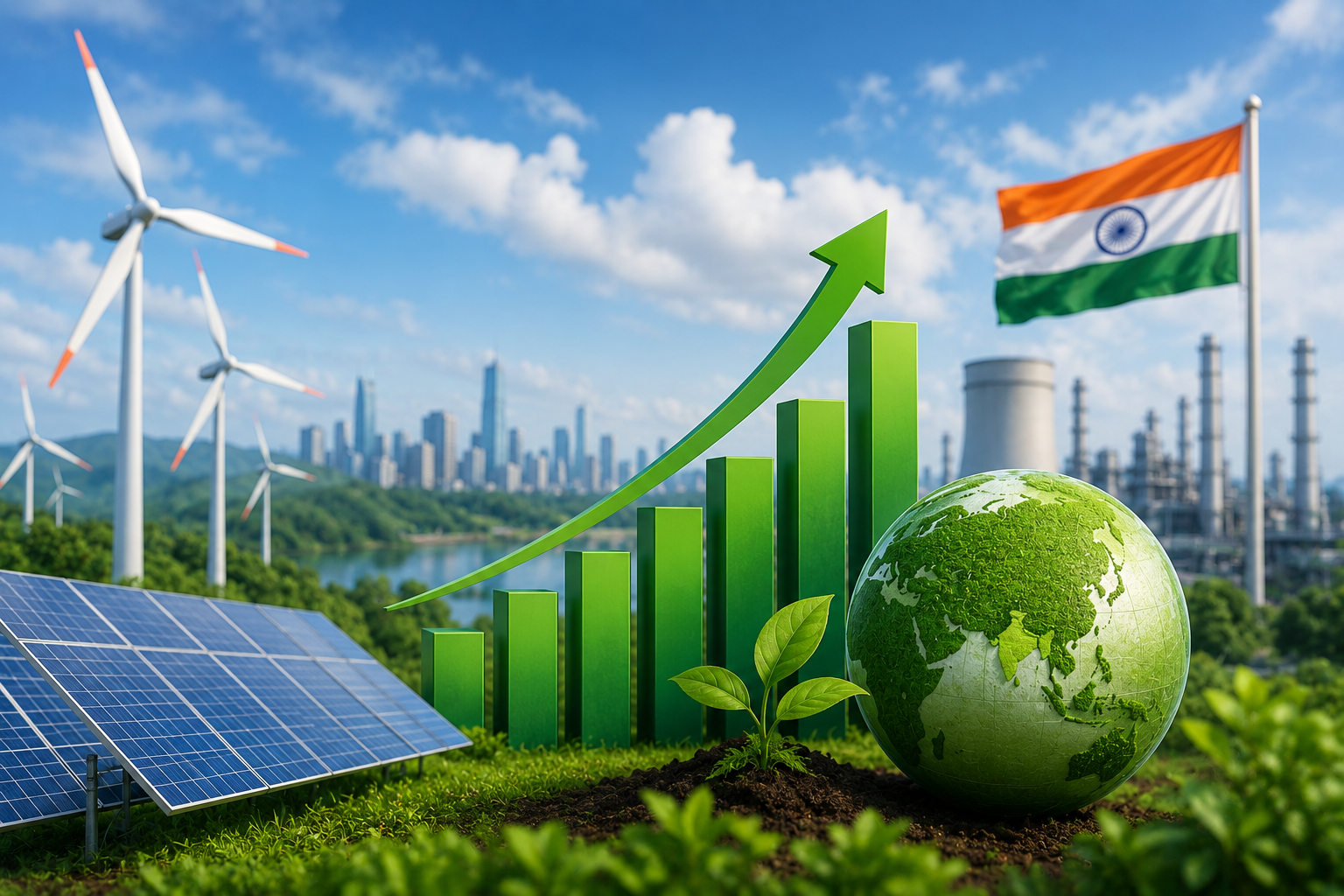
Energy Institute report shows India recorded the slowest rise in carbon emissions among the world's three largest polluters, supported by milder weather, lower coal-based power generation, and increasing renewable energy adoption.
India recorded its slowest annual growth in energy-related carbon dioxide (CO₂) emissions in 2025—excluding the pandemic year of 2020—marking a significant milestone in the country's clean energy transition. According to the Energy Institute Statistical Review of World Energy 2026, the combination of favourable weather conditions, lower electricity demand, and rising renewable energy generation helped moderate the country's emissions growth despite continued economic expansion.
The report highlights that India's CO₂ emissions from energy use increased by just 0.6% in 2025, reaching 2.96 billion tonnes. The increase was significantly lower than the 4.4% growth recorded in 2024 and well below the average annual emissions growth of 3.4% during the 2015–2025 period.
Among the world's three largest carbon emitters—India, China, and the United States—India posted the slowest increase in emissions, reflecting gradual progress toward a cleaner and more diversified energy system.
Renewable Energy Continues to Reshape India's Energy Landscape
A major factor behind the slower emissions growth was the increasing contribution of renewable energy to India's electricity generation.
Rapid expansion in solar and wind power capacity, coupled with improved grid integration, enabled renewable sources to meet a larger share of electricity demand. As a result, dependence on coal-fired power generation declined, limiting the growth of carbon emissions even as overall energy consumption continued to rise.
The report also noted an important structural milestone: although fossil fuels still accounted for around 93% of India's primary energy supply, their market share fell to the lowest level recorded since the Energy Institute began maintaining comparable global energy data in 1965.
This trend indicates that renewable energy is steadily gaining ground within India's energy mix, even though conventional fuels continue to dominate overall consumption.
Mild Weather Reduced Electricity Demand
Weather conditions played an equally important role in moderating emissions during the year.
Compared to previous years, relatively mild temperatures reduced electricity demand for cooling across several parts of the country. Lower power consumption meant coal-fired thermal power plants generated less electricity, directly contributing to slower growth in carbon emissions.
The report suggests that reduced dependence on coal generation, combined with greater renewable energy output, created favourable conditions for India's lowest emissions growth in recent years.
Fossil Fuels Continue to Power Economic Growth
Despite the encouraging slowdown, fossil fuels remain the backbone of India's energy economy.
Coal continues to be the primary source of electricity generation, while crude oil and natural gas remain essential for transportation, manufacturing, heavy industries, and commercial activities.
India's rapidly expanding economy, rising industrial production, urbanisation, and growing middle-class population continue to drive higher energy demand. As a result, policymakers face the challenge of ensuring energy security while simultaneously reducing carbon emissions.
Experts believe that maintaining this balance will be critical as India moves toward its long-term climate commitments.
India Outperforms Other Major Polluters
The report draws a sharp contrast between India's emissions trajectory and that of other major economies.
While India's emissions grew only marginally, the United States emerged as the largest contributor to global emissions growth during 2025. US energy-related carbon emissions increased by 3.1%, or approximately 129 million tonnes, reaching around 4.75 billion tonnes.
The increase was largely attributed to higher fossil fuel consumption, making the US the biggest contributor to the rise in global energy-related carbon emissions during the year.
India's comparatively slower emissions growth demonstrates the growing impact of renewable energy investments and improvements in energy efficiency across multiple sectors.
Clean Energy Investments Gathering Momentum
India has significantly accelerated investments in renewable energy over the past few years as part of its broader strategy to reduce carbon intensity and strengthen energy independence.
Large-scale investments are being made in solar parks, wind energy projects, battery energy storage systems, green hydrogen production, transmission infrastructure, and electric mobility.
Government initiatives promoting domestic manufacturing of solar modules, battery cells, and clean energy equipment are also expected to strengthen India's renewable energy ecosystem while reducing dependence on imports.
Industry experts believe these investments will continue to reduce the share of fossil fuels in India's energy mix over the coming decade.
Challenges Remain on the Road to Net Zero
Although the latest report reflects encouraging progress, India continues to face several structural challenges.
Rapid economic growth, expanding infrastructure, rising vehicle ownership, increasing electricity consumption, and growing industrial activity will continue to push energy demand higher in the coming years.
Since coal remains the country's most affordable and reliable source of baseload electricity, reducing emissions without compromising economic growth will require continued investments in renewable energy, energy storage, smart grids, nuclear power, and emerging technologies such as carbon capture.
Achieving these objectives will be essential for meeting India's long-term climate targets while sustaining high economic growth.
Outlook
India's record-low carbon emissions growth in 2025 marks an important milestone in its transition toward a cleaner energy future. The combination of expanding renewable energy capacity, lower coal-fired power generation, and favourable weather conditions demonstrates that economic growth and emissions moderation can increasingly coexist.
While fossil fuels continue to dominate the country's energy landscape, the declining share of conventional fuels and the rapid expansion of renewable power indicate that India's energy transition is gathering momentum. Going forward, sustained policy support, technological innovation, and continued investment in clean energy infrastructure will play a decisive role in determining how quickly India can decarbonise its economy while meeting the energy needs of one of the world's fastest-growing nations.