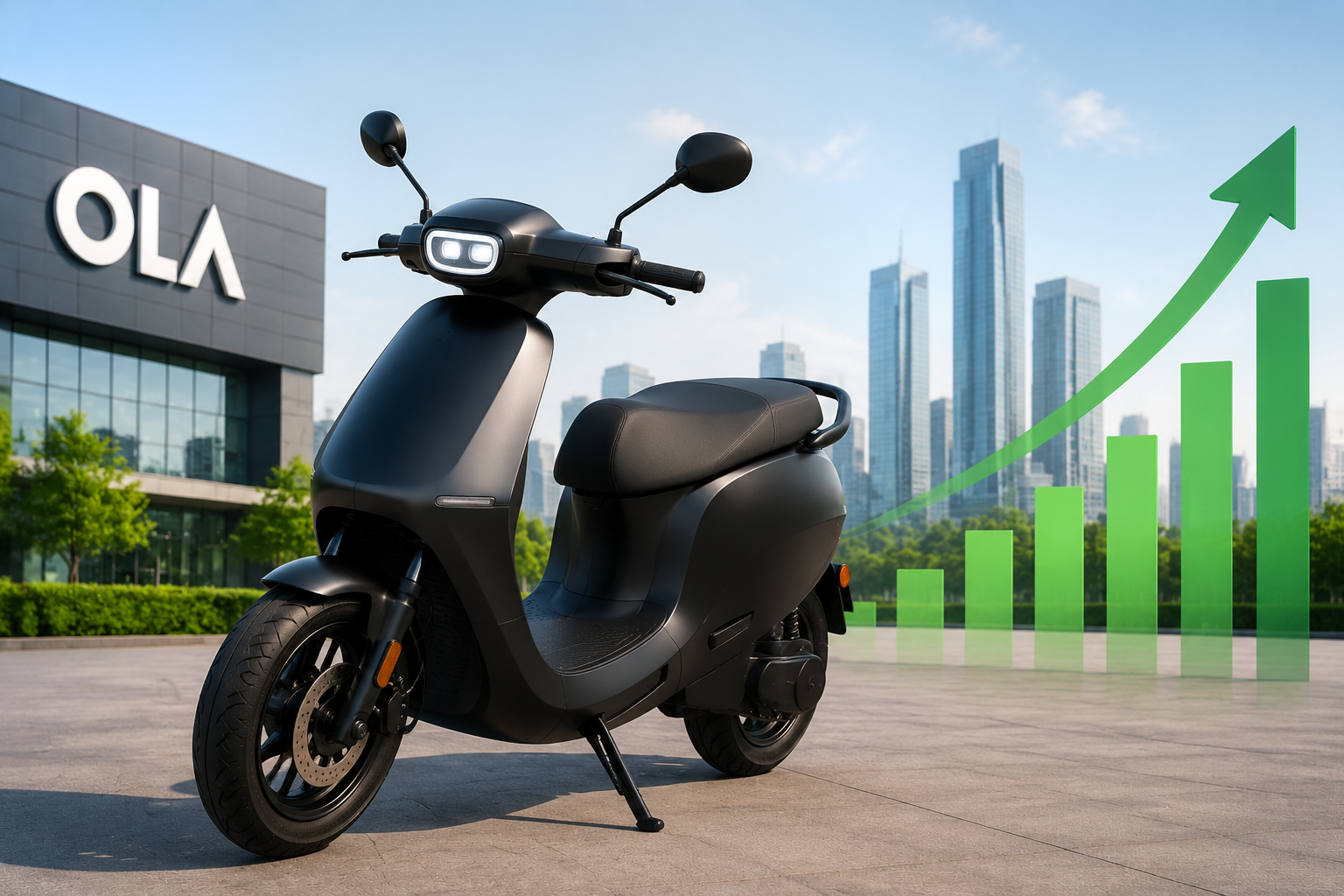
Electric two-wheeler maker reports strong recovery driven by improved retail execution, better product availability and rising consumer demand, reinforcing optimism around India's expanding EV market.
Ola Electric Mobility Ltd. has reported a sharp sequential improvement in its sales performance for the first quarter of FY26, signaling a strong recovery after a challenging start to the year. According to VAHAN registration data, the company registered 43,719 electric two-wheelers during the April–June quarter, compared with 22,252 units in the January–March quarter, reflecting an impressive 96.5% quarter-on-quarter growth.
The Bengaluru-based EV manufacturer also recorded 16,144 vehicle registrations in June, its highest monthly tally in recent quarters, highlighting improving customer demand and operational efficiency.
The latest figures have strengthened investor confidence that India's largest electric two-wheeler manufacturer by cumulative sales is regaining momentum amid rising competition in the electric mobility segment.
Strong Sequential Growth Reflects Business Recovery
The nearly two-fold jump in quarterly registrations indicates that Ola Electric's operational initiatives are beginning to deliver results.
After facing supply-chain constraints, delivery delays and execution challenges in previous quarters, the company has focused on strengthening its retail network, improving inventory availability and streamlining customer deliveries.
These efforts translated into a consistent month-on-month improvement throughout the April–June quarter, culminating in the strongest monthly registration performance in June.
Management believes the recovery reflects stronger execution across the company's sales and distribution network.
June Emerges as Best Performing Month
The company's 16,144 registrations in June represent the highest monthly volume achieved in several quarters.
The performance suggests improving consumer acceptance of Ola Electric's product portfolio and demonstrates that demand remains healthy despite increasing competition in India's electric scooter market.
Higher registrations also indicate better production planning and faster delivery timelines, both of which had been areas of investor concern in recent quarters.
Operational Improvements Drive Growth
According to the company, the strong sequential growth has been supported by several operational enhancements.
Key Growth Drivers
-
Improved product availability across dealerships.
-
Better inventory management.
-
Enhanced retail execution.
-
Faster customer deliveries.
-
Continued demand for electric mobility.
-
Expansion of service and support infrastructure.
These initiatives have helped the company improve customer experience while strengthening its overall sales momentum.
India's EV Market Continues to Expand Rapidly
Ola Electric remains optimistic about the long-term outlook for India's electric two-wheeler industry.
The company expects industry growth to be driven by multiple structural factors, including:
-
Rising fuel prices.
-
Lower running costs compared to petrol-powered vehicles.
-
Growing environmental awareness.
-
Government initiatives promoting clean transportation.
-
Expansion of charging infrastructure.
-
Improvements in battery technology.
India has emerged as one of the world's fastest-growing electric mobility markets, with electric scooters accounting for a significant share of EV adoption.
Vertically Integrated Manufacturing Strategy
One of Ola Electric's key competitive advantages continues to be its vertically integrated business model.
The company manufactures its electric scooters and several key vehicle components at its Futurefactory in Tamil Nadu.
Its integrated manufacturing approach includes:
-
Vehicle assembly.
-
Battery pack manufacturing.
-
Software development.
-
Motor integration.
-
Supply chain management.
This model enables the company to improve quality control, reduce production costs and accelerate product innovation.
Continued Focus on Battery Innovation
Battery technology remains central to Ola Electric's long-term strategy.
The company operates a dedicated battery research and development centre in Bengaluru, where it is working on:
-
Improving battery efficiency.
-
Increasing vehicle range.
-
Enhancing charging speed.
-
Improving battery safety.
-
Developing next-generation battery technologies.
Advancements in battery performance are expected to strengthen the company's competitive position as consumer expectations continue to evolve.
Direct-to-Customer Model Supports Expansion
Unlike traditional automobile manufacturers that rely heavily on dealership networks, Ola Electric follows a direct-to-customer sales model.
Its nationwide company-owned retail network enables it to:
-
Offer a standardized customer experience.
-
Maintain better pricing control.
-
Collect direct customer feedback.
-
Improve after-sales service.
-
Launch products more efficiently.
The company believes this model provides greater operational flexibility while supporting long-term scalability.
Competition in India's EV Industry Intensifies
While Ola Electric remains one of the market leaders, competition in India's electric two-wheeler segment continues to intensify.
Leading automobile manufacturers and EV startups are expanding aggressively through new product launches and wider distribution networks.
Key competitors include:
-
TVS Motor Company
-
Bajaj Auto
-
Ather Energy
-
Hero MotoCorp
-
Honda Motorcycle & Scooter India
-
Emerging EV startups
As competition increases, companies are focusing on innovation, affordability, charging infrastructure and customer service to capture market share.
Industry Tailwinds Continue to Support Growth
Despite competitive pressures, several long-term factors continue to support India's EV ecosystem.
Positive Industry Drivers
-
Government support through EV policies.
-
Expansion of charging infrastructure.
-
Rising urbanisation.
-
Increasing environmental awareness.
-
Lower ownership costs.
-
Technological advancements.
-
Growing financing options for EV buyers.
These structural trends are expected to keep demand for electric two-wheelers on a strong growth trajectory over the coming years.
What Investors Should Watch
Going forward, investors will closely monitor several operational and financial indicators that could influence Ola Electric's performance.
These include:
-
Monthly VAHAN registration trends.
-
Market share movement.
-
New product launches.
-
Gross margin improvement.
-
Battery technology developments.
-
Expansion of manufacturing capacity.
-
Progress toward profitability.
Consistent execution across these areas will be critical as the company seeks to strengthen its leadership position in India's fast-growing EV market.