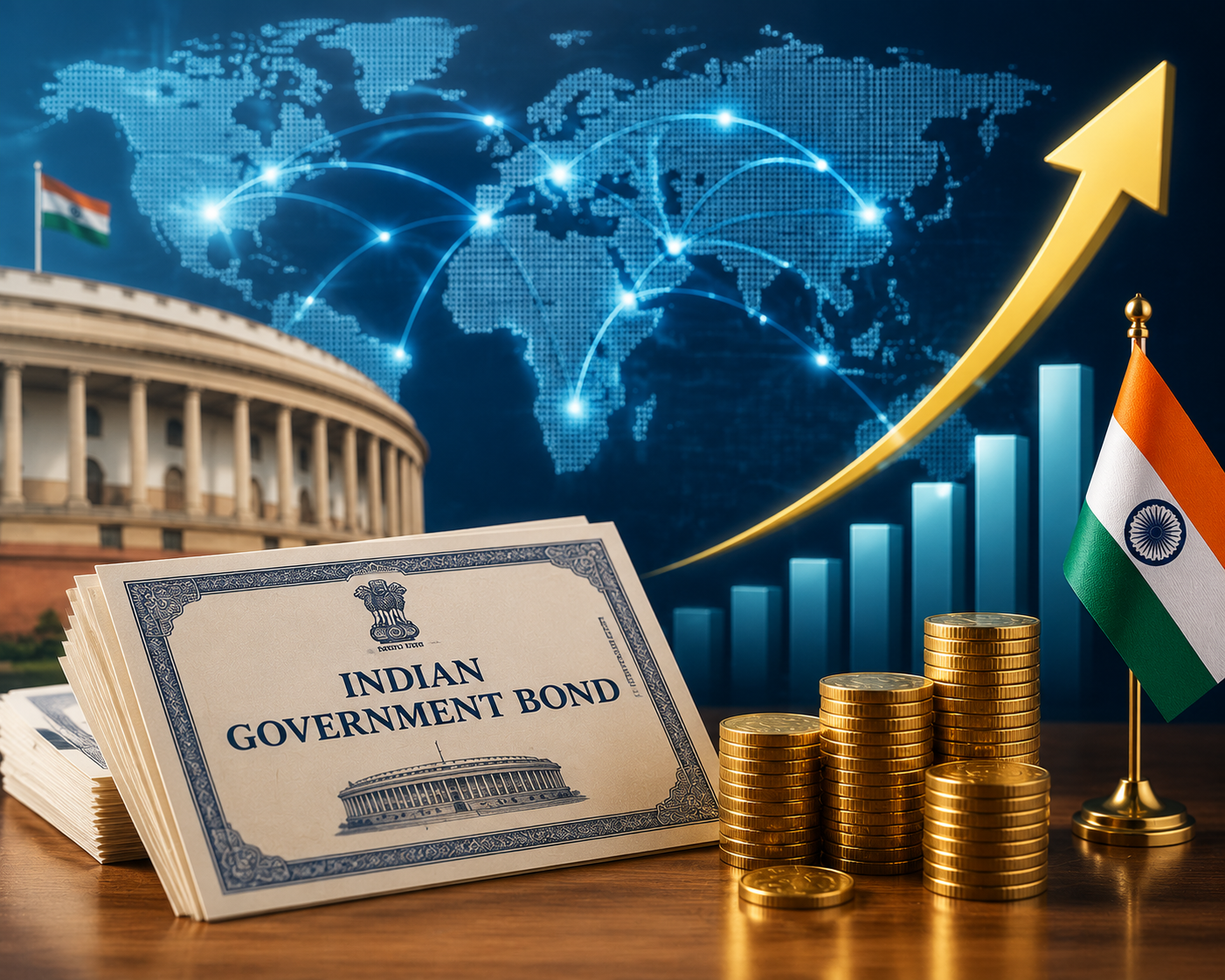
Government's Tax Exemption and RBI's Stable Policy Outlook Drive Strong Overseas Interest in Sovereign Debt
Foreign investors poured a record amount into Indian government bonds in June following the Centre's decision to remove taxes on capital gains and interest income earned by overseas investors. The landmark policy move has significantly improved the attractiveness of India's sovereign debt market, resulting in the highest-ever monthly inflows under the Fully Accessible Route (FAR).
According to data released by the Clearing Corporation of India Ltd. (CCIL), overseas investors purchased ₹41,800 crore ($4.4 billion) worth of Indian government securities during June. The inflow almost doubled the previous monthly record of ₹23,900 crore registered in August 2024, reflecting renewed confidence among global fixed-income investors.
The sharp increase comes after the government announced tax reforms on June 5, removing one of the final barriers preventing broader foreign participation in India's government bond market.
Tax Relief Sparks Record Overseas Participation
The government's decision to exempt foreign investors from taxes on capital gains and interest income generated from eligible government bonds has been widely welcomed by global asset managers.
The move improves the post-tax returns available on Indian sovereign debt and places India on a more competitive footing compared with other emerging market bond destinations.
Market participants believe the policy change is likely to attract a larger pool of long-term institutional investors, including pension funds, sovereign wealth funds, insurance companies, and global bond funds.
The tax relief is also expected to enhance liquidity in the domestic bond market while reducing borrowing costs for the government over time.
Fully Accessible Route Continues to Gain Traction
The entire record inflow came through securities classified under the Fully Accessible Route (FAR).
The FAR framework allows foreign investors to invest in specified government securities without being subject to investment ceilings, making it easier for overseas institutions to participate in India's debt market.
During June, the government also expanded the list of securities available under the FAR category, further increasing investment opportunities and contributing to higher foreign participation.
The broader availability of eligible securities is expected to improve trading volumes and deepen the domestic bond market.
Multiple Factors Boost Investor Confidence
Apart from the tax reforms, several macroeconomic developments have strengthened the investment case for Indian government bonds.
These include:
-
Stable macroeconomic environment
-
Improving fiscal outlook
-
Expectations of policy stability from the Reserve Bank of India
-
Moderating inflation
-
Relatively attractive bond yields
-
Stable currency performance compared with many emerging markets
Economists believe this combination of favourable domestic conditions has made India one of the most attractive fixed-income destinations in Asia.
RBI's Policy Signals Support Bond Market
Investor confidence has also been supported by the Reserve Bank of India's recent policy communication.
Unlike several emerging market central banks that continue to battle inflation pressures, the RBI has indicated that discussions regarding tighter monetary policy remain premature.
Governor Sanjay Malhotra recently stated that policymakers would have adopted a more hawkish stance during the June monetary policy meeting if they believed further interest rate increases were necessary.
The central bank's balanced approach has helped benchmark government bond yields decline, improving returns for existing bond investors.
Bond Yields Decline as Demand Rises
Growing foreign demand has contributed to a rally in Indian government bonds.
The benchmark 10-year government bond yield declined by approximately 25 basis points during June, marking its biggest monthly fall in nearly six years.
Lower yields indicate stronger investor demand and reduce borrowing costs for the government, creating fiscal benefits over the medium term.
A stable government borrowing programme combined with healthy investor participation is expected to support the bond market going forward.
Positive Impact on the Rupee
Record foreign investment into government securities has also strengthened the Indian rupee.
Bond inflows increase demand for the domestic currency, helping offset foreign portfolio outflows from equities and limiting volatility caused by global dollar strength.
The rupee has recovered more than 2% since falling to a record low against the US dollar in May, making it one of the better-performing Asian currencies during the past month.
Currency stability further enhances India's attractiveness for global debt investors.
Global Asset Managers Increase Exposure
Several leading international investment firms have become increasingly optimistic about India's bond market.
Global fund managers including Pictet Asset Management, Neuberger Berman, and M&G Investments have indicated plans to increase allocations to Indian government securities following the government's tax reforms and improving macroeconomic outlook.
Their growing interest reflects confidence in India's economic resilience, policy stability, and long-term growth prospects.
Bloomberg Global Aggregate Index Inclusion Draws Closer
Market experts believe the latest reforms significantly improve India's chances of being included in the Bloomberg Global Aggregate Index, one of the world's most widely followed global bond benchmarks.
Analysts at Goldman Sachs believe India's inclusion has become "a question of timing rather than direction."
If included, passive investment funds tracking the index could channel an estimated $15 billion into Indian government bonds over the inclusion period, providing another structural boost to foreign investment.
Challenges Still Remain
Despite the record inflows, analysts caution that June's figures were partially boosted by the inclusion of additional government securities under the FAR category.
Future foreign investment will continue to depend on:
-
US Federal Reserve policy decisions
-
Global interest rate trends
-
Dollar strength
-
Geopolitical developments
-
Domestic inflation trajectory
-
India's fiscal discipline
A tighter global financial environment could temporarily moderate the pace of overseas investment into emerging market debt.
Investor Outlook
The record inflow into Indian sovereign bonds highlights growing international confidence in India's economic reforms and policy framework. The government's tax incentives, stable monetary policy, improving macroeconomic indicators, and expanding access through the Fully Accessible Route have collectively transformed the investment landscape for foreign bond investors.
Looking ahead, continued reforms, sustained macroeconomic stability, and potential inclusion in major global bond indices could attract even larger overseas investments into India's debt market. Such inflows would not only strengthen the rupee and deepen the bond market but also help lower government borrowing costs, creating long-term benefits for the broader economy and financial markets.