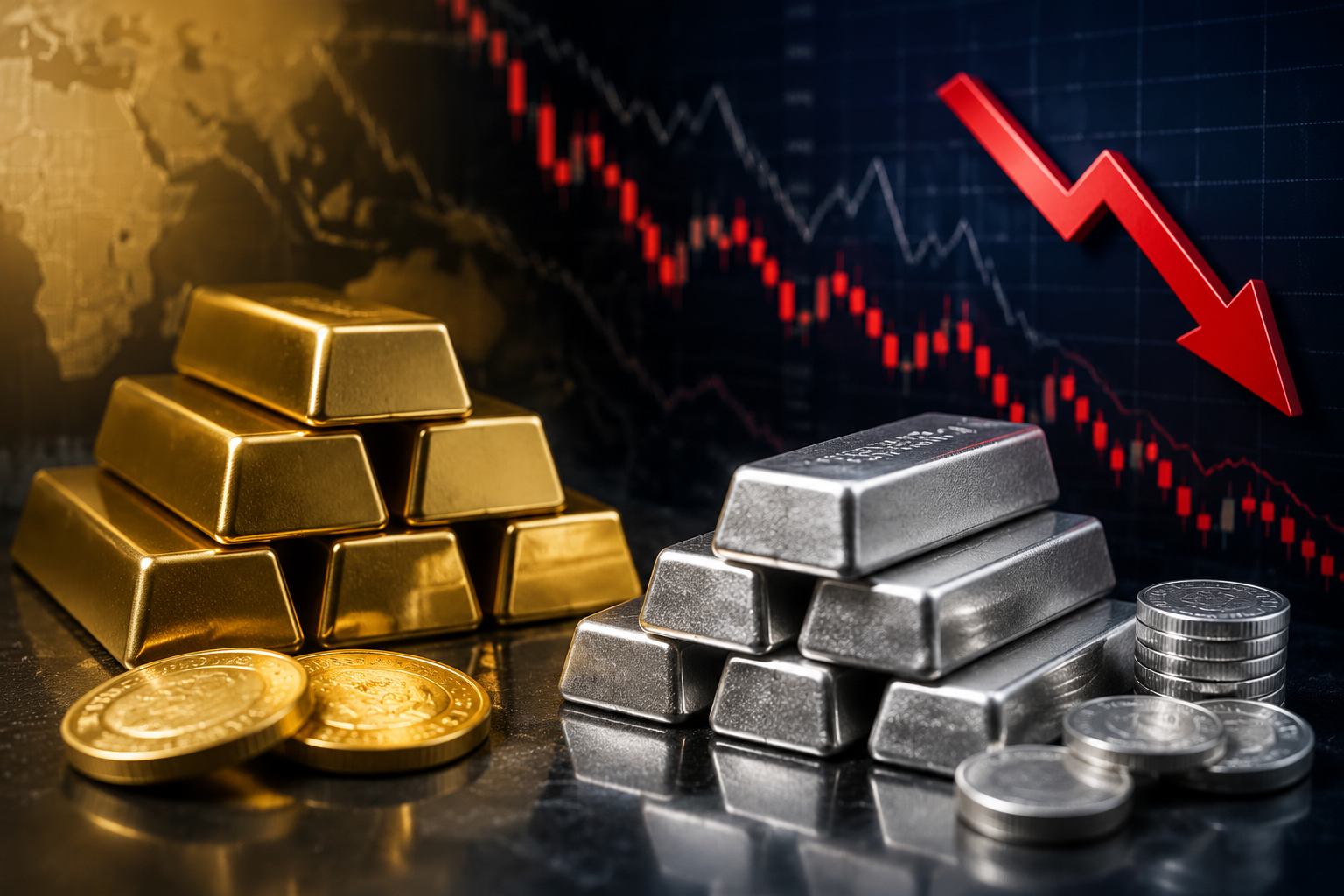
Higher US Interest Rate Expectations and Stronger Dollar Weigh on Precious Metals; Gold and Silver ETFs Trade Lower
Gold and Silver Exchange Traded Funds (ETFs) came under selling pressure on Wednesday as international bullion prices continued their downward trajectory. The decline was driven by a stronger US dollar, expectations that the US Federal Reserve may keep interest rates elevated for a longer period, and easing geopolitical concerns, all of which reduced investor demand for safe-haven assets.
Both gold and silver prices weakened sharply in early trade, prompting declines across Indian bullion-backed ETFs. While gold slipped below the key $4,000 per ounce level, silver recorded an even steeper fall of nearly 3%, reflecting continued volatility in the precious metals market.
Gold Extends Correction Below $4,000
Gold August futures were trading at $3,991 per ounce, down 1.2% during Wednesday's morning session. The yellow metal has now declined for the third consecutive trading session as investors shifted towards the strengthening US dollar.
The recent weakness comes after gold touched a historic high of $5,626.80 per ounce in January 2026. Since then, prices have corrected by more than 29%, erasing a significant portion of the gains accumulated during the global risk-off rally earlier this year.
Analysts believe the correction reflects changing expectations around US monetary policy rather than any deterioration in gold's long-term investment appeal.
Silver Faces Heavy Selling Pressure
Silver witnessed an even sharper correction than gold, falling 3% to around $58.17 per ounce in international trade. The white metal has now dropped nearly 54% from its all-time high of $121.76, highlighting the intense volatility in industrial and precious metals.
June proved particularly challenging for silver investors, with prices declining approximately 22% during the month amid profit booking, reduced industrial demand expectations, and a stronger US currency.
Why Are Precious Metals Falling?
Market participants attribute the recent decline to a combination of macroeconomic factors.
A stronger US dollar has made gold and silver more expensive for overseas buyers, reducing global demand. At the same time, expectations that the US Federal Reserve may maintain higher interest rates for an extended period have increased the attractiveness of fixed-income investments, thereby reducing the appeal of non-interest-bearing assets such as gold.
Although geopolitical tensions in West Asia continue to remain on investors' radar, markets have largely shifted their focus toward central bank policy, inflation trends, and upcoming US economic data.
Gold ETFs Mirror Weakness in Bullion Prices
Indian gold-backed ETFs reflected the weakness in global bullion markets, with most funds trading nearly 1% lower during Wednesday's session.
Among the prominent ETFs witnessing declines were Union Gold ETF, 360 ONE Gold ETF, Edelweiss Gold ETF, and Axis Gold ETF. These funds are currently trading 22–25% below their respective 52-week highs, illustrating the extent of the correction in gold prices.
Other major schemes, including Kotak Gold ETF, Bandhan Gold ETF, SBI Gold ETF, Nippon India Gold BeES, and The Wealth Company Gold ETF, also traded in negative territory as investors reacted to the fall in international gold prices.
Silver ETFs Also Trade Lower
Silver-backed ETFs were equally affected by the sharp decline in silver prices.
Funds such as Nippon India Silver ETF, Tata Silver ETF, HDFC Silver ETF, and Zerodha Silver ETF declined around 1% during intraday trading. The fall underscores the direct impact of global commodity price movements on exchange-traded funds tracking physical silver.
Despite the recent weakness, silver continues to attract long-term investors due to its dual role as both a precious metal and an industrial commodity used in sectors such as solar energy, electric vehicles, and electronics.
Investment Outlook
Analysts believe volatility in precious metals is likely to remain elevated in the near term as investors closely monitor US inflation data, Federal Reserve commentary, and movements in the US dollar. Any signs of easing inflation or a shift toward monetary policy relaxation could provide support to gold and silver prices.
For long-term investors, market experts suggest that gold ETFs continue to serve as an effective portfolio diversification tool and a hedge against economic uncertainty. However, short-term price fluctuations are expected to persist until there is greater clarity on global interest rate trends and macroeconomic conditions.
Conclusion
The sharp correction in gold and silver prices has weighed on bullion-backed ETFs, leading to broad-based declines across India's precious metal investment products. While the current environment favors the US dollar and higher-yielding assets, long-term demand for gold and silver remains supported by their safe-haven characteristics and strategic role in diversified investment portfolios. Investors should remain cautious in the near term while keeping a close watch on global economic developments that could shape the next phase of the precious metals cycle.