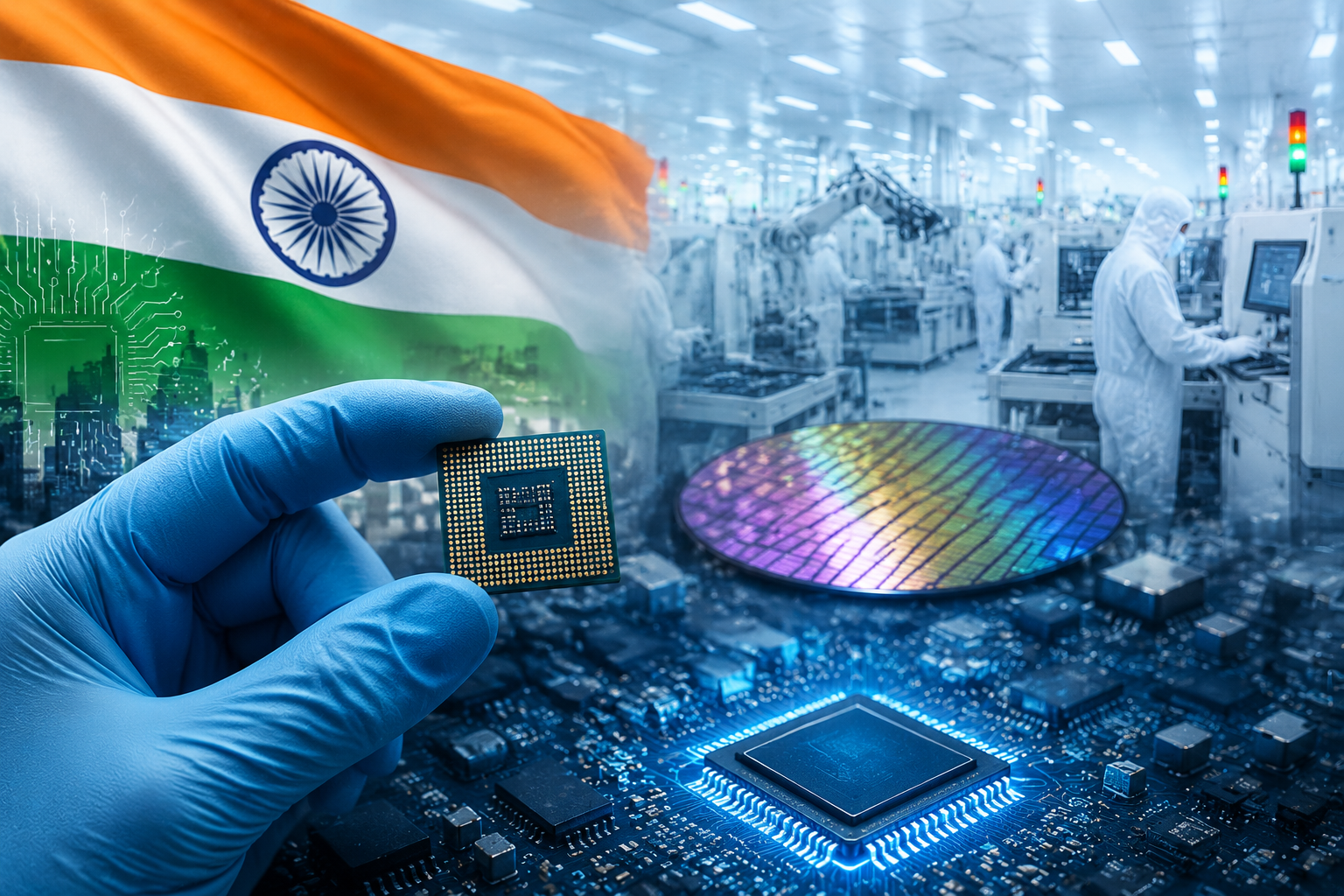
Enhanced Incentive Scheme Aims to Strengthen Domestic Semiconductor Production, Boost Global Investments and Build a Self-Reliant Electronics Ecosystem
In a major step towards strengthening India's position in the global semiconductor industry, the Central Government has reportedly cleared a ₹1.25 lakh crore outlay for the India Semiconductor Mission (ISM) 2.0. The proposal has received approval from the Expenditure Finance Committee (EFC) under the Ministry of Finance and will now be placed before the Union Cabinet for final approval.
The proposed allocation marks a significant expansion of the government's semiconductor strategy, substantially exceeding the ₹76,000 crore allocated under the first phase of the mission. The enhanced financial support is expected to accelerate semiconductor manufacturing, attract global technology companies, strengthen domestic supply chains and reinforce India's ambition of becoming a leading semiconductor hub.
Building on the Momentum of ISM 1.0
The first phase of the India Semiconductor Mission laid the foundation for India's semiconductor manufacturing ecosystem by attracting several large investment proposals.
As of December 2025, the government had approved 10 major semiconductor projects across six states, with a combined investment commitment of nearly ₹1.60 lakh crore.
These projects span multiple segments of the semiconductor value chain, including wafer fabrication, semiconductor packaging, chip assembly, testing facilities and display manufacturing.
Industry experts believe the second phase will focus on converting these investments into commercial production while encouraging additional global players to establish manufacturing facilities in India.
Larger Financial Incentives to Drive Investments
A key objective of ISM 2.0 is to make India one of the world's most attractive destinations for semiconductor investments.
The scheme is expected to continue offering fiscal support of up to 50% of eligible project costs, reducing the capital burden for companies setting up advanced semiconductor facilities.
Eligible projects are expected to include:
-
Silicon semiconductor fabrication plants
-
Compound semiconductor manufacturing units
-
Assembly, Testing, Marking and Packaging (ATMP) facilities
-
Outsourced Semiconductor Assembly and Test (OSAT) units
-
Semiconductor design companies
-
Display manufacturing facilities
-
Semiconductor equipment and material suppliers
The enhanced incentive structure is expected to improve project viability while attracting both domestic conglomerates and international semiconductor manufacturers.
Expanding Beyond Chip Manufacturing
Unlike the initial phase, ISM 2.0 is expected to place greater emphasis on developing the complete semiconductor ecosystem rather than focusing solely on fabrication plants.
The government plans to support manufacturers of critical raw materials such as:
-
Silicon ingots
-
Specialty gases
-
High-purity chemicals
-
Advanced substrates
-
Packaging materials
-
Electronic-grade components
-
Semiconductor manufacturing equipment
Strengthening these upstream industries will help reduce import dependence and create a resilient domestic semiconductor supply chain.
Strong Focus on Chip Design and Innovation
India already plays a significant role in global semiconductor design, with thousands of engineers working for leading international technology companies.
The next phase of the mission is expected to encourage companies that develop and retain semiconductor intellectual property (IP) within India.
Support for indigenous chip design startups, research institutions and innovation centres could help India move up the semiconductor value chain from manufacturing to technology development.
Developing homegrown semiconductor IP is considered essential for improving technological competitiveness and reducing dependence on foreign technologies.
Strategic Importance of the Semiconductor Industry
Semiconductors have become one of the world's most strategically important industries, powering virtually every modern technology.
From smartphones and laptops to electric vehicles, industrial automation, telecommunications, defence equipment, artificial intelligence and cloud computing, semiconductor chips form the backbone of today's digital economy.
Recent global chip shortages highlighted the vulnerability of international supply chains and prompted governments worldwide to invest heavily in domestic semiconductor manufacturing.
India's expanded semiconductor mission aligns with this global trend of strengthening strategic technology capabilities.
Economic Benefits Expected Across Multiple Sectors
The enhanced mission is expected to generate substantial long-term economic benefits.
Industry analysts anticipate:
-
Large-scale foreign direct investment (FDI)
-
Creation of thousands of high-skilled jobs
-
Expansion of electronics manufacturing
-
Growth of research and development activities
-
Increased exports of semiconductor products
-
Development of advanced manufacturing infrastructure
-
Strengthening of India's technology ecosystem
The programme is also expected to stimulate growth in industries such as consumer electronics, automotive manufacturing, telecommunications, defence production and renewable energy.
Supporting India's Manufacturing Vision
The semiconductor mission complements several flagship government initiatives, including:
-
Make in India
-
Atmanirbhar Bharat
-
Digital India
-
Production Linked Incentive (PLI) Scheme
-
National Electronics Policy
Together, these programmes aim to transform India into a global manufacturing and technology powerhouse while increasing domestic value addition across strategic sectors.
The government has also allocated ₹1,000 crore for ISM 2.0 in the Union Budget for FY2026-27, demonstrating its continued commitment to expanding the semiconductor ecosystem.
Challenges That Remain
While the outlook is highly promising, industry experts caution that semiconductor manufacturing remains one of the world's most capital-intensive and technologically demanding industries.
Success will depend on several factors, including:
-
Timely project execution
-
Availability of skilled workforce
-
Reliable power and water infrastructure
-
Stable policy support
-
Global technology partnerships
-
Efficient supply chain development
Addressing these challenges will be critical for ensuring India's long-term competitiveness in the global semiconductor market.
Outlook
The proposed ₹1.25 lakh crore India Semiconductor Mission 2.0 represents one of the largest government-backed technology initiatives in the country's history.
By significantly expanding financial incentives and broadening support across the semiconductor value chain, the government aims to establish India as a trusted global destination for semiconductor manufacturing and innovation.
As worldwide demand for advanced chips continues to rise amid rapid growth in artificial intelligence, electric vehicles, data centres and digital infrastructure, India has an opportunity to emerge as a key player in the global semiconductor ecosystem.
If implemented successfully, ISM 2.0 could become a transformative initiative that not only strengthens India's technological self-reliance but also creates a new engine of economic growth, high-value manufacturing and innovation for decades to come.