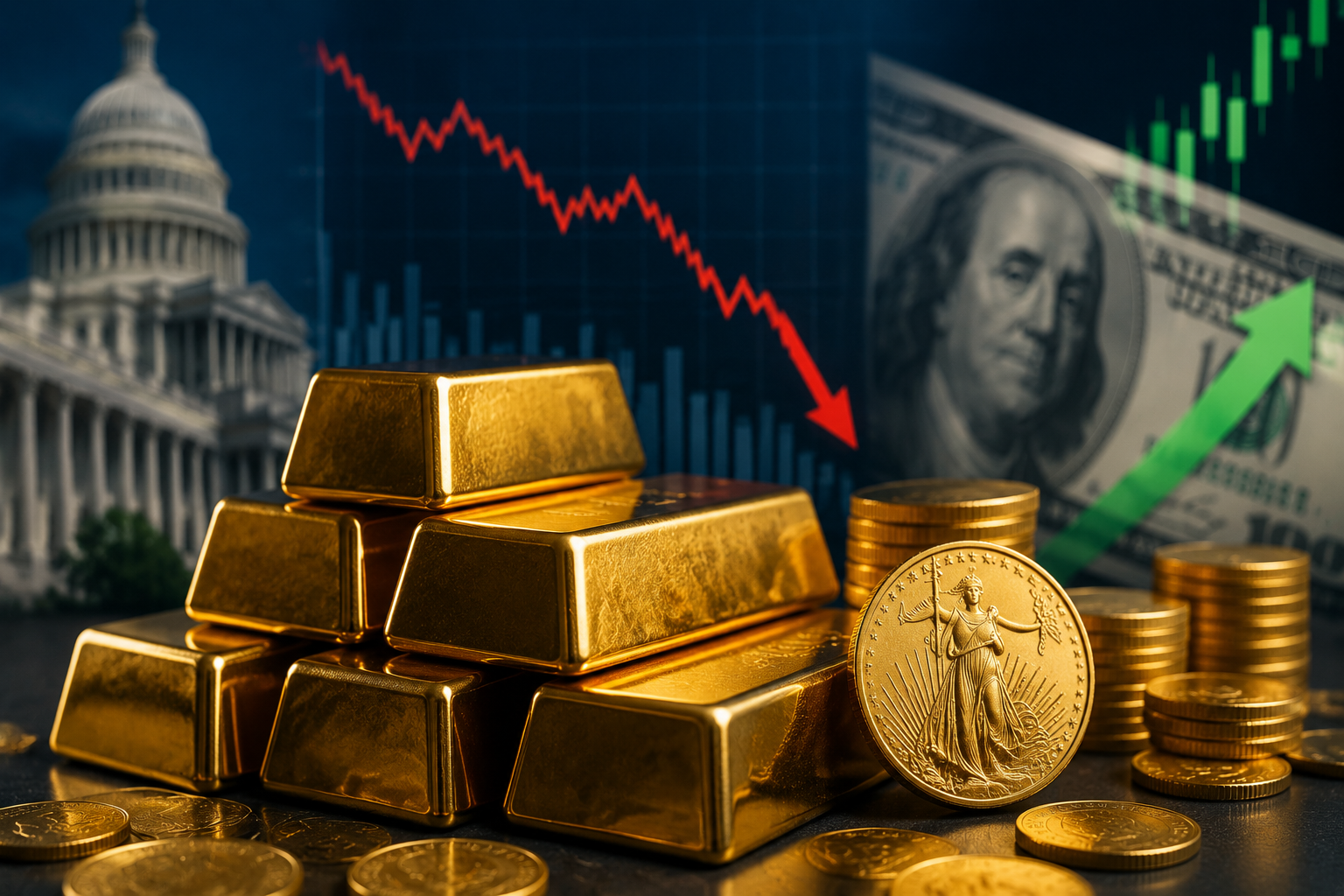
Rising US Bond Yields, Stronger Dollar and Persistent Inflation Expectations Trigger Heavy Selling in Precious Metals
Gold prices extended their losses on Tuesday, putting the yellow metal on course for its biggest monthly decline since October 2008 as investors increasingly priced in tighter US monetary policy. Expectations that the US Federal Reserve could continue raising interest rates to curb stubborn inflation, coupled with a stronger US dollar, outweighed gold's traditional appeal as a safe-haven asset.
Spot gold slipped around 1.5% to trade near $3,957 per ounce, while US gold futures also recorded sharp losses. The precious metal has declined nearly 13% during June, marking its fourth consecutive monthly decline and the steepest monthly correction since the global financial crisis.
Interest Rate Expectations Drive Investor Sentiment
The primary catalyst behind gold's weakness has been the growing expectation that the Federal Reserve will maintain an aggressive stance on interest rates.
Recent inflation data has remained above the US central bank's target, prompting investors to anticipate additional policy tightening in the coming months. According to market expectations, traders are now assigning a higher probability of multiple rate hikes before the end of the year.
Higher interest rates increase the attractiveness of fixed-income investments such as government bonds while reducing demand for non-yielding assets like gold. As a result, institutional investors have been reallocating capital toward higher-yielding financial instruments.
Strong US Dollar Adds Further Pressure
The appreciation of the US dollar has amplified the decline in bullion prices.
A stronger dollar makes gold more expensive for overseas buyers, reducing international demand and encouraging profit booking across commodity markets. The US currency has posted consecutive monthly gains as investors seek the safety of dollar-denominated assets amid expectations of tighter monetary conditions.
The inverse relationship between gold and the dollar has once again become a dominant factor influencing price movements.
Inflation Hedge Loses Momentum
Although gold has traditionally been viewed as a hedge against inflation, its performance often weakens when central banks aggressively raise borrowing costs.
Persistent inflation has led policymakers to prioritise monetary tightening, causing investors to focus more on higher real interest rates than on inflation itself. Rising real yields generally diminish gold's attractiveness because the opportunity cost of holding a non-interest-bearing asset increases.
This shift in market dynamics has outweighed the support that inflation would normally provide to precious metals.
Geopolitical Tensions Take a Back Seat
Earlier this month, escalating tensions in West Asia had boosted safe-haven buying in gold as investors sought protection from geopolitical uncertainty.
However, optimism surrounding diplomatic efforts and easing concerns over a wider regional conflict have reduced the geopolitical premium embedded in gold prices. Market participants are now concentrating more on economic fundamentals than geopolitical developments.
Even though geopolitical risks remain present, monetary policy expectations have become the dominant driver of precious metal prices.
Investors Await Key US Economic Data
Attention is now turning to crucial US labour market indicators, including the ADP employment report and the monthly non-farm payrolls data.
These reports are expected to provide fresh clues about the strength of the US economy and influence the Federal Reserve's upcoming policy decisions.
A stronger-than-expected jobs report could reinforce expectations of additional interest rate hikes, while weaker economic data may revive hopes of a pause in monetary tightening and offer temporary support to gold.
Precious Metals Witness Broad-Based Weakness
The selling pressure has extended across the precious metals complex.
Silver, platinum and palladium also recorded notable declines, reflecting weaker investor sentiment toward the entire sector. The correction has been driven by a combination of rising bond yields, a stronger dollar and reduced expectations of near-term monetary easing.
Commodity analysts believe volatility across precious metals could remain elevated as markets react to incoming macroeconomic data.
Outlook: Volatility Likely to Continue
Market experts expect gold to remain highly sensitive to developments in US monetary policy during the second half of the year.
Should inflation remain stubbornly high, the Federal Reserve may continue tightening financial conditions, limiting the upside for bullion. On the other hand, signs of slowing economic growth, easing inflation or renewed geopolitical tensions could revive demand for safe-haven assets.
Investors are also expected to closely monitor movements in the US dollar, bond yields and central bank purchases of gold, all of which will play an important role in determining the metal's medium-term direction.
For long-term investors, gold continues to serve as a strategic portfolio diversifier. However, in the near term, price movements are likely to remain driven by interest rate expectations, currency trends and global macroeconomic developments, making volatility a defining feature of the precious metals market.