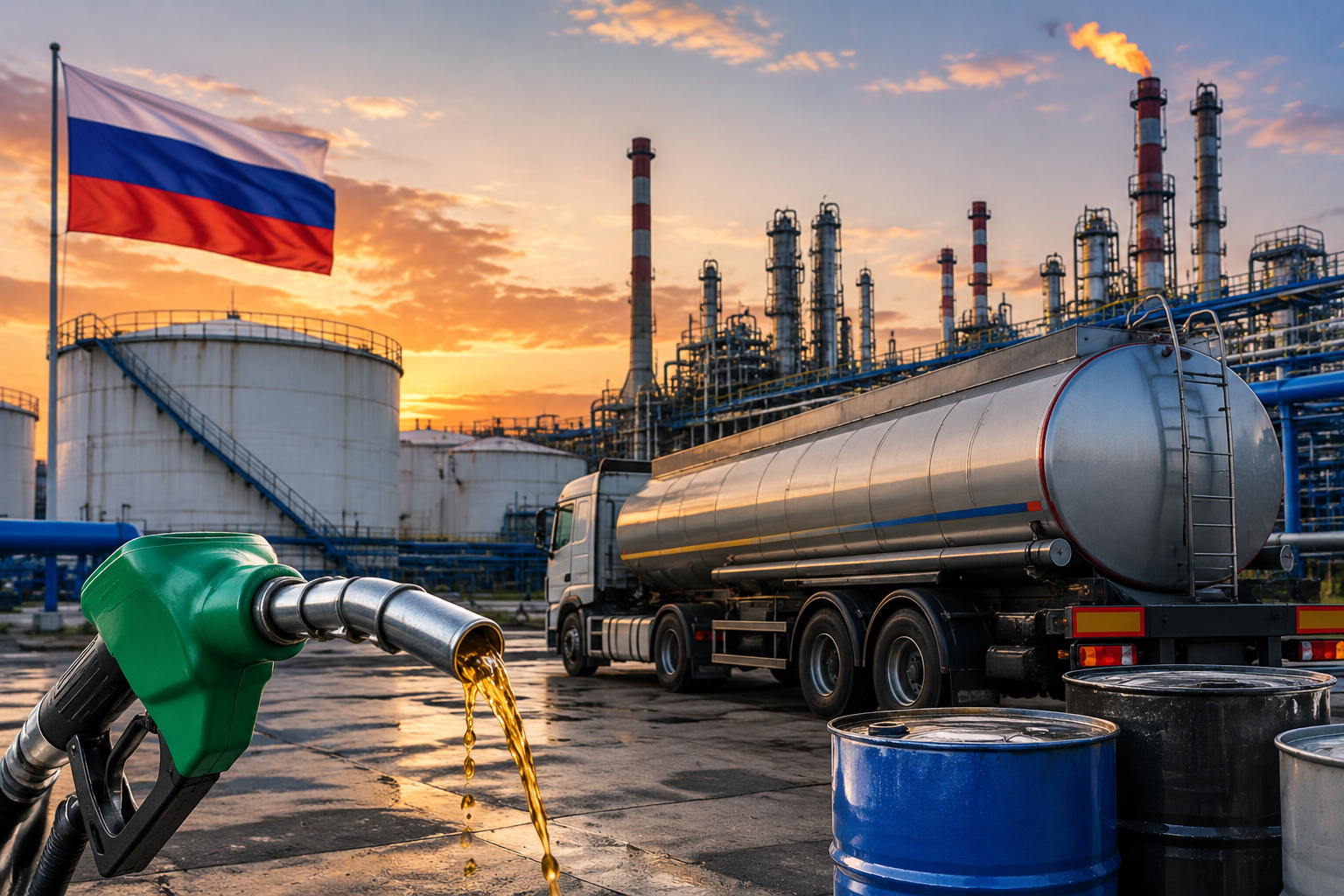
Government Considers Allowing Euro-2 Fuel Production and Imports Until 2027 to Stabilise Domestic Market Amid Ongoing Infrastructure Attacks
Russia is reportedly considering a temporary relaxation of its fuel quality regulations as authorities seek to address mounting supply challenges caused by repeated attacks on the country's oil refining infrastructure. The proposed measure would allow the production and import of lower-grade Euro-2 gasoline and diesel for up to one year, providing refiners with greater flexibility to maintain domestic fuel availability.
The proposal comes as Ukraine continues to target Russian energy assets through drone strikes, disrupting refinery operations and increasing pressure on fuel supplies across several regions. The government views the temporary easing of environmental standards as a practical solution to ensure energy security while damaged facilities undergo repairs.
Euro-2 Fuel Could Return After More Than a Decade
According to reports, the Russian government is reviewing a draft proposal that would permit refiners to manufacture and import Euro-2 standard gasoline and diesel until July 2027.
Euro-2 fuel contains significantly higher sulphur levels than the cleaner Euro-5 standard currently used across Russia. The lower standard was phased out in 2013 as part of nationwide efforts to improve fuel quality, reduce harmful emissions and align with stricter environmental regulations.
If approved, refiners would be able to produce fuel more quickly and operate with greater flexibility during periods of constrained refining capacity.
Energy Infrastructure Under Growing Pressure
Russia's refining industry has faced increasing operational challenges following repeated drone attacks targeting oil refineries, fuel storage facilities and other critical energy infrastructure.
Several refining units have reportedly experienced temporary shutdowns or reduced output, leading to localized fuel shortages and higher wholesale prices. The disruptions have affected the production of gasoline, diesel and other petroleum products, forcing authorities to explore emergency measures to stabilize domestic supplies.
The attacks have become an increasingly significant factor influencing Russia's energy logistics and supply chain management.
Government Prioritises Domestic Fuel Availability
President Vladimir Putin recently acknowledged that attacks on energy infrastructure have contributed to fuel shortages in certain regions, while maintaining that the government is actively managing the situation.
Russian authorities have already implemented measures such as temporary fuel export restrictions, market interventions and increased monitoring of domestic inventories to ensure adequate supplies for consumers, agriculture and industry.
The proposed temporary return to Euro-2 fuel standards represents another policy option aimed at preventing prolonged shortages and maintaining stable distribution across the country.
Environmental Compromise for Short-Term Stability
While the proposal may help ease supply constraints, it also represents a temporary compromise on environmental policy.
Euro-2 fuels produce higher sulphur emissions, contributing to increased air pollution and potentially affecting the performance of modern vehicles equipped with advanced emission-control technologies. Environmental experts caution that prolonged reliance on lower-quality fuels could reverse years of progress in improving air quality.
However, policymakers appear to view the measure as an emergency response designed to address exceptional circumstances rather than a permanent shift in environmental standards.
Global Oil Markets Monitoring Developments
As one of the world's largest oil producers and exporters, Russia's refining capacity plays a significant role in global energy markets. Any sustained disruption to domestic refining operations could influence exports of gasoline, diesel and other refined petroleum products, affecting regional fuel supplies and pricing.
Although crude oil production has remained relatively resilient, refining bottlenecks have created uncertainty around product availability, particularly in neighbouring markets that rely on Russian fuel exports.
Energy traders and investors are closely monitoring refinery repair timelines, government policy decisions and geopolitical developments that could further impact the country's energy sector.
Implications for the Energy Sector
The proposal highlights how geopolitical conflicts continue to reshape global energy markets beyond crude oil production. Supply chain resilience, refinery security and fuel logistics have become increasingly important as governments respond to infrastructure-related disruptions.
For investors, the situation underscores the importance of monitoring developments across the downstream oil sector, where refining capacity, fuel inventories and government policy decisions can significantly influence energy company earnings, commodity prices and broader market sentiment.
If implemented, the temporary relaxation of fuel standards would demonstrate Russia's willingness to prioritise energy security and domestic fuel stability over environmental objectives during a period of heightened geopolitical uncertainty.