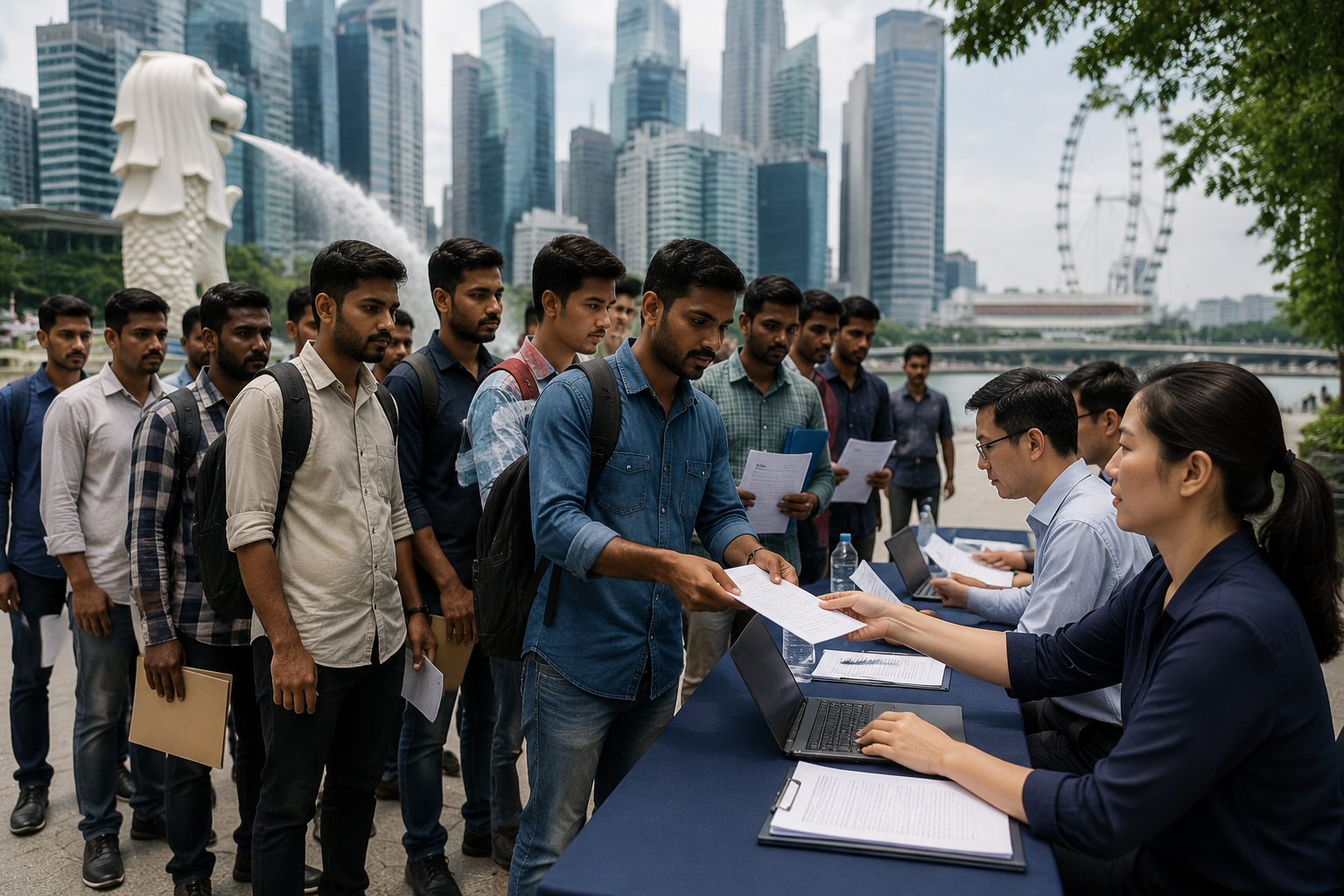
NTUC steps in with rapid placement plan as employers offer hundreds of vacancies across sectors
Singapore’s labour ecosystem has activated a large-scale emergency employment response after more than 400 migrant workers—primarily from India and Bangladesh—were allegedly left without wages for several months following a corporate default case.
The initiative, led by the National Trades Union Congress (National Trades Union Congress), aims to quickly reintegrate affected workers into new jobs as over 80 companies have stepped forward with immediate hiring interest.
Workers Left Stranded After Alleged Wage Default
Authorities and labour bodies reported that the workers were employed by three companies linked to a common director, who is believed to have left Singapore after failing to pay wages.
Key issues under investigation include:
-
Several months of unpaid salaries
-
Sudden disruption of employment contracts
-
Possible corporate misconduct involving linked firms
-
Verification of legal accountability and compliance gaps
While investigations are ongoing, the immediate focus has shifted toward worker rehabilitation and income restoration.
Large Employer Response Creates Rapid Hiring Pipeline
Despite the disruption, Singapore’s employer community has responded swiftly to absorb affected workers.
Placement pipeline highlights:
-
Over 400 job vacancies available immediately
-
More than 80 companies participating
-
Active coordination between employers and unions
-
Ongoing matching of skills and work experience
Officials say demand spans across multiple operational sectors, helping accelerate reemployment timelines.
NTUC Leads Coordinated Workforce Reallocation Effort
The National Trades Union Congress (National Trades Union Congress) has taken the lead in coordinating job matching, referrals, and onboarding support for affected workers.
Core responsibilities include:
-
Identifying suitable job openings
-
Matching workers based on skill sets
-
Fast-tracking referral processes
-
Coordinating with employer associations
According to officials, placements are expected to begin within days, reducing the financial stress on displaced workers.
Migrant Labour Risks Under Spotlight
The incident has once again highlighted structural vulnerabilities in cross-border labour arrangements, particularly in subcontracted employment systems.
Key concerns include:
-
Dependence on intermediary employers
-
Wage protection enforcement gaps
-
Limited financial safety nets for migrant workers
-
Risks of sudden contract termination
While Singapore maintains strict labour regulations, the case underscores the importance of continuous monitoring and compliance enforcement.
Strong Institutional Framework Enables Fast Recovery
Despite the disruption, Singapore’s organised labour and regulatory structure has enabled a relatively quick response compared to similar global incidents.
Supporting factors:
-
Active union participation in placement drives
-
Strong employer participation in hiring
-
Centralised workforce coordination mechanisms
-
Rapid job-matching infrastructure
This has helped convert a potential long-term unemployment issue into a short-term transition process.
Economic and Social Stability Implications
From a broader perspective, the situation also carries implications for labour-intensive sectors that depend heavily on migrant workers.
Potential impacts:
-
Temporary labour shortages in affected industries
-
Increased focus on contractor accountability
-
Strengthening of wage protection frameworks
-
Greater scrutiny of overseas recruitment practices
However, analysts expect limited macroeconomic impact due to quick reabsorption into the workforce.
Outlook: Swift Reemployment Likely in Coming Weeks
With strong employer participation and union coordination, most affected workers are expected to secure new employment opportunities in the near term.
The ongoing drive reflects Singapore’s structured labour governance model, where institutional coordination plays a key role in managing workforce shocks and ensuring economic continuity.
As placements begin next week, authorities are expected to further strengthen oversight mechanisms to prevent similar disruptions in the future.