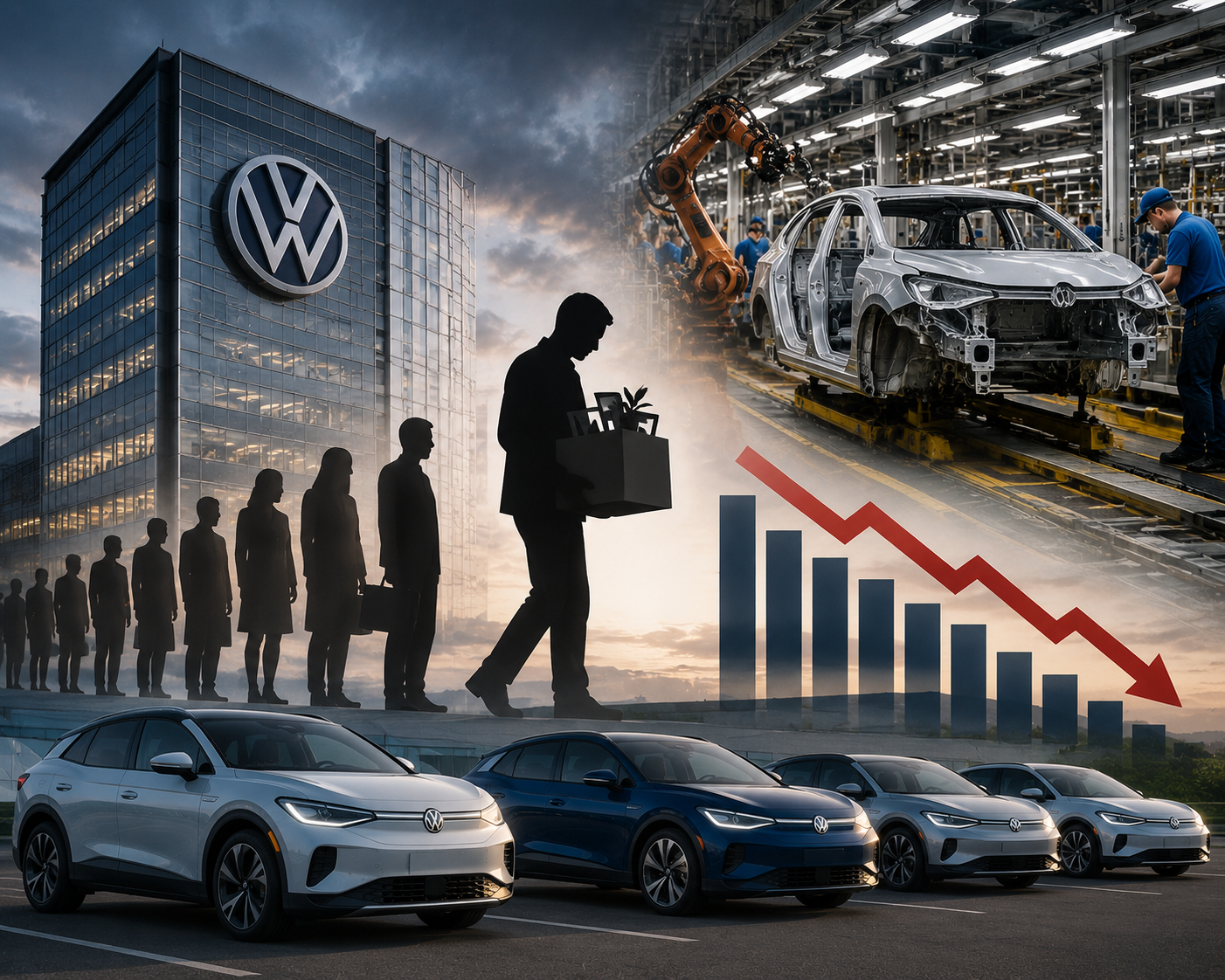
Cost pressures, EV transition and global competition push German automaker toward aggressive overhaul
Volkswagen is reportedly preparing one of the most significant restructuring plans in its modern history, with CEO Oliver Blume aiming to cut up to 100,000 jobs globally over the coming years. The move reflects mounting pressure on traditional automakers as they navigate the costly transition to electric mobility while facing intense global competition.
The restructuring comes at a time when the global auto industry is undergoing a structural shift, with legacy manufacturers forced to rethink production capacity, cost structures, and long-term investment strategies.
Multi-Year Cost Rationalisation Plan Under Review
Investment cuts and efficiency drive at the core of strategy
According to media reports, the company is also planning to reduce total investment by around 15%, bringing planned expenditure down to just over €130 billion over the next five years.
The strategy is expected to focus on:
-
Large-scale workforce reduction across global operations
-
Streamlining overlapping production and administrative units
-
Optimising capital expenditure across EV and ICE portfolios
-
Improving profitability in underperforming divisions
A spokesperson for Volkswagen Group said the company does not comment on internal or confidential planning documents, adding that all strategic decisions will go through formal approval processes.
German Plants May Face Production Shifts
Reports suggest potential closures or phase-outs in key facilities
Media reports indicate that Volkswagen is evaluating changes at several German manufacturing sites, including plants in Hanover, Zwickau, and Emden, along with an Audi-linked facility in Neckarsulm.
Rather than immediate shutdowns, production is expected to be phased out gradually as existing vehicle models reach the end of their lifecycle.
If implemented, the changes would mark a major shift in the company’s domestic manufacturing footprint and reflect broader cost pressures in European industrial production.
Structural Reorganisation of Core Business
Possible separation of VW brand and manufacturing units
The restructuring plan reportedly includes a potential reorganisation of the group’s structure, separating the core Volkswagen brand and parts manufacturing divisions into distinct entities.
Key objectives behind this move include:
-
Greater operational transparency across divisions
-
Improved cost accountability and efficiency tracking
-
Faster decision-making in EV transition strategy
-
Better alignment of capital allocation with performance
Such a restructuring would represent a major strategic shift for Volkswagen Group, which operates multiple global brands under a unified structure.
Industry Pressures Driving the Decision
EV transition costs and China competition reshape global auto landscape
The proposed overhaul reflects broader challenges facing global automakers:
-
Rising investment requirements for electric vehicle platforms
-
Intense pricing competition from Chinese EV manufacturers
-
Weak demand conditions in key European markets
-
High labour and energy costs in Germany
-
Trade and tariff uncertainties across major markets
The shift toward electrification has significantly increased capital requirements, forcing companies to balance legacy internal combustion engine (ICE) operations with long-term EV investments.
Workforce Impact and Labour Negotiations
Job cuts add pressure amid existing employment guarantees
The reported job reduction plan comes on top of earlier workforce optimisation measures involving tens of thousands of positions.
However, Volkswagen had previously reached agreements with labour unions that included job security assurances and limits on plant closures in Germany for the current decade. Any deviation from these commitments could trigger complex negotiations with worker representatives and political stakeholders.
Given Germany’s strong labour protections and union influence, implementation of such restructuring is expected to face structured but firm negotiations.
Market Implications
Short-term sentiment pressure, long-term margin focus
From an investor perspective, the announcement signals a strategic pivot toward cost discipline and profitability improvement. While job cut headlines may create short-term sentiment pressure, markets often view such restructuring as necessary for long-term competitiveness.
Key implications include:
-
Potential margin expansion over medium term
-
Improved capital efficiency in EV transition
-
Reduced operational complexity
-
Higher focus on core profitable platforms
The stock reaction is likely to depend on clarity around execution timelines and labour negotiations.
Outlook
Auto industry enters a decisive restructuring phase
The proposed overhaul at Volkswagen Group underscores a broader transformation across the global automotive sector, where legacy manufacturers are being forced to adapt rapidly to electrification and shifting demand dynamics.
If executed, the restructuring could redefine Volkswagen’s global manufacturing strategy, significantly reduce its cost base, and reposition the company for the next phase of automotive competition—though not without substantial labour and political challenges in its home market.