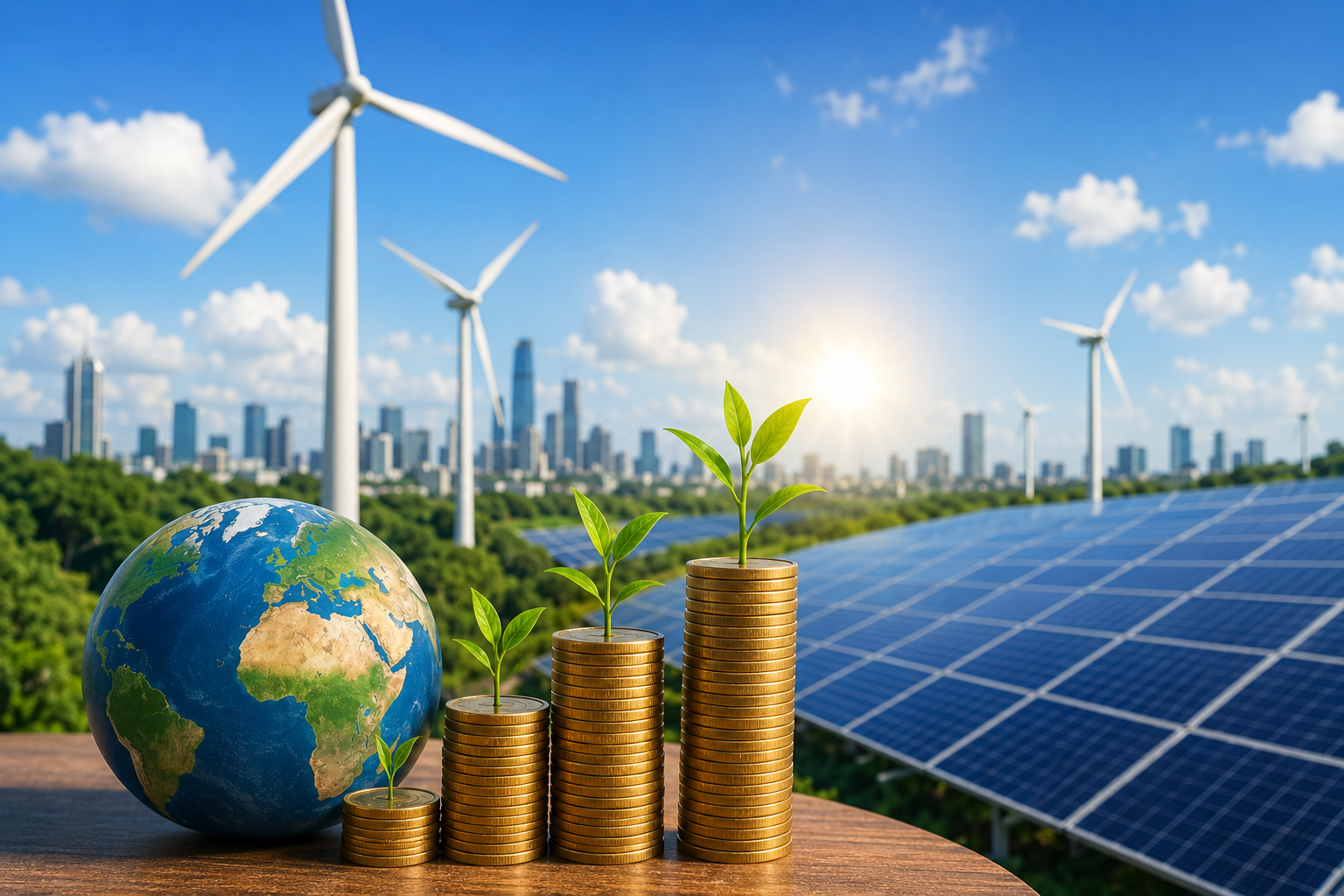
International Funding for Renewable Energy Edges Higher, But Electricity Access, Clean Cooking and Energy Equity Continue to Lag Across Developing Nations
International public financial support for clean energy projects in developing countries increased marginally to $24.6 billion in 2024, underscoring the growing global commitment toward sustainable development. However, the increase remains far below the level required to achieve the United Nations Sustainable Development Goal (SDG) 7, which aims to ensure universal access to affordable, reliable, sustainable and modern energy by 2030.
The findings are part of the latest Tracking SDG 7: The Energy Progress Report, jointly prepared by the International Energy Agency (IEA), International Renewable Energy Agency (IRENA), United Nations Department of Economic and Social Affairs (UN DESA), the World Bank, and the World Health Organization (WHO).
The report paints a mixed picture of global energy transition efforts. While renewable energy generation continues to expand rapidly, millions of people—particularly in low-income nations—still lack access to electricity and clean cooking fuels, highlighting persistent inequalities in global energy development.
The report will be officially presented to policymakers on July 8, 2026, during the High-Level Political Forum on Sustainable Development in New York.
Clean Energy Funding Shows Only Marginal Improvement
According to the report, international public financial flows for clean energy reached $24.6 billion in 2024, compared with $24.4 billion in 2023.
Although the increase signals continued international support for climate and energy initiatives, experts caution that the pace of funding remains insufficient relative to the enormous investment required to decarbonize global energy systems and achieve universal energy access.
Developing economies continue to require substantial investments in:
-
Renewable power generation.
-
Electricity transmission networks.
-
Battery storage.
-
Rural electrification.
-
Clean cooking infrastructure.
-
Energy efficiency technologies.
Without a significant acceleration in financing, achieving SDG 7 by 2030 remains a major challenge.
Debt Financing Dominates Clean Energy Investment
One of the report's key findings is that debt-based financing continues to account for nearly 80% of total international public clean energy finance.
While concessional loans have enabled several countries to invest in renewable infrastructure, increasing dependence on debt has created additional fiscal pressures for many developing economies already grappling with:
-
Rising interest rates.
-
High sovereign debt.
-
Currency depreciation.
-
Inflationary pressures.
-
Limited public investment capacity.
The report suggests that increasing grant-based funding, blended finance and private-sector participation will be essential to bridge the financing gap.
Electricity Access Stagnates Despite Global Progress
The report highlights that global progress in expanding electricity access has slowed significantly.
Key findings include:
-
Global electricity access remained at 92% in 2024.
-
Annual growth in electricity access has fallen to nearly half the pace recorded during the previous decade.
-
Hundreds of millions of people continue to live without reliable electricity.
This slowdown raises concerns about whether universal electricity access can realistically be achieved within the next five years.
Electricity remains fundamental to economic development, healthcare, education, digital connectivity and industrial growth.
Sub-Saharan Africa Continues to Face the Largest Energy Deficit
The report identifies Sub-Saharan Africa as the region facing the greatest energy access challenges.
The rural electricity deficit has increased from:
-
376 million people in 2010
to -
447 million people in 2024
Rapid population growth, inadequate infrastructure, limited investment and financing constraints continue to widen the energy access gap.
Experts believe substantially higher public and private investment will be required to reverse this trend.
Clean Cooking Remains the Biggest Development Challenge
While electricity access has improved over the past decade, access to clean cooking fuels and technologies remains one of the weakest areas of global energy development.
The report notes:
-
89% of urban populations now have access to clean cooking.
-
Only 56% of rural populations enjoy similar access.
Millions of households continue to rely on traditional fuels such as:
-
Firewood.
-
Charcoal.
-
Crop residues.
-
Animal waste.
These fuels contribute to indoor air pollution, respiratory illnesses, environmental degradation and deforestation, particularly affecting women and children.
Expanding access to clean cooking remains essential for improving health outcomes and reducing carbon emissions.
Renewable Energy Continues to Expand Worldwide
Renewable energy continues to record impressive growth globally.
According to the report:
-
Renewable sources now generate more than 30% of global electricity.
-
Record levels of solar and wind capacity were added during the year.
-
Investment in clean energy infrastructure continues to increase.
However, the report notes that renewable energy adoption remains relatively limited in sectors such as:
-
Transportation.
-
Industrial heating.
-
Heavy manufacturing.
-
Aviation.
-
Shipping.
Accelerating electrification and expanding green fuels will be necessary to decarbonize these sectors.
Wide Gap Between Developed and Developing Nations
Despite global progress, renewable energy deployment remains highly uneven.
The report reveals a stark contrast in renewable energy capacity:
-
Low-income countries: 33.6 watts per person
-
High-income countries: 1,224 watts per person
This disparity reflects differences in:
-
Investment availability.
-
Grid infrastructure.
-
Technology access.
-
Policy support.
-
Institutional capacity.
Bridging this gap will require stronger international cooperation, technology transfer and significantly higher climate finance.
Renewable Energy Strengthens Energy Security
Commenting on the findings, Francesco La Camera, Director-General of IRENA, said recent global energy disruptions have demonstrated the strategic importance of renewable energy.
Countries with stronger renewable energy systems are better equipped to:
-
Reduce dependence on imported fuels.
-
Improve energy security.
-
Stabilize electricity prices.
-
Strengthen economic resilience.
-
Manage supply chain disruptions.
He emphasized that accelerating deployment of affordable domestic renewable energy should become a central pillar of national economic and energy strategies.
Why SDG 7 Matters for Global Growth
Sustainable Development Goal 7 extends far beyond environmental objectives.
Universal access to modern energy supports:
-
Economic development.
-
Industrial growth.
-
Poverty reduction.
-
Education.
-
Healthcare.
-
Digital transformation.
-
Employment generation.
-
Climate resilience.
Affordable and reliable energy also serves as the foundation for achieving many of the other Sustainable Development Goals.
Investment Opportunities in the Global Energy Transition
The report also highlights growing investment opportunities across the clean energy ecosystem.
Sectors expected to attract significant capital include:
-
Solar power.
-
Wind energy.
-
Battery storage.
-
Smart grids.
-
Electric vehicles.
-
Green hydrogen.
-
Energy-efficient buildings.
-
Clean cooking technologies.
-
Carbon reduction solutions.
Governments are increasingly encouraging private-sector participation through public-private partnerships, green bonds and climate finance initiatives.
What Investors Should Watch
As countries intensify efforts to achieve their climate commitments, investors should closely monitor:
-
International climate finance commitments.
-
Renewable energy policy reforms.
-
Grid modernization projects.
-
Carbon pricing mechanisms.
-
Green hydrogen investments.
-
Clean technology innovation.
-
Sustainable infrastructure spending.
-
Development finance initiatives.
These trends are expected to shape global investment opportunities over the coming decade.
Outlook
The latest Tracking SDG 7: The Energy Progress Report highlights both the remarkable progress and the significant challenges facing the global clean energy transition. While international public financial flows reached $24.6 billion in 2024 and renewable energy now contributes more than 30% of global electricity generation, progress in expanding electricity access and clean cooking remains far below the pace required to achieve universal energy access by 2030.
For policymakers, the report serves as a call to accelerate investment, strengthen international cooperation and mobilize greater public and private capital toward sustainable energy infrastructure. For investors, the global energy transition continues to present long-term opportunities across renewable power, energy storage, clean technologies and climate finance. As governments prepare for the upcoming High-Level Political Forum on Sustainable Development, the focus will increasingly shift toward bridging financing gaps and ensuring that the benefits of clean energy reach developing economies and underserved populations worldwide.